Hui Waʻa Kaukahi

Nui a lehulehu na mokupuni, ʻaʻole lawa ka manawa

So many islands, so little time!

Author: Terry Shimabukuro

  • Kaʻena Point Leeward Coast

    Kaʻena Point Leeward Coast

    Story and photos by Terry Shimabukuro

    October 12, 2025

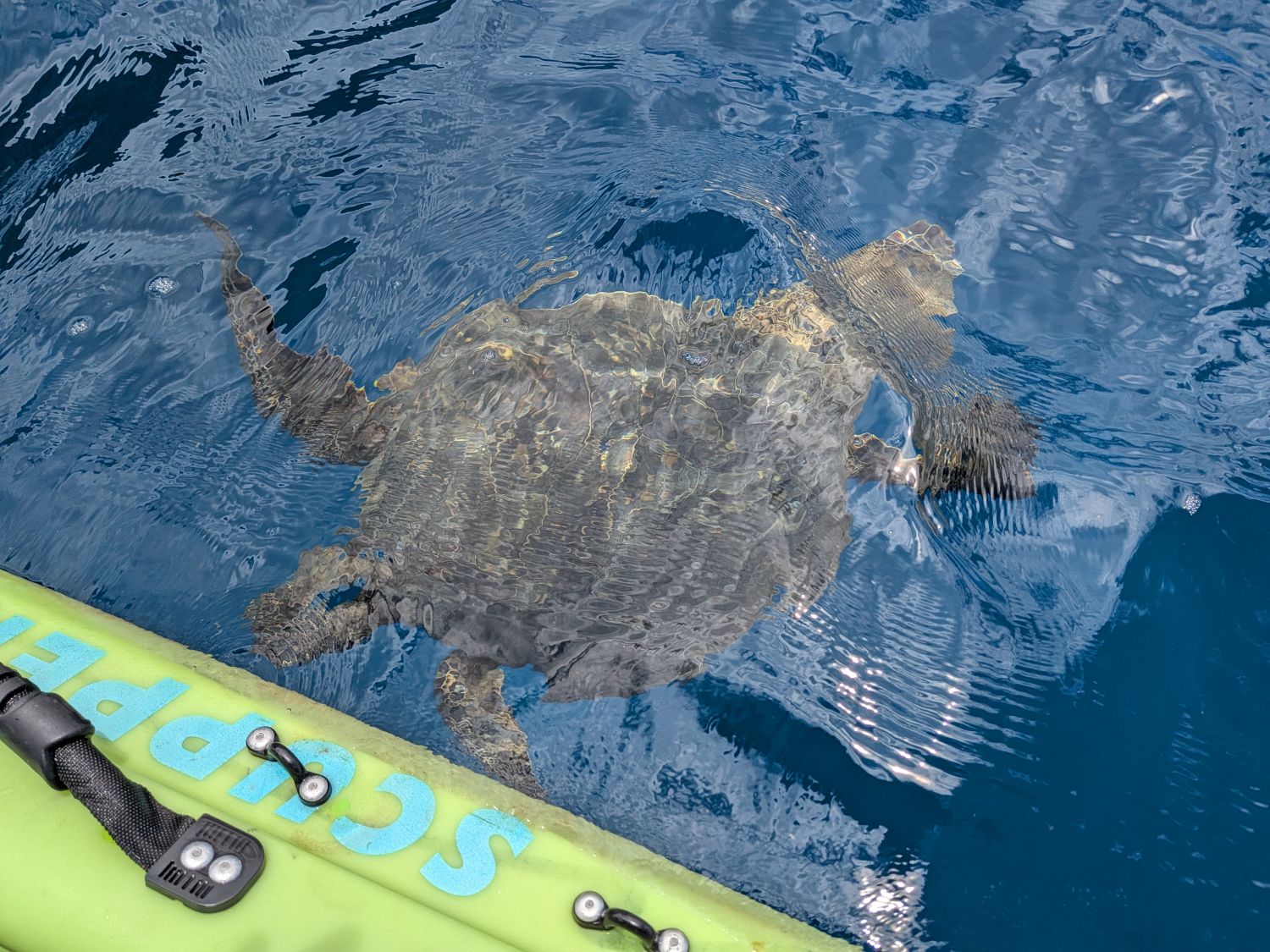
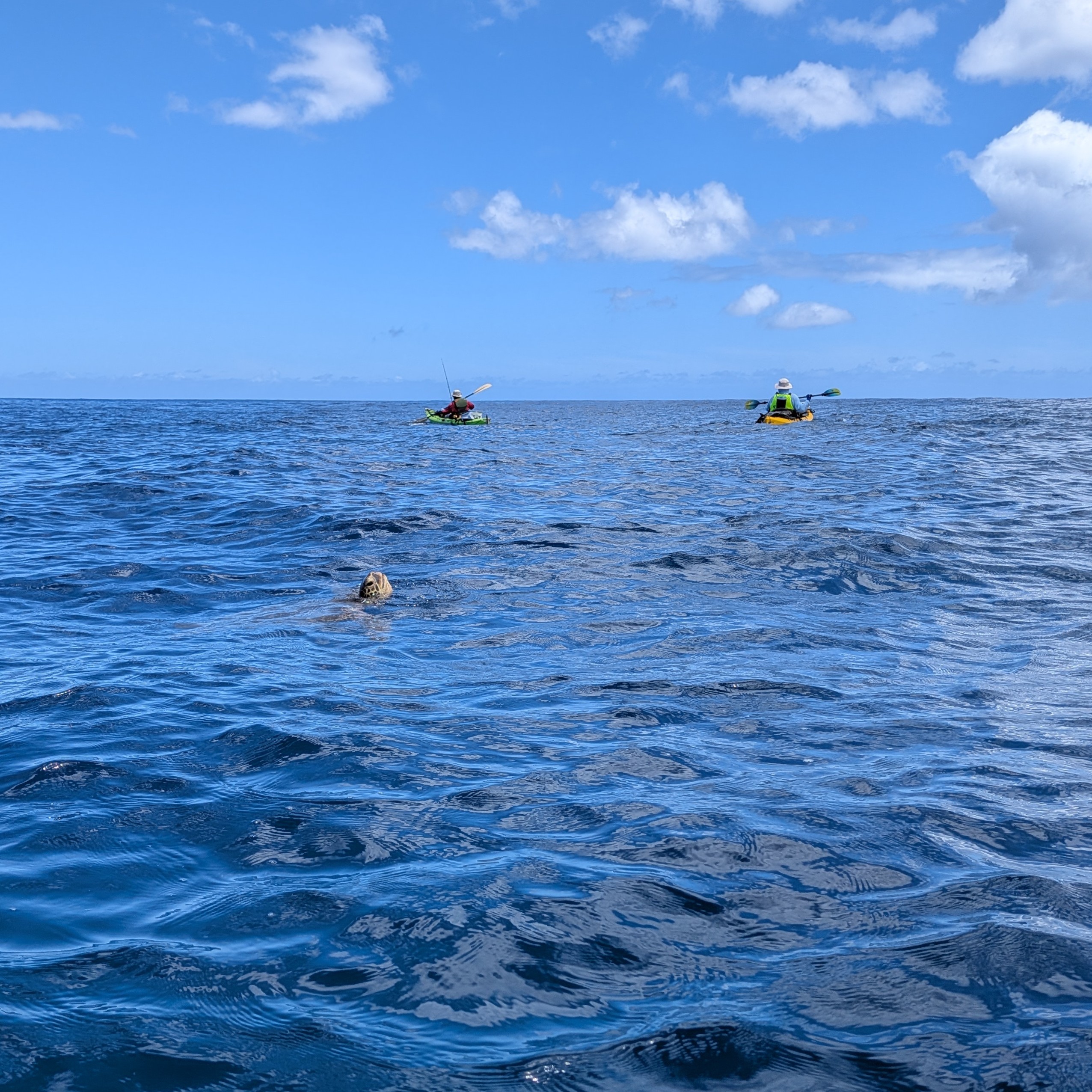
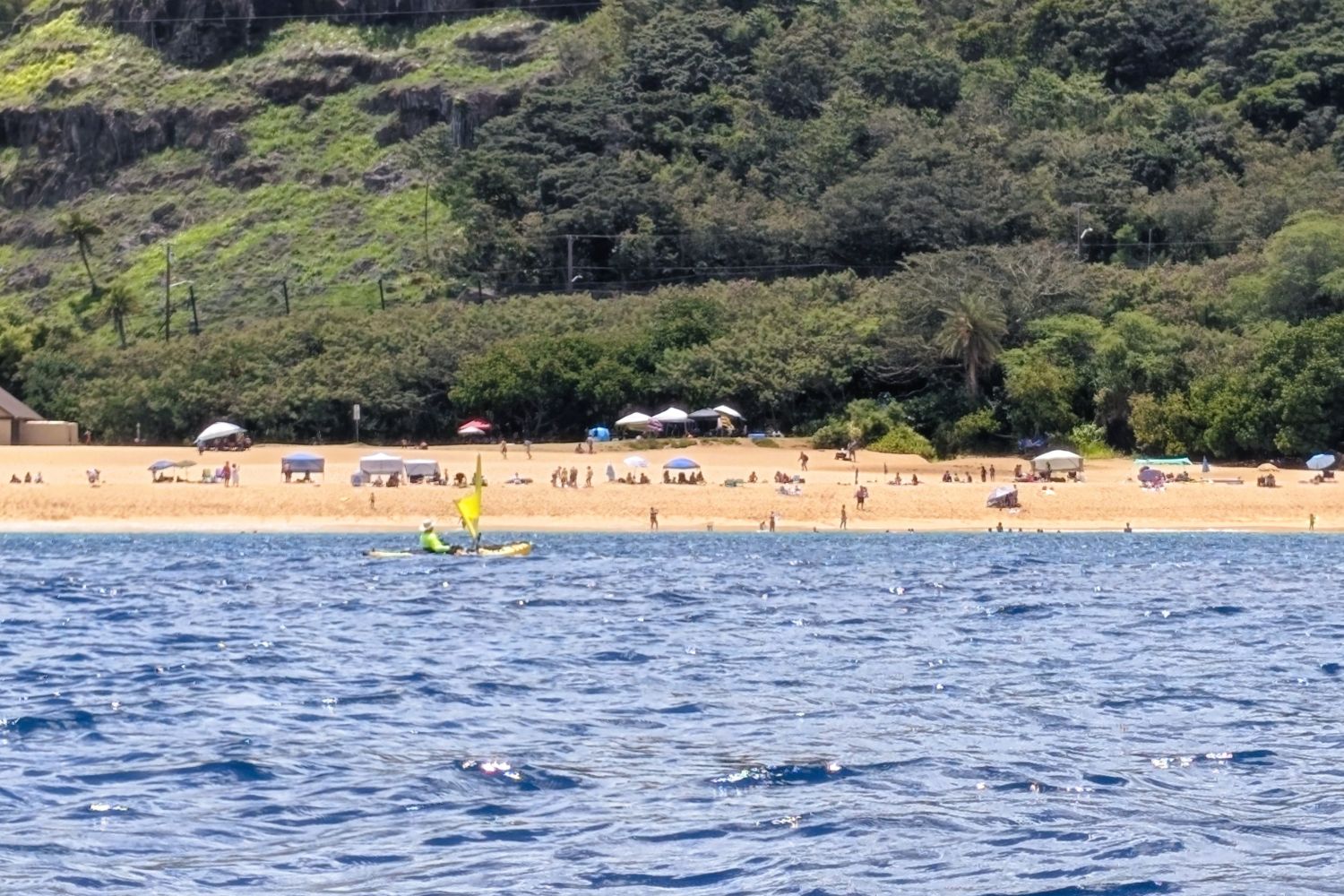
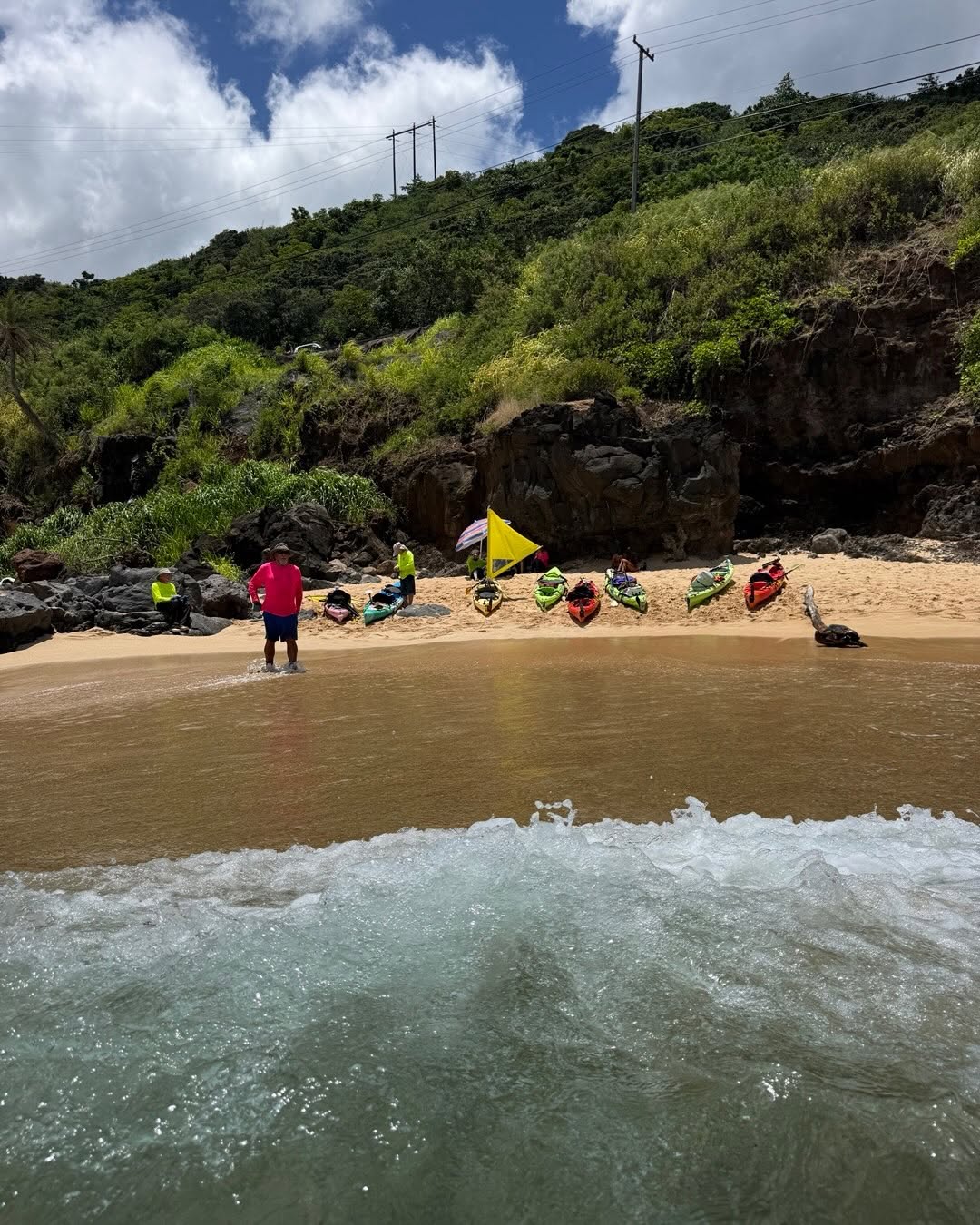
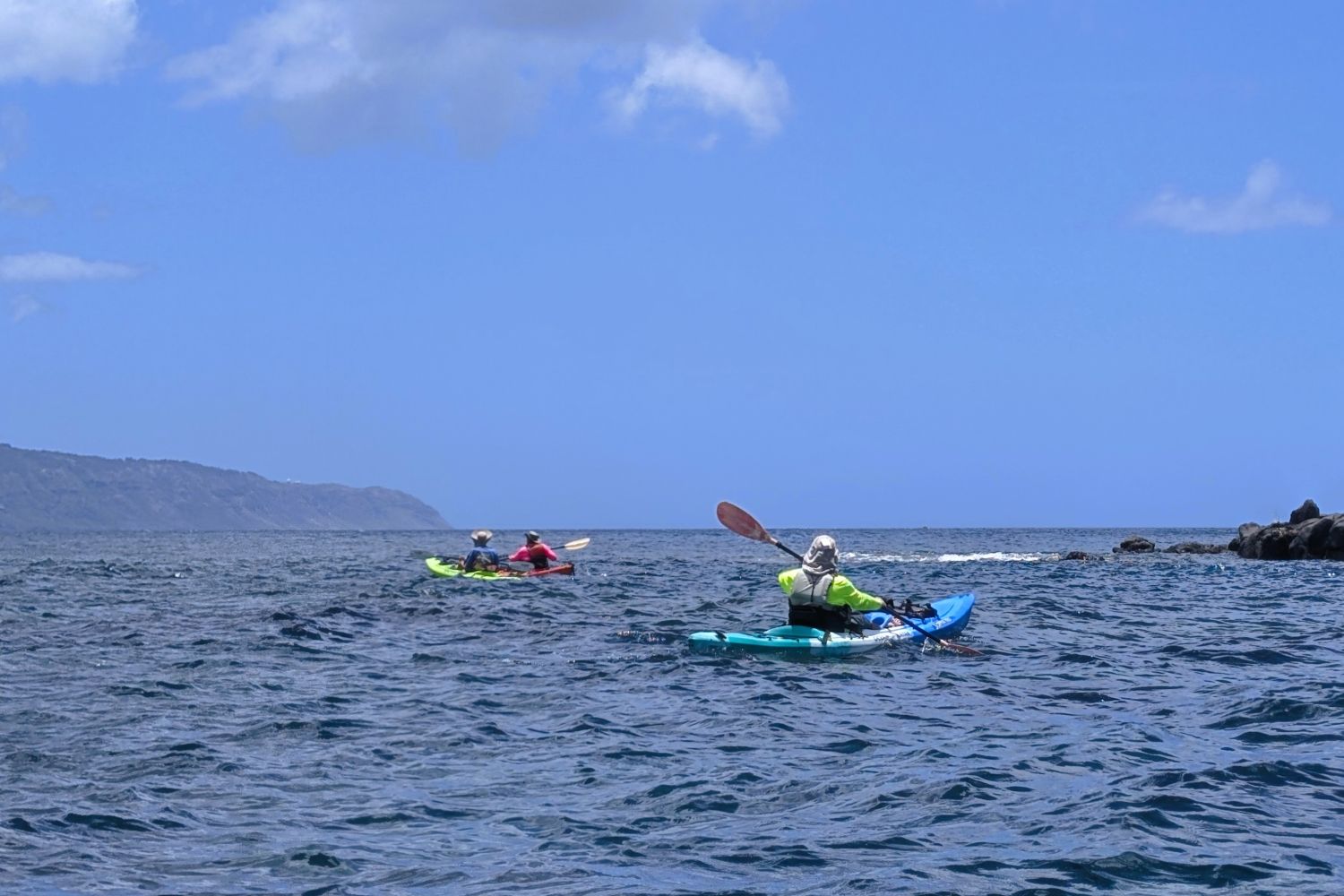
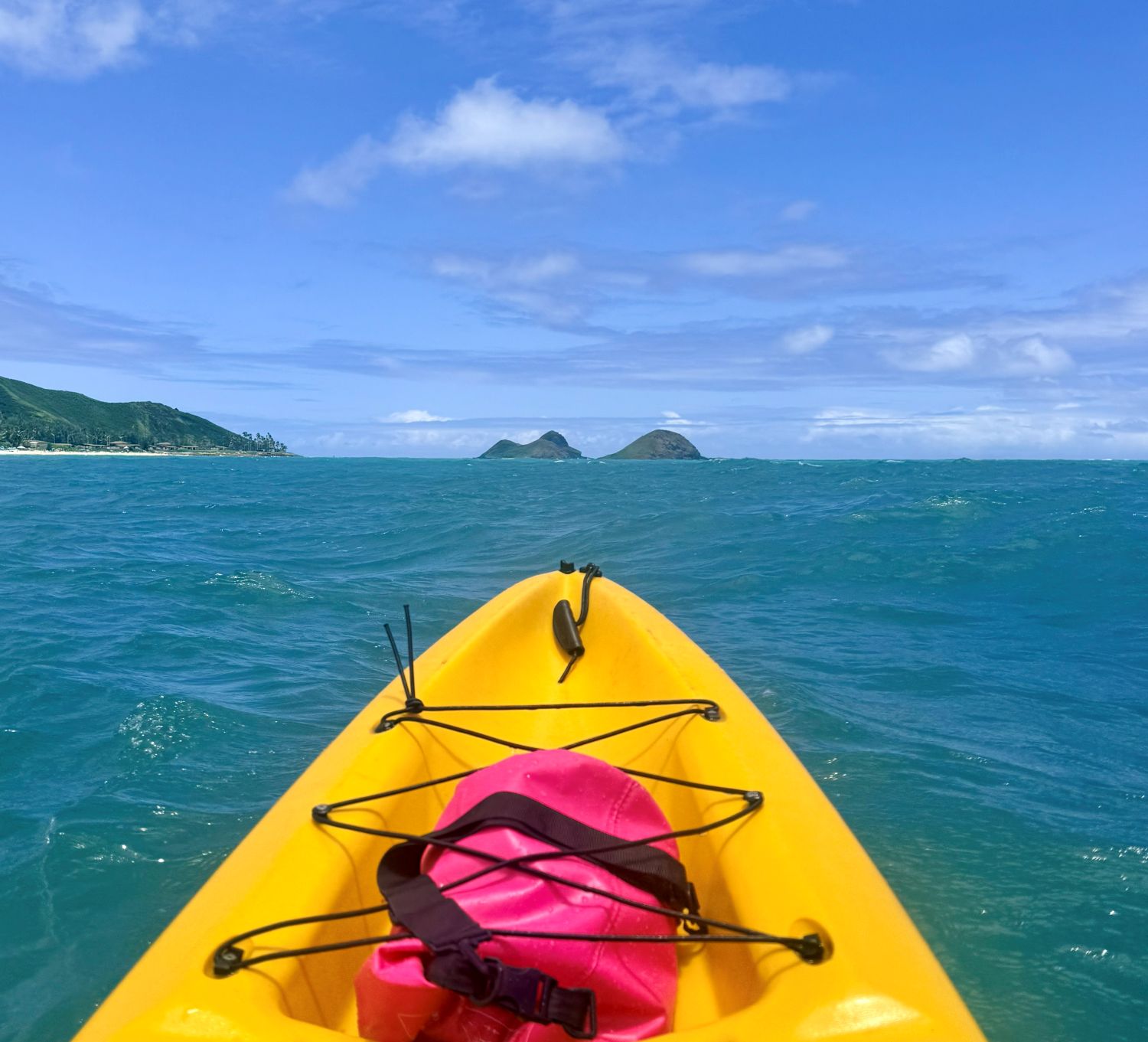
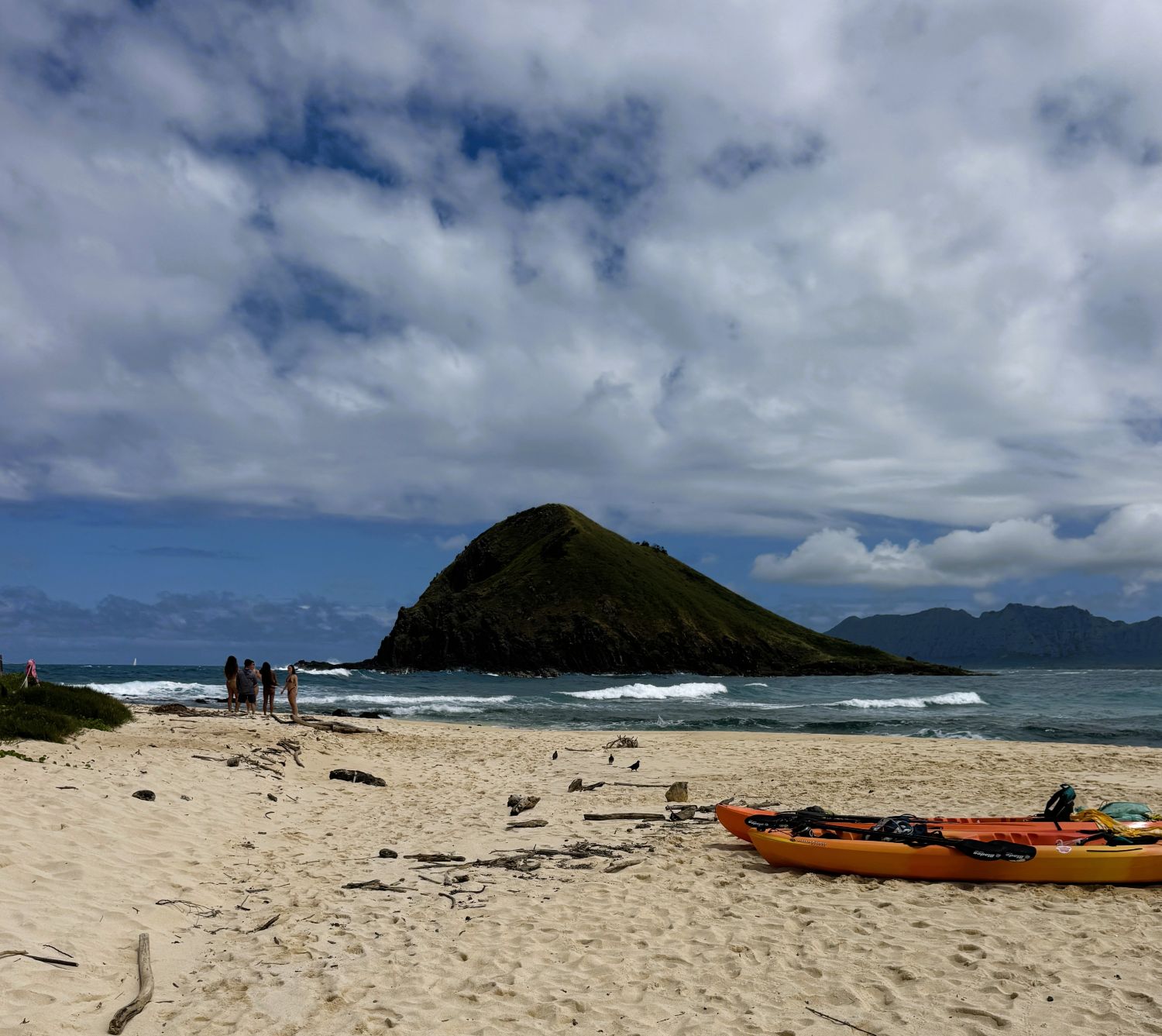
    Kayaking from Mokulēʻia to Keawaʻula Bay around Kaʻena Point treats paddlers to vistas of a windswept mountain ridge, seabirds soaring above a protected coastal plain, waves crashing against a rocky shore and if you’re lucky sightings of large honu, a cruising pod of naiʻa, a curious ‘īlioholoikauaua (“Dog that runs in rough water”, Hawaiian monk seal) or, if you’re really lucky, a splashing koholā. As awesome as this sounds, paddling this route involves planning a long, arduous carpool and careful monitoring of wind and wave forecasts to avoid dangerous conditions. Stan, a diligent paddle leader, pondered these factors for a week and decided to play it safe and switched to a round trip from Mākua to the point and back, no carpool required. 

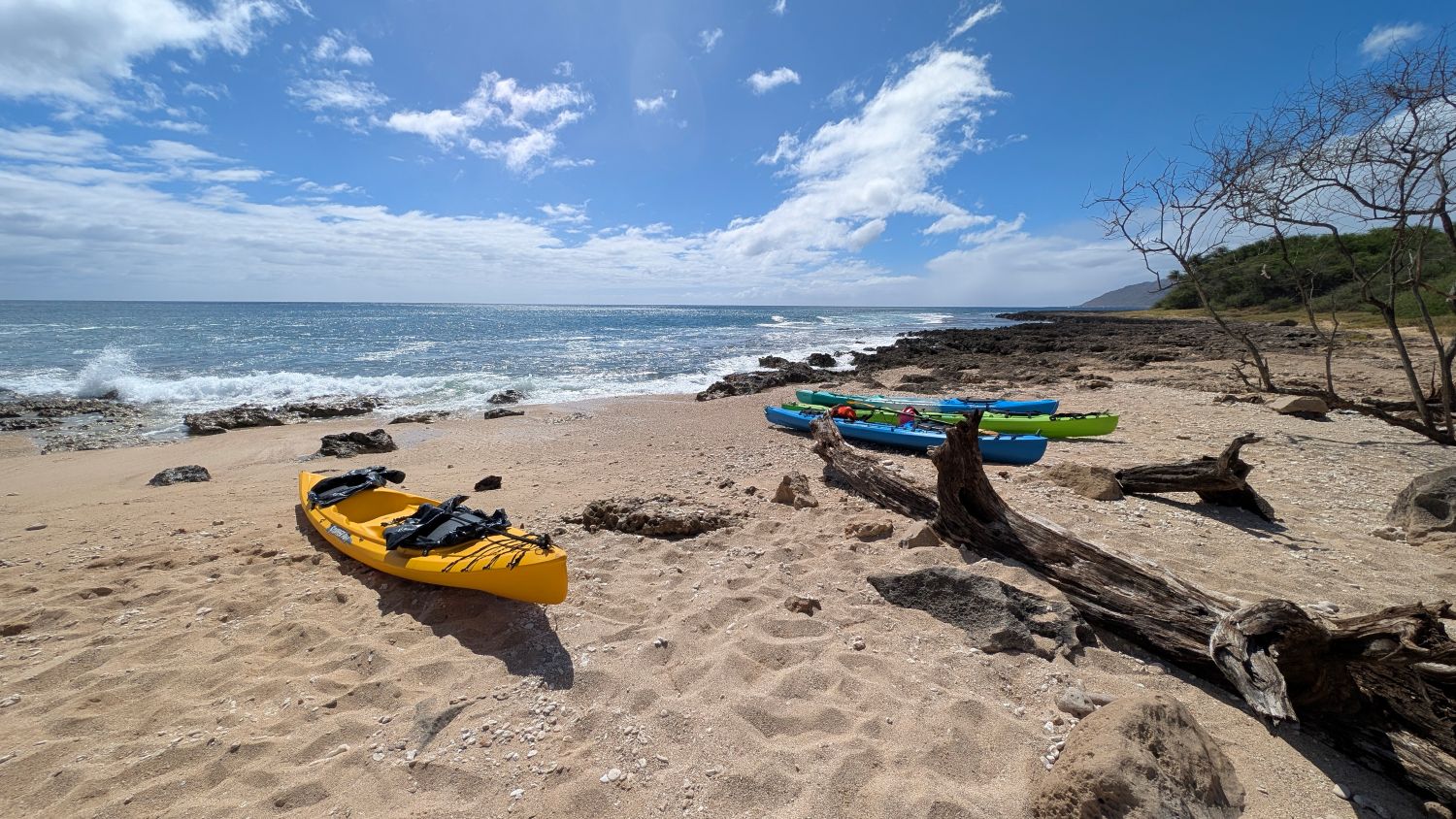
    This switch prompted several more carpool adverse paddlers to sign up, including myself. A half-dozen kayakers showed up. Even though I live the closest I was the last to show up as everyone else got there early and were almost ready to launch. I scrambled to get ready as the others studied the small shore break. The conditions looked great so everyone was eager to go.

    Stan held a brief Captain’s meeting. Steve heard an ulua calling his name so he charged out…right into a small set. He gave a great demonstration on how to wait out a set while keeping control of your kayak. This was Amy’s first shore break launch and she timed her launch much better. 

    I followed Stan out and after clearing the swells I looked up to see several dorsal fins silently arcing out of the water. I was surrounded by a large naiʻa pod! I radioed the group, who were already paddling west, about the dolphins, but I didn’t know they had been watching them from shore and had seen enough by the time I launched. So, I sat idle, by myself, enjoying the acrobatic show of the playful keiki until the pod moved on. (Watch the video on YouTube if you’re not getting good resolution)

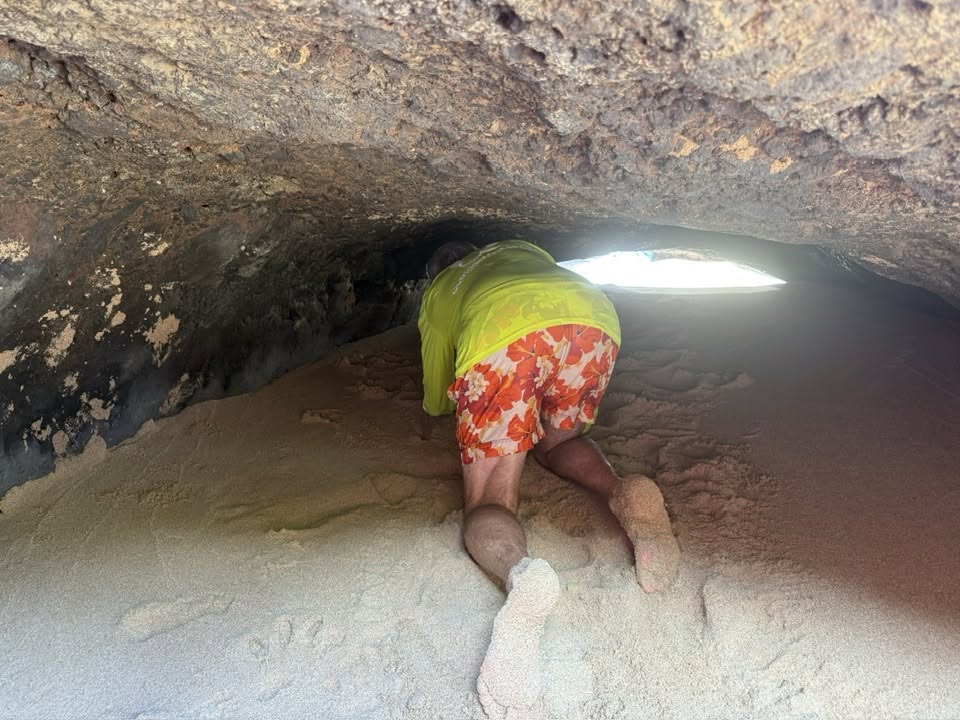
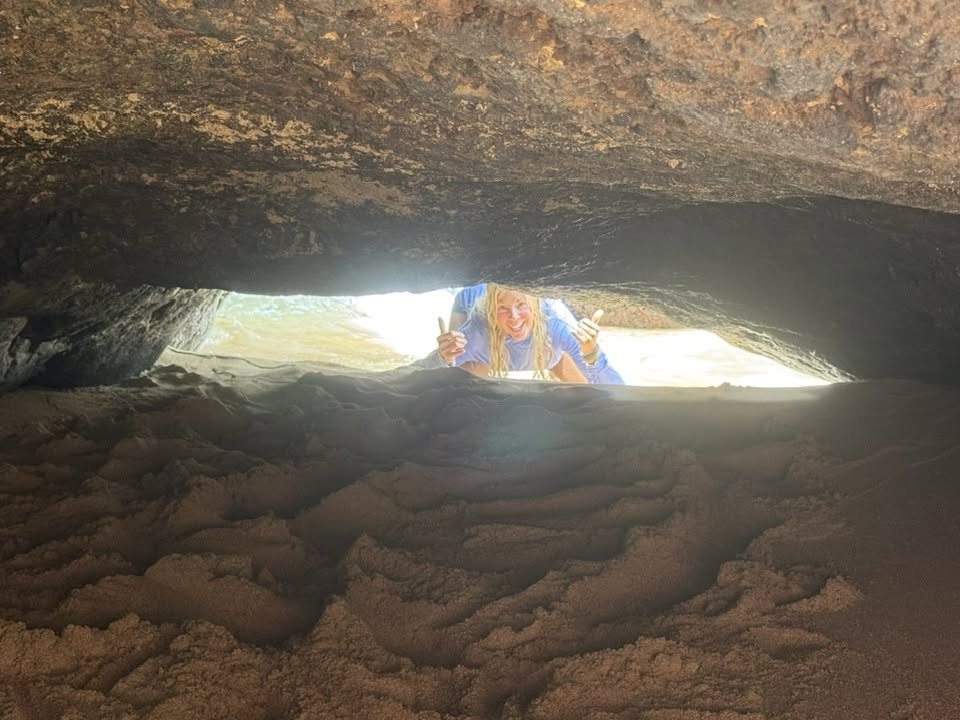
    We made good time paddling out to the point with calm water and light variable wind. I opted to stay close to shore with Stan to get a good look at the rugged shoreline. The gentle swell allowed us to get up close. At several places I thought I saw arches that I didn’t remember from hiking the coast. As I paddled past I was disappointed that they were just illusions of light and shadows that made them appear as arches from a certain angle. When I reached the big arch that everyone sees from the hiking trail I was skeptical that it was the same one. Looking at my photo afterward I was happy to see that it wasn’t an illusion.

    I spotted a white plastic jug bobbing on the surface and went to collect it as any good ocean steward would. I couldn’t simply pluck it from the water, however, as it was securely anchored in place with over a 100-pound test monofilament line. I gave it a few good tugs hoping to break the line close to its anchor, but it’s hard to generate enough force when you’re just floating in a kayak. I cut the jug free, retrieving it plus a couple hundred yards of braided fishing line. It must have been in the water for a while judging by the amount of flotsam tangled up in it. 

    I wish the state would ban this type of fishing as having this much submerged line is a danger to marine life and boaters that can get it tangled in their propellers. Earlier this year a young monk seal died after becoming entangled in a similar jug rig. This is the second time that I’ve pulled up a mess like this. The first time, I helped Sandy who ran into the fishing line with her paddle. That time, a large honu popped up behind Sandy as we were retrieving the line as if to say mahalo. This time, three large honus surfaced after I finished. (I didn’t get a photo, you’ll just have to take my word for it.) Whenever you’re paddling, if you see a jug floating on the water take the time to pick it up and if it has fishing line attached to it check to see it a fisherman is still attached to the other end. If not, retrieve as much of the line as you safely can. A honu may thank you too.

    As many times that I’ve paddled and hiked this coast it was my first time truly appreciating the scale of the old Oʻahu Railway foundation. Stan said that those foundation rocks were all manually placed. Impressive, they survived over 100 years of erosion from storms and pounding surf.

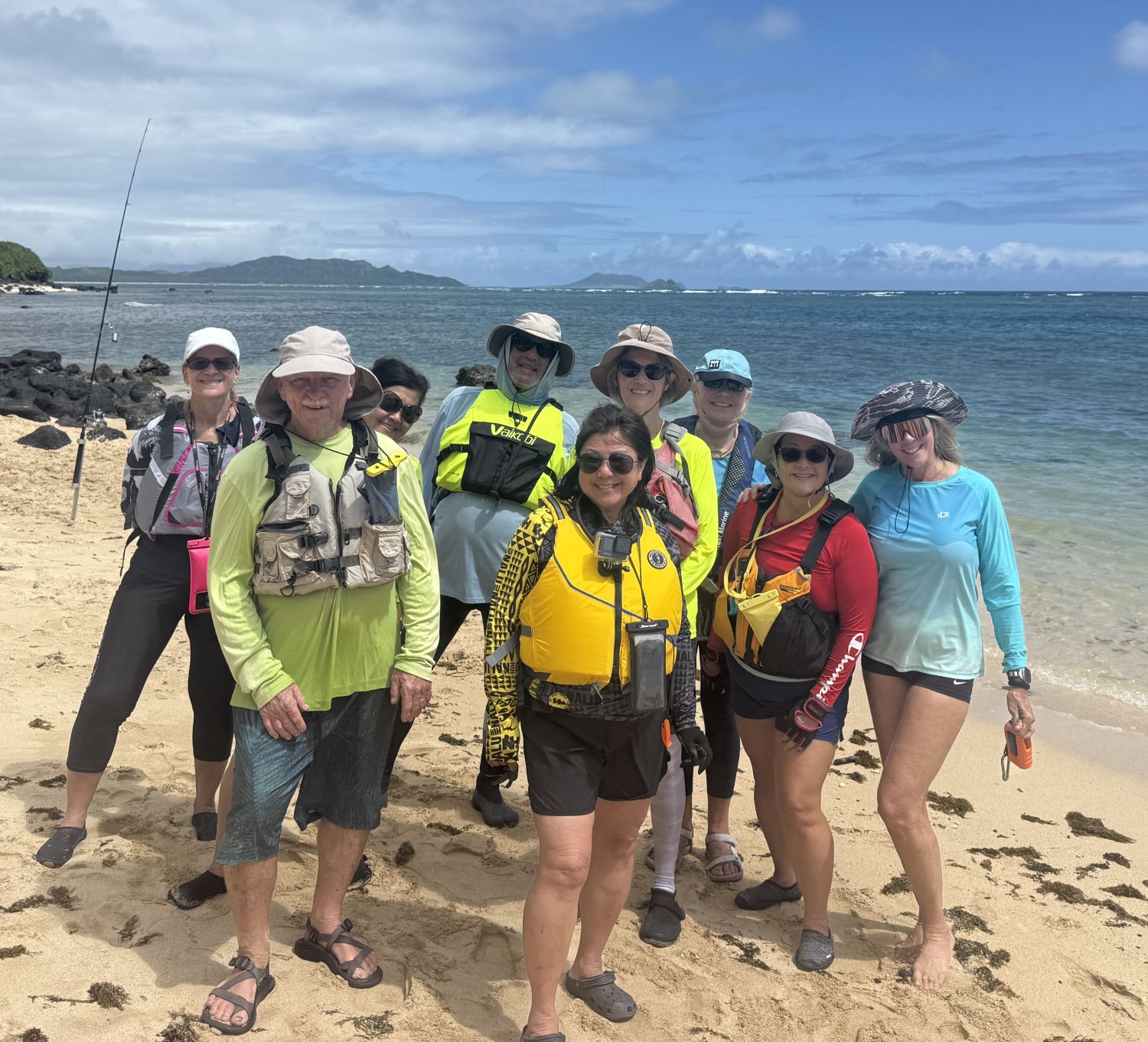
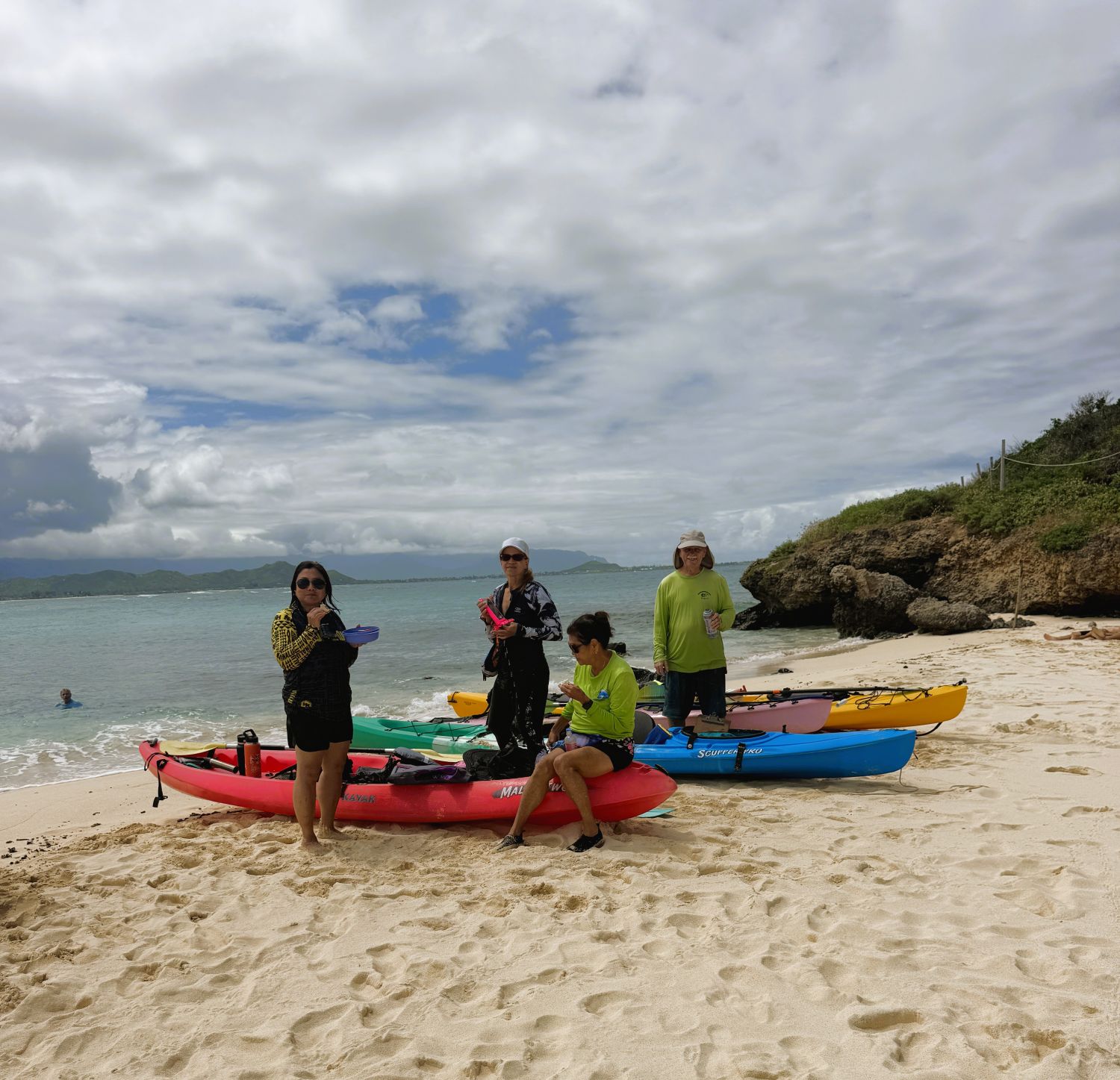
    I rendezvoused with Amy, Kelvin and Stan at the point. We took a break to soak up the breathtaking scenery and surmised that we could probably paddle to Mokuleʻia with the conditions that day. I herded them together for a group photo.

    As we began the return journey, we realized that the current has carried us a long way from the point. We felt it too, as it was slow going to get back to the point. I looked at my GPS track after the paddle and we had drifted almost a mile beyond the point! Maybe not the best place to take a long break unless your destination is Kauai.

    We managed to get spread out far apart on the return leg. Our unintended separation demonstrated the value of everyone having working VHF radios as we were able to keep track of each other and ensure that the less experienced kayakers returned safely. Congratulations to Amy for completing her first long distance paddle and to Kelvin who made it back unassisted even though he was running on empty! Mahalo to Stan for making the switch to a round trip so that more of us could experience this incredible journey!

  • Gear Review – Outex & Pelican Phone Cases

    Gear Review – Outex & Pelican Phone Cases

    Review by Terry Shimabukuro

    October 5, 2025

    Every kayaker should have a good waterproof case for their cell phone so they can safely carry it with them when they paddle. Having your phone with you to make a call in an emergency is a must have. Many of us also like to take photos or videos with our phones while we’re paddling. Ideally, you want to be able to do this without removing your phone from its case. Several of you asked me about my Outex phone case that has a big glass port for the camera. I’ve been using this case for a few months and in this review I’ll compare it with my previous case from Pelican that has a clear plastic camera port.

    Outex makes waterproof housings for full size cameras, lenses and phones. They sell their products directly from their website. Their Phone Pro Kit costs $149. The kit includes a case, made from durable silicone, a lanyard and a three-piece optical glass port. Some assembly is required to use this case. Your phone enters the case through a large circular opening in the upper corner. The silicone case material is tough and durable, but it is a little sticky so my phone doesn’t just glide into place. It take a little pulling and wiggling to get it fully inserted. The optical glass is permanently mounted in an aluminum ring with external threads. The glass port fits into the circular opening and is sealed tight with a thin clamping ring and an internally threaded outer ring. It takes a little practice to get the rings properly seated and securely closed.

    You’ll notice that my Pixel 8 Pro phone is a little too long for the rectangular pocket in the case and is slightly canted. The extra length doesn’t affect the proper location of the cameras in the port, but it does affect touch screen operation at the top of the screen. The rectangular pocket is 150 mm long so if your phone is shorter than this it should fit completely in the pocket.

    I had a thin-film screen protector on my phone, but I had to remove it to use the touch screen while installed in the case. I also have to set my phone touch screen sensitivity to the screen protector mode. While the touch screen works, it sometimes it requires a repeated tap or pinch and zoom to get the desired result. The sides of the case are pliable enough that you can push the side buttons on your phone if needed.

    This case will not float with the weight of your phone and glass port. You will need to attach flotation to the lanyard if you want to make sure your phone doesn’t sink if accidentally dropped overboard. If it does sink, it is waterproof to 10 meters (33 feet) making it suitable for snorkeling and shallow diving.

    My Pixel 8 Pro fits comfortably in the Pelican XL Marine Waterproof floating pouch. I previously had the regular-size Pelican pouch and my phone fit, but just barely. The extra room in the XL-size pouch allows me to put my phone in without removing it from its case. You can get a two pack of these cases for $28 from Amazon. You could buy 10 Pelicans for the cost of a single Outex!

    To use this pouch you just open two levers and slide your phone in with the cameras facing the smaller window. The windows are clear plastic. To seal the pouch you just put the levers through their slots and rotate them closed. It doesn’t take much force to close or open the levers. When closed, the levers are flush with the hard plastic closure and I’ve never had a lever open accidentally.

    Like the Outex case, you can operate the touch screen and side buttons with the phone sealed in the case. Also, like the Outex, you may have to repeat your tap or pinch and zoom to get your desired result.

    A unique feature of the Pelican pouch is sealed air cushions around the edges. This allows the pouch to float with a phone inside without additional flotation. The waterproof rating is IP68 which means it protects from dust and can be submerged up to one meter (3.3 feet) for at least 30 minutes. So, you can use it for underwater photos while snorkeling at the surface, but you can’t dive with it.

    Now, let’s take a look at some comparison photos to see the difference between shooting through an optical glass versus a clear plastic window. All the photos were taken by me with my Pixel 8 Pro, but they were taken on different paddles in different locations. The photos are have not been edited except for minor cropping and they are not at full resolution as they have been resized for viewing on the web.

    In this medium range shot of kayakers under a sunny sky there is not much difference. The Outex shot may be slightly sharper, but not by much.

    Again, not much difference in these medium range shots under an overcast sky.

    Still not much difference in these closer shots of solo kayakers under cloudy skies. Maybe a slight edge in sharpness to the Outex photo.

    In these close range shots under sunny skies you do see some blur in the Pelican photo. The haze in the background and shadow on the kayaker’s face exaggerate the difference between these photos, but I think the Outex’s improved quality shows here.

    One thing I didn’t show are spoiled photos that I took with the Pelican case due to smudges or water on the plastic window, blurry images and images with unwanted light streaks. I’ve had a few spoiled photos with the Outex, but much less than with the Pelican.

    You can take good to excellent photos and videos with both of these cases. Many other factors go into ocean kayaking photography like composing a photo of a moving subject while seated in a rolling and pitching platform, the position of the sun and seeing through the glare on your phone screen in bright sunlight. Mastering these other factors are much more important to getting a good photo than having a clear window to shoot through.

    Photos through the Outex’s glass port will be sharper, but will probably not be noticeable on most mobile devices. Unless you plan to display your photos on larger screens or print enlargements I don’t think you’ll see the difference. As long as you take reasonable care of the Outex case I expect the glass port to remain clear and scratch free for a long time. The Pelican’s plastic window is much more susceptible to scratches, creases or discoloration, but you could replace your Pelican case nine times for the cost of one Outex case.

    If you’re a discerning photographer that wants the best out of your on-water photos (perhaps to win a Christmas photo contest) it may be worth the extra cost, weight and additional assembly time of the Outex case. But, if all you want are snapshots to remember your paddling experiences the Pelican or other cases like it should suffice. I haven’t tried taking any underwater photos with the Outex, but its 10 meter depth range would be another plus for those of you that dive that deep.

    For myself, I’ll use the Outex case when I go on a paddle where I hope to take a lot of scenic or action photos. For more routine paddles I’ll go with the simplicity of the Pelican pouch.

  • Summer Solstice Meet & Greet 2025

    Summer Solstice Meet & Greet 2025

    Story by Terry Shimabukuro

    Photos by Ruby & Terry Shimabukuro

    June 21, 2025

    Technically the solstice was the day before, but we planned our Summer Solstice Celebration on a Saturday so that the working folks could attend. We didn’t think a one second shorter day would matter to anyone. I chose a new event location, the Kalanianaʻole Beach Park, because it had a good picnic area, a convenient restroom and shower, an easy beach launch and lots of parking. Unfortunately, that day coincided with a couple of large family events that brought hundreds of people to the park. The picnic grounds and beach were packed!

    There was a bit of chaos unloading kayaks and gear in the full parking lot. We hastily unloaded while double parked and drivers scrambled into a spot if one opened up. Luckily, we did have lots of room at our picnic site to stage all the kayaks. Sixteen kayakers showed up and another half dozen guests came just to picnic. The beach was filled with afternoon swimmers forcing us to launch single-file to carefully dodge all the bobbing bodies in the water. We made it through the gauntlet without incident.

    Norm led us to the Kahe power plant warm water outflow. The wind was a bit stronger than forecast, but the ocean was calm and everyone, including three beginners, made it without issue. Norm dropped an anchor and a few paddlers tied off to snorkel.

    I stayed with tandem kayakers Mariah and first-timer Aiko. I tethered their kayak to mine so we could snorkel. Aiko, without warning, jumped into the water. Unfortunately, she must have gotten too high on her dismount and they hulied! We quickly righted the kayak and I helped Mariah get back on. She was fine, but soon noticed that the clip holding her waterproof phone case to its lanyard had released and her phone was gone. Her case didn’t float so down it went. The wind pushed us quite a distance from where they hulied so Aiko and I couldn’t find it by snorkeling. Mariah bid a sad farewell to her phone along with thousands of unbacked up photos and videos (more on her phone at the end of the story).

    Most of the non-snorkelers just paddled around the outflow enjoying the scenery. Stan took the opportunity to practice reentry using a paddle float and somehow he got separated from his kayak. He called out to me for assistance as he was floating on his paddle float. By the time I reached him Marie was already paddling hard toward us towing Stan’s kayak. Marie gets credit for her first kayak rescue!

    As we gathered just before heading back a small pod of naiʻa (spinner dolphin) gave us a brief show. I didn’t see any aerial acrobatics, they just swam in our vicinity surfacing now and then. We surmised that they were waking up from their daytime slumber getting ready for their nightly feed. Sorry, no dolphin pics you’ll have to take my word for it.

    There were still a lot of swimmers in the water when we landed so we had to carefully paddle through them. We got a workout dragging our kayaks up the steep beach. Alan didn’t paddle, but he came down to the beach and provided some much appreciated muscle hauling boats. A young bystander volunteered to help carry my kayak and Monte’s back to the grass. Great to see the aloha spirit alive and well!

    Hungry from our workout, our stomachs rumbled at the aroma of food on the grill as the grillmaster, my cousin Macky, got things cooking while we were paddling. The picnic table overflowed with a great variety of potluck dishes and everyone settled in as the sun began to set.

    Low clouds and heavy vog led to an underwhelming sunset. The sun didn’t really set, it just disappeared. Still, it made a pleasant end to the second longest day of the year. Everyone went home with a full belly and memories of another great Hui paddle.

    Back to Mariah’s phone…Aiko texted me on Monday asking for the approximate location where they hulied. She reached out to the local diving community to see if anyone would be willing to look for Mariah’s phone. Amazingly, a diver found it and Mariah had her phone back on Tuesday in perfect working condition! More aloha spirit in action. How’s that for a happy ending!

  • Tracks to Pokai 2025

    Tracks to Pokai 2025

    Story and photos (except as noted) by Terry Shimabukuro

    May 18, 2025


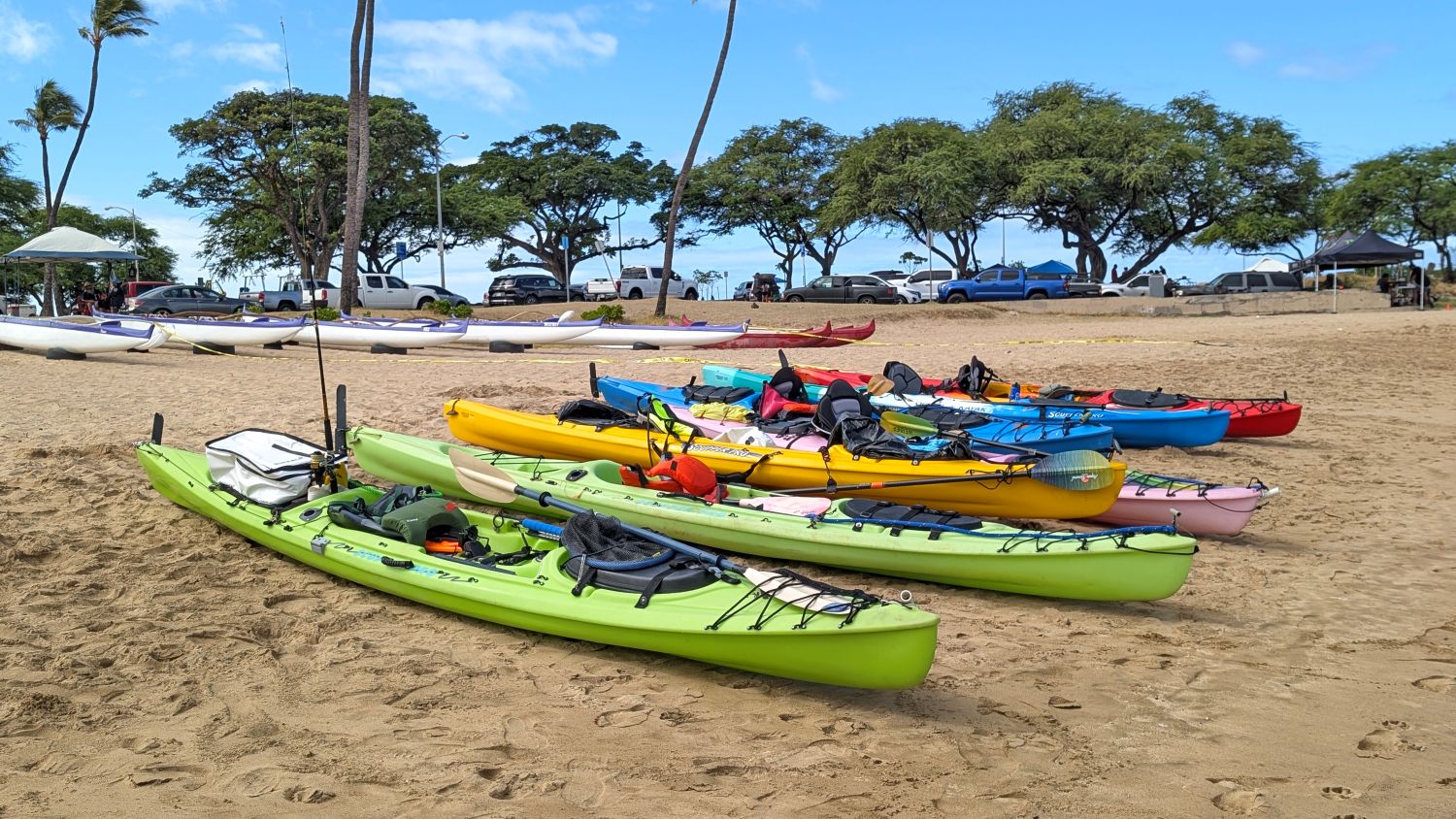
    As I watched over seven kayaks waiting for their owners to return from the carpool to Pōkaʻī Bay I kept scanning the ocean for naiʻa, Hawaiian spinner dolphin, that frequent the leeward coast. I saw some splashes near the Kahe power plant discharge outlet and noticed that a tour boat stopped short of the outlet so I surmised that a pod might be there. I didn’t have my binoculars so I couldn’t confirm my sighting, but it gave me hope that they might cruise past us on our paddle.

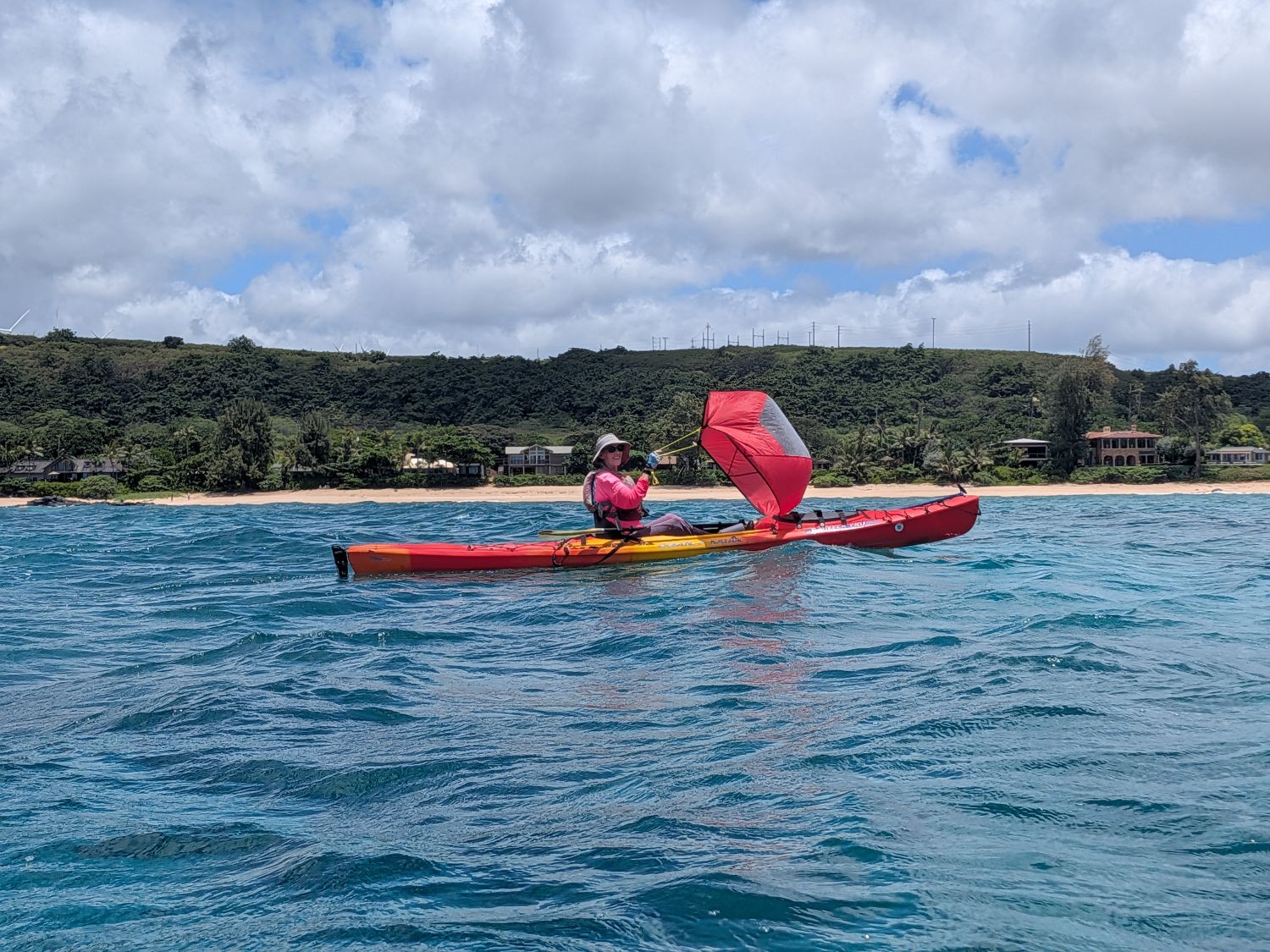
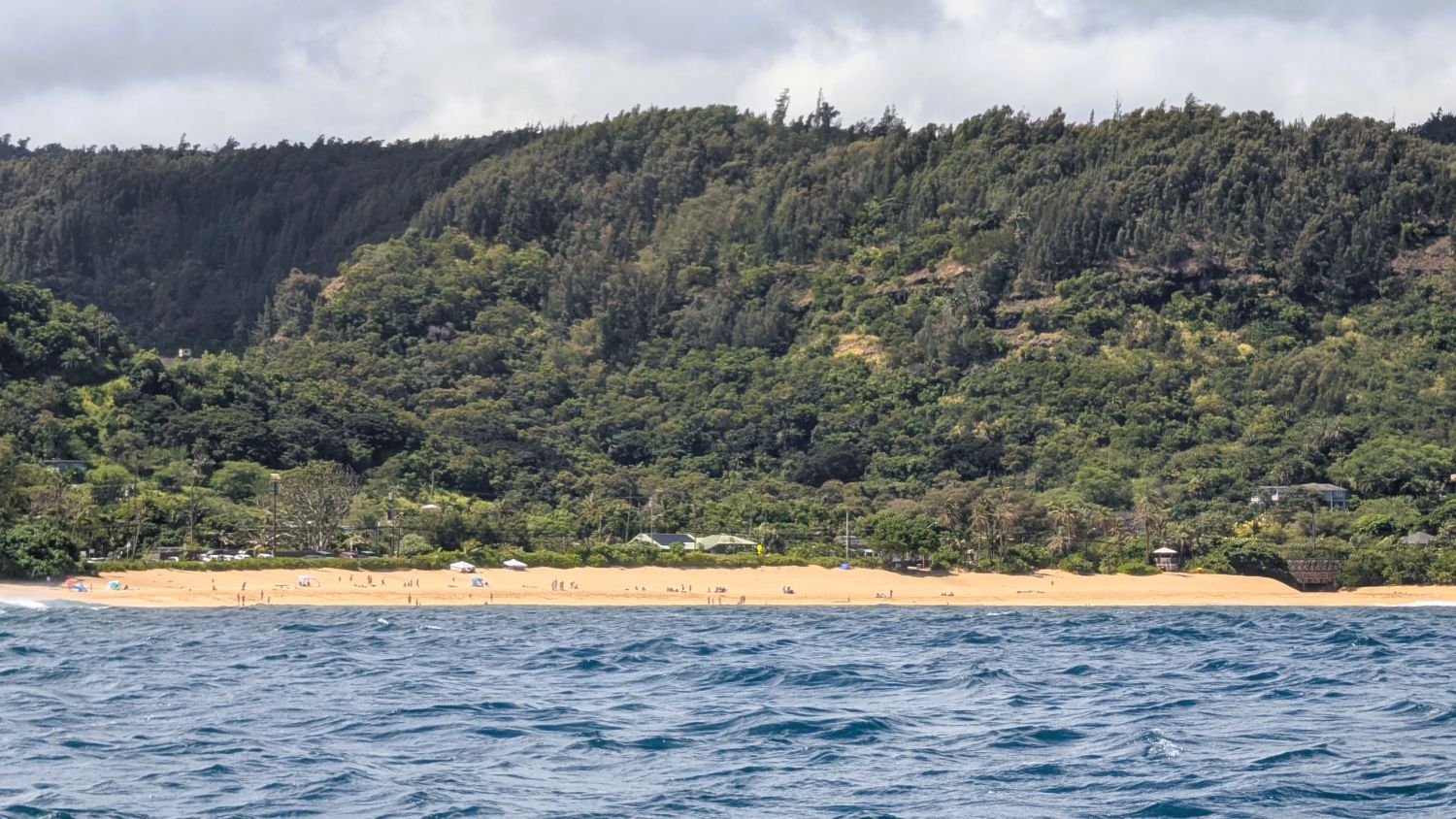
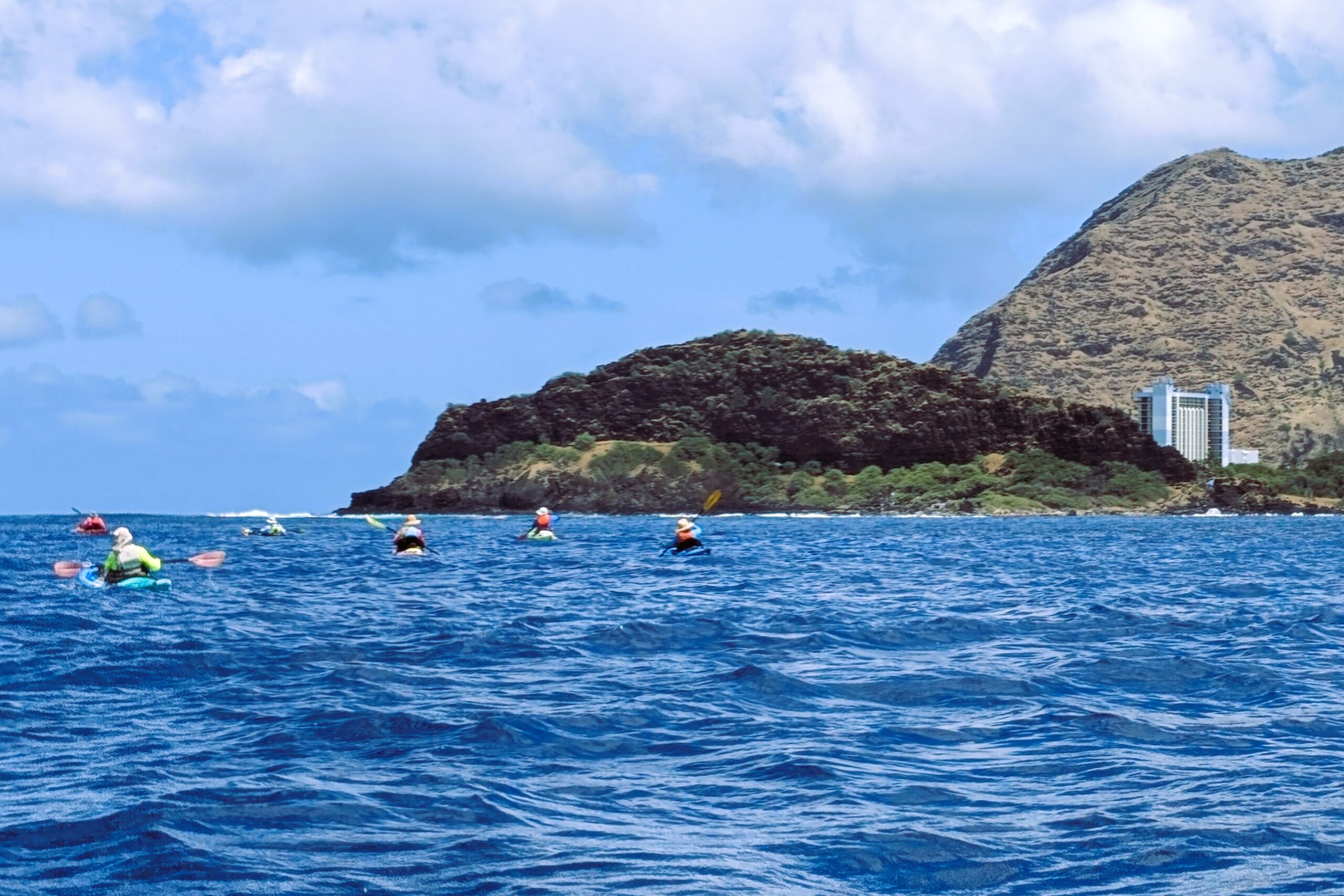
    With almost no shore break we all launched off the steep beach without incident. A light tailwind aided us as we began the journey up the coast. I paddled in close past Mermaid’s Cave to Kalanianaʻole Beach Park to show the group where we’d be launching from for the upcoming Summer Solstice Meet & Greet. A flotilla of six enjoyed peering into Nanakuli valley while stroking steadily through the calm water toward Puʻuʻohulu (Maʻili Point). The seventh kayaker, Norm, lagged behind a little as took the time to reel in a small uku (grey snapper).

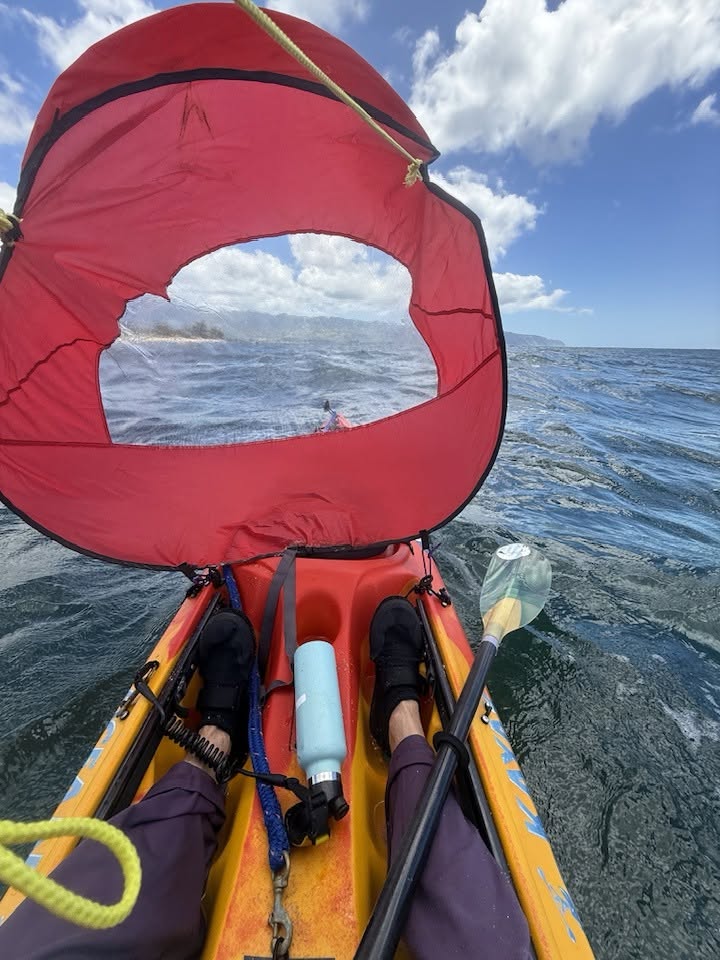
    There was no surf at Maʻili Point so we rounded it close enough to see hikers up at the pink pillbox on top of the ridge. We took a short break at the point and let Norm catch up with us. We began the second half of the paddle and soon rendezvoused with Paul and Victoria who launched their tandem from Pōkaʻī. About a mile or so from our destination the wind direction changed and we now paddled into a headwind. The wind strength picked up as we got closer to Pōkaʻī turning the last mile into a real slog.

    The naiʻa never showed, but as we pulled into the bay a shark warning blasted over a loudspeaker. None of us saw the shark, but the ocean safety jet ski was zipping around the bay warning swimmers.

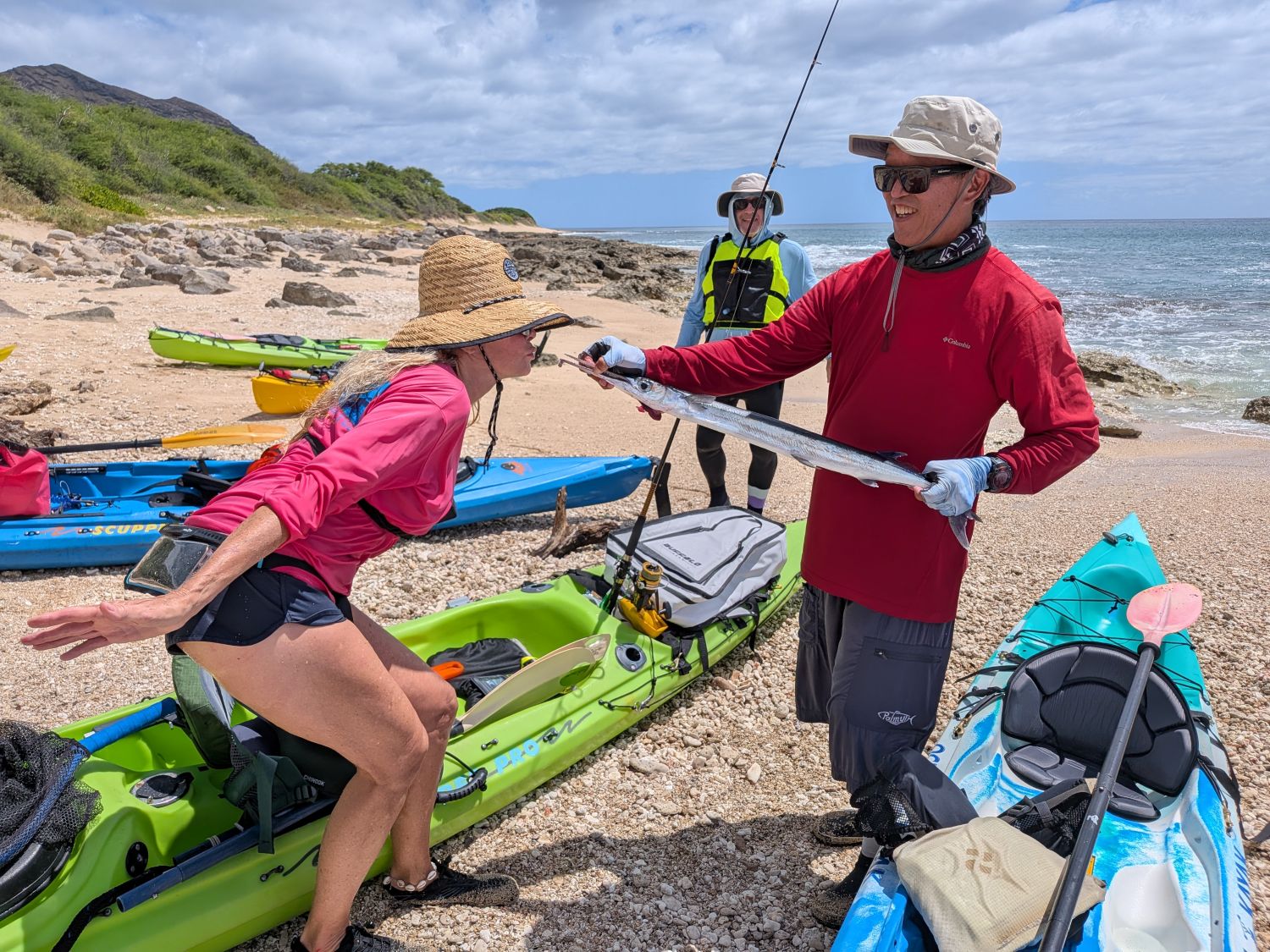
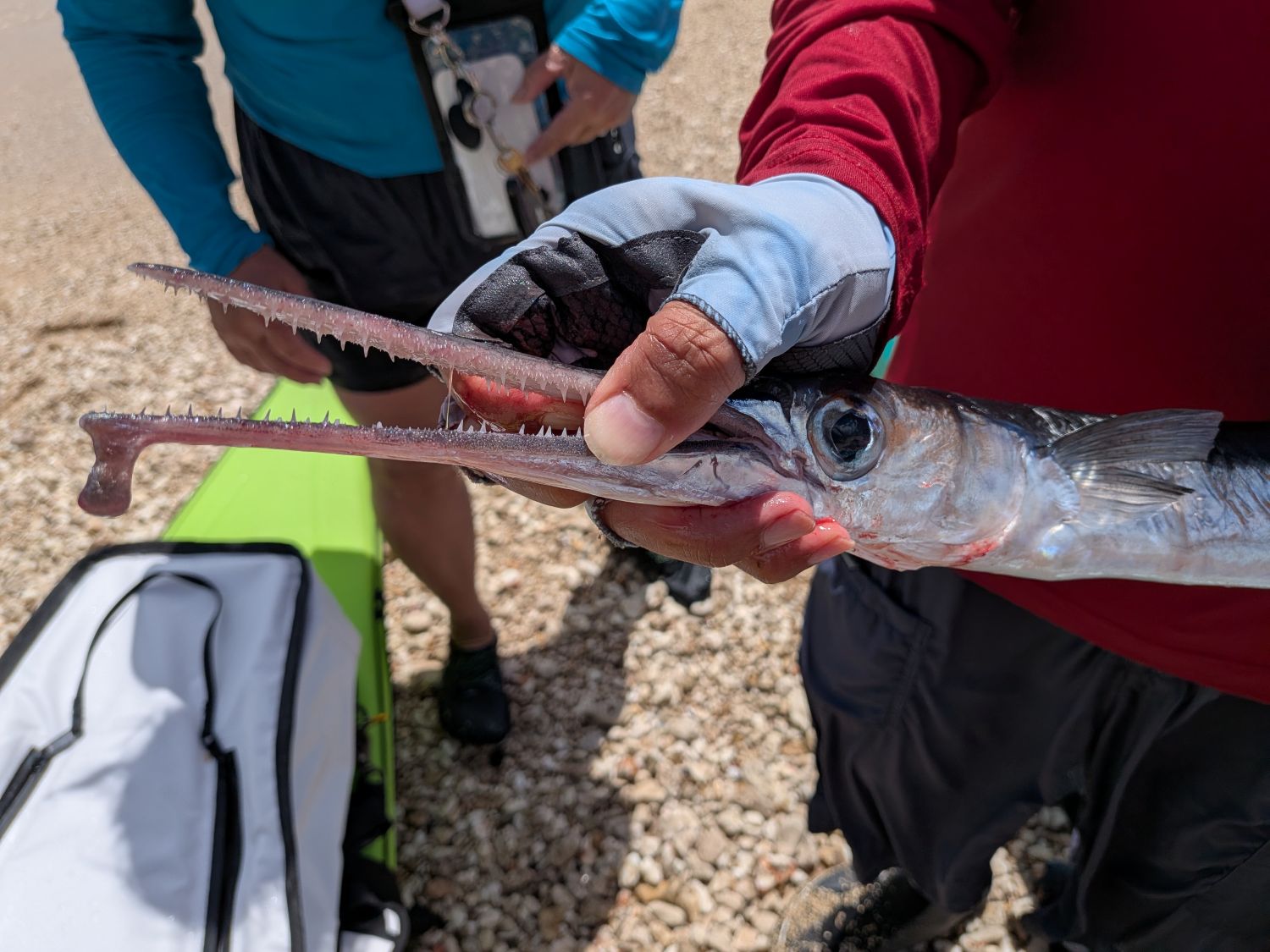
    Norm pulled in last with a total of two uku and one omilu in his fish bag. He later told me that Ed Rhinelanderʻs spirit was with him on this paddle as he caught the fish on frozen oama that Ed had given him years ago.

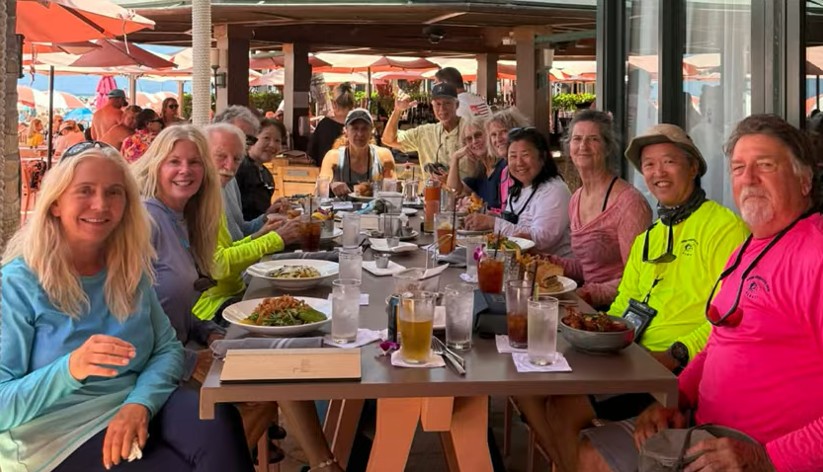
    We enjoyed a nice post-paddle picnic and congratulated Sandy on completing her circumnavigation of Oʻahu a few weeks earlier. Paul brought magnum of bubbly that he had been saving almost ten years waiting for someone to complete their holopuni. Unfortunately, there was no pop when uncorked and it was undrinkable. Luckily Sandy had her own bottle on ice and we properly toasted her accomplishment. Cheers!

  • Easter Camp 2025

    Easter Camp 2025

    Story by Terry Shimabukuro

    Photos by Terry except as noted

    April 11-13, 2025

    Ruby and I pulled into a nearly empty parking lot at Kualoa Campground A to be greeted by a mama duck and her large brood of fluffy ducklings. We hoped that the sparse crowd meant that the large group campsite would be unoccupied for the weekend. Tim had arrived a little before us and he quickly dashed that hope as he told us that one of the park workers said it would be a full house with the Boy Scouts occupying the large group site. (They also told him that mama duck was named Aflac.) Oh well, at least the Boy Scouts would be quiet neighbors and we got a good parking spot.

    We quickly setup club HQ under a small beachside ironwood grove. With the steady beach erosion, as evidenced by several ironwood stumps below the high tide mark, I wondered how much longer this little grove would survive. We’d enjoy it’s shade at least one more year. An unfortunate confluence of club members on travel, a few battling colds and those turned off by a not-so-rosy weekend weather forecast resulted in a sparse number of campers. The Hui’s petroman and I watched a beautiful Saturday sunrise in relative solitude.

    On Saturday, after the main gate opened, people began to slowly arrive for the paddle to Kahana. While breezy, the wind had dropped below advisory levels and seven paddlers showed up for the journey. Stan Dalbec was able to get our new club banner printed just in time for camp and he delivered it before paddling off. Mahalo for taking care of this Stan! Unfortunately for Stan his paddle was cut short by a nasty wave that dumped him and cracked his hull. I won’t go over the details in this story, but his experience validates our advice to always paddle with a buddy.

    One of the reasons we held camp the weekend before Easter Sunday was to take advantage of the full moon. Norm was going to lead us on a Saturday twilight paddle around Mokoliʻi under the magical light of the full moon. Pakaʻa, the Hawaiian god of the wind, had other plans, however, as he summoned a strong, steady wind along with a thick cloud cover that lasted most of the afternoon and into the early evening so we had to abort the paddle. Pakaʻa might have been hanging out with the trickster Maui as the wind calmed back down soon after we finished dinner and the mahina began to play peek-a-boo.

    Conditions were just right for a nice campfire courtesy of Kelly and James. James, a Washington state transplant, had his first taste of fire-roasted papio that he caught right in front of camp an hour or so before. Ono!

    While the campers were sparse, we had a good turnout for Sundayʻs activities. About a dozen people attended Kevin and Joeʻs “Introduction to Kayaking” clinic. The clinic ended with a good session of kayak reentry practice on the water.

    One of the nice things about Easter Camp is that several of our long-time members who no longer attend regular club paddles show up for the Sunday festivities. One of those members is Susan Girard who created our kayak paddle wielding petroglyph man logo in crayon on a t-shirt silk screen in 1983. Susan still looks forward to pumping up her inflatable to chase down Easter eggs.

    Around twenty boats scrambled on the water to hunt for floating Easter eggs. This was our inaugural hunt with decorated wooden eggs and there was a question of whether they would float high enough to be spotted from a kayak. The answer was a resounding, “Yes!”, as 119 or 120 eggs were recovered. As people filled their plates from the potluck buffet President Bill began awarding prizes. The club’s first president, Mark Rognstad, scooped up the golden egg and claimed a large dry bag for his prize. The silver and bronze eggs were found by my neighbor’s daughter and a friend. They received bonus chocolate Easter bunnies to go along with their kayak gear prizes.

    Mahalo to Tim for leading the Kahana paddle and for scattering the eggs, Stan D. for getting our new banner made, bringing the paper goods and for providing a dramatic moment, Kelly and James for the warming campfire, Kevin and Joe for another excellent clinic, Bill for getting and distributing all the prizes, everyone who decorated wooden eggs, Sandy for signing in all the egg hunters, Ruby and Katrena for setting up the potluck, Katrena for bringing garbage bags and for storing the eggs for next year, everyone who brought tables and canopies and those who helped with cleanup and breakdown. A great team effort by all!