Hui Waʻa Kaukahi

Nui a lehulehu na mokupuni, ʻaʻole lawa ka manawa

So many islands, so little time!

Author: Susan Wilcox

  • Saluting the Sun at Summer Solstice

    Saluting the Sun at Summer Solstice

    Story by Susan Wilcox (with plenty of help)

    Photos as credited

    June 20, 2026

    On some paddles, you go farther than others. Some paddles, maybe you don’t go far at all. It still counts for a few moments on the water. That’s my take, and I’m sticking to it.

    I was excited about the Summer Solstice Meet and Greet on Saturday, June 20 at Haleʻiwa Beach Park. The Meet and Greets are always so much fun — an easy paddle followed by good conversation and fabulous food. I was especially excited because Haleʻiwa Beach Park is home base for me, paddling-wise. It’s where I launch trips up the Anahulu River, the only place I feel safe kayaking solo.
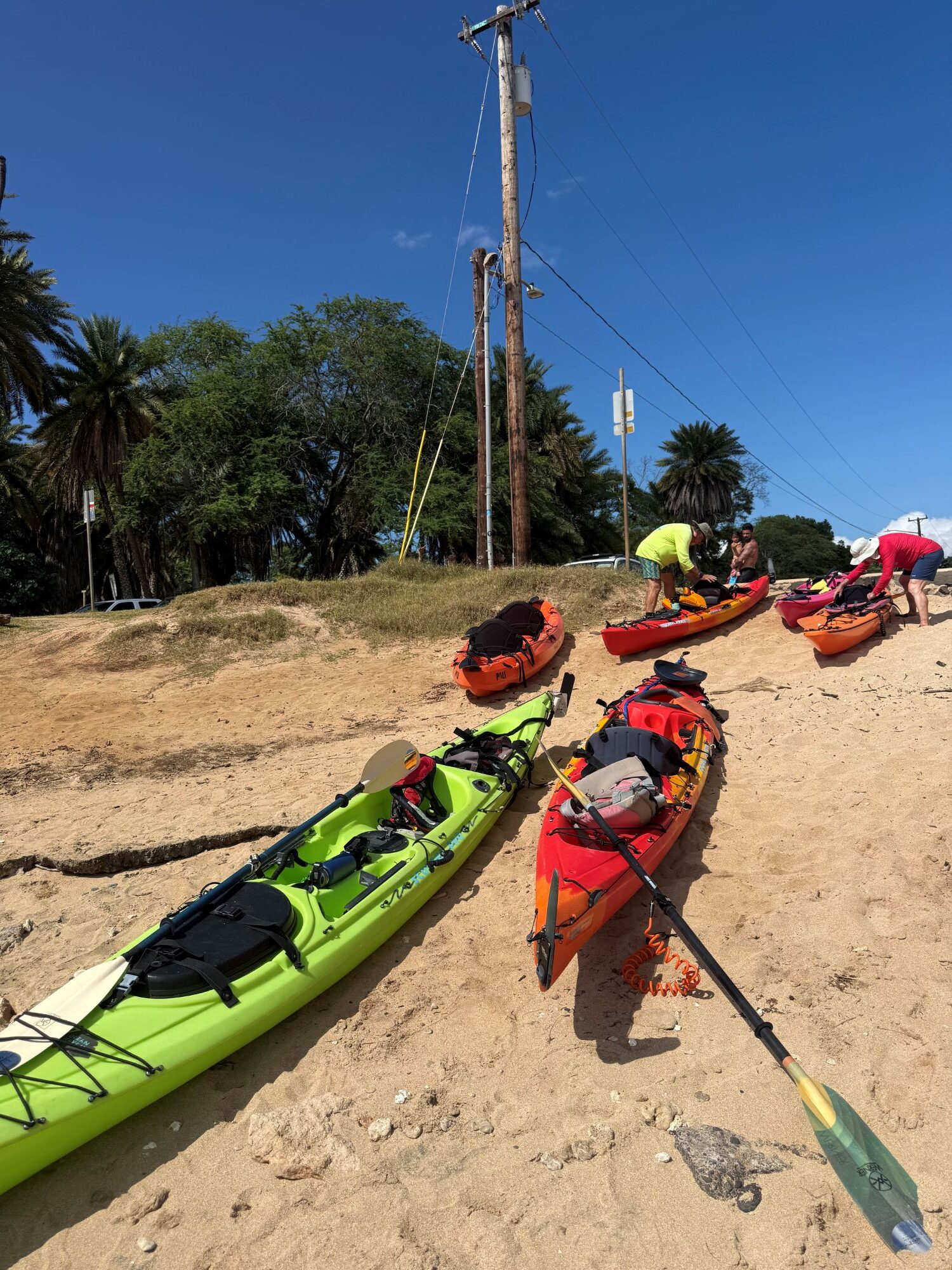
    Kayaks on the beach before launch
    Launch prep – photo by Sandy
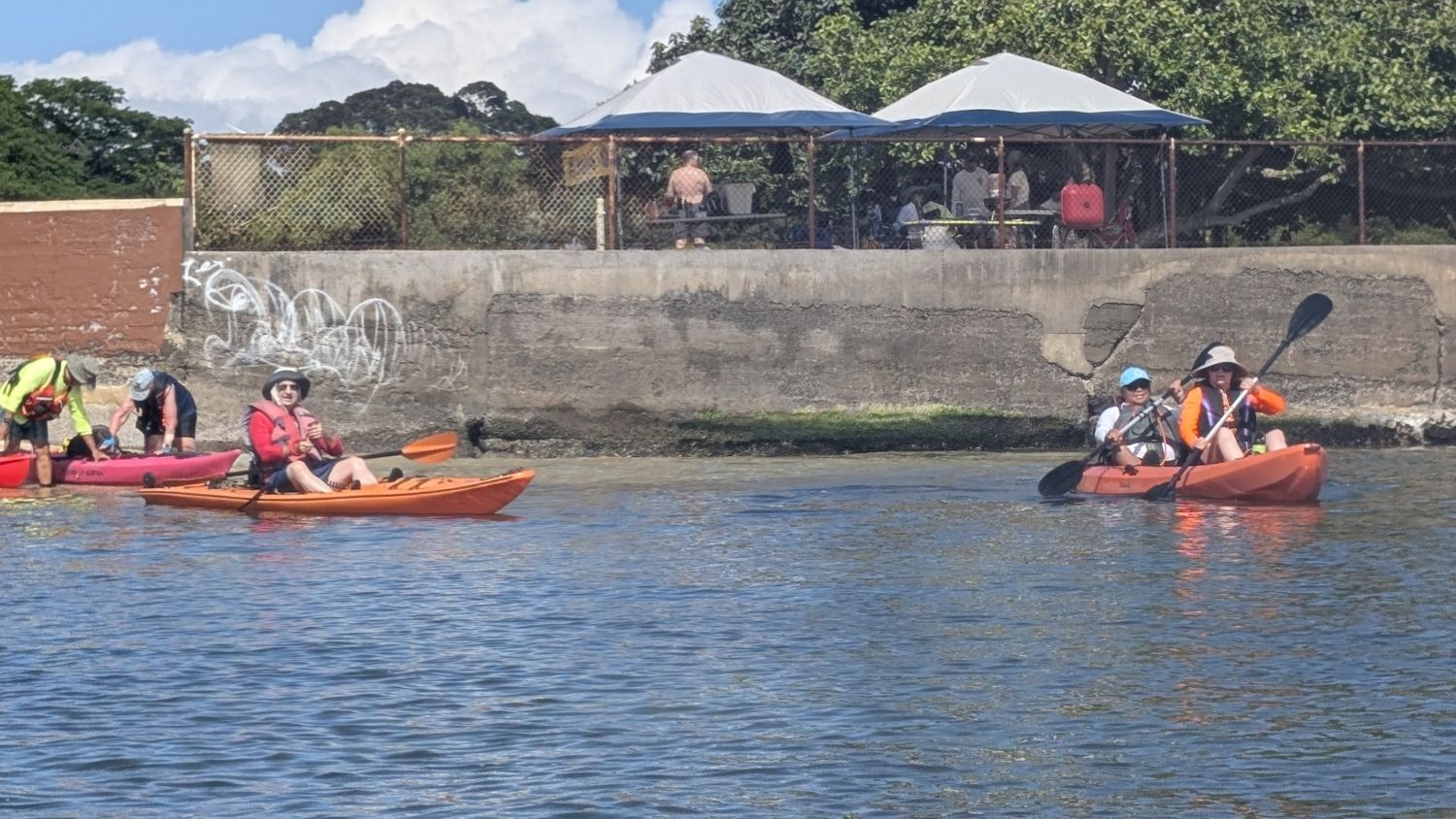
    Three kayakers just after launch with picnic canopies behind them
    Barry, Clarice & Ramon leave the beach – photo by Terry

    But this time, with the club, the paddle would be in the opposite direction, toward Laniakea! I’ve really, really, really wanted to go in this direction. A LOT! But I don’t venture onto the open ocean alone because I’m not experienced nor fit enough for possible trouble. And trouble is always brewing, even when it’s a beautiful, flat, sunshiny day on the North Shore.
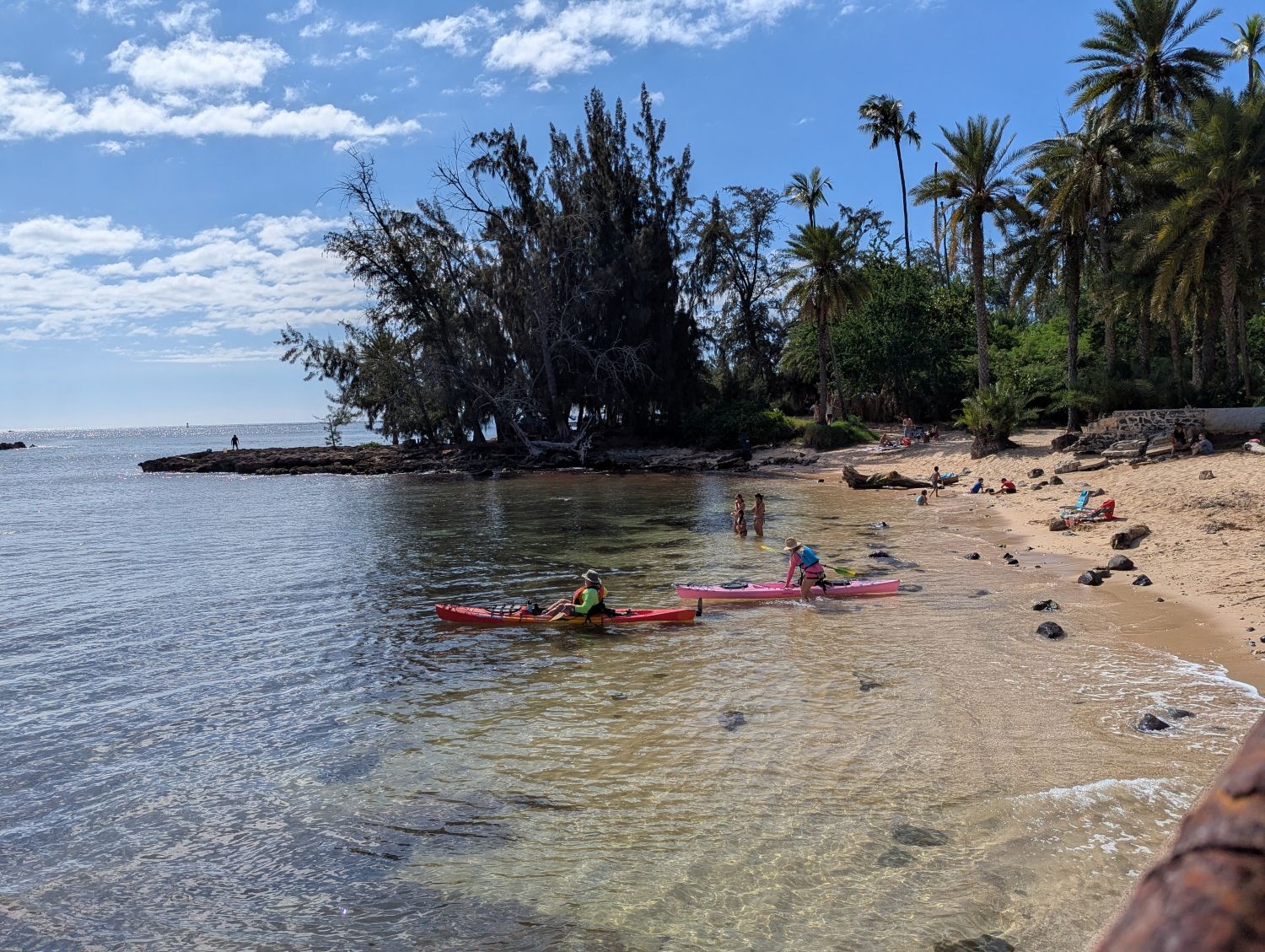
    Two kayakers launch from the beach
    Bill & Debi launching – photo by Ruby
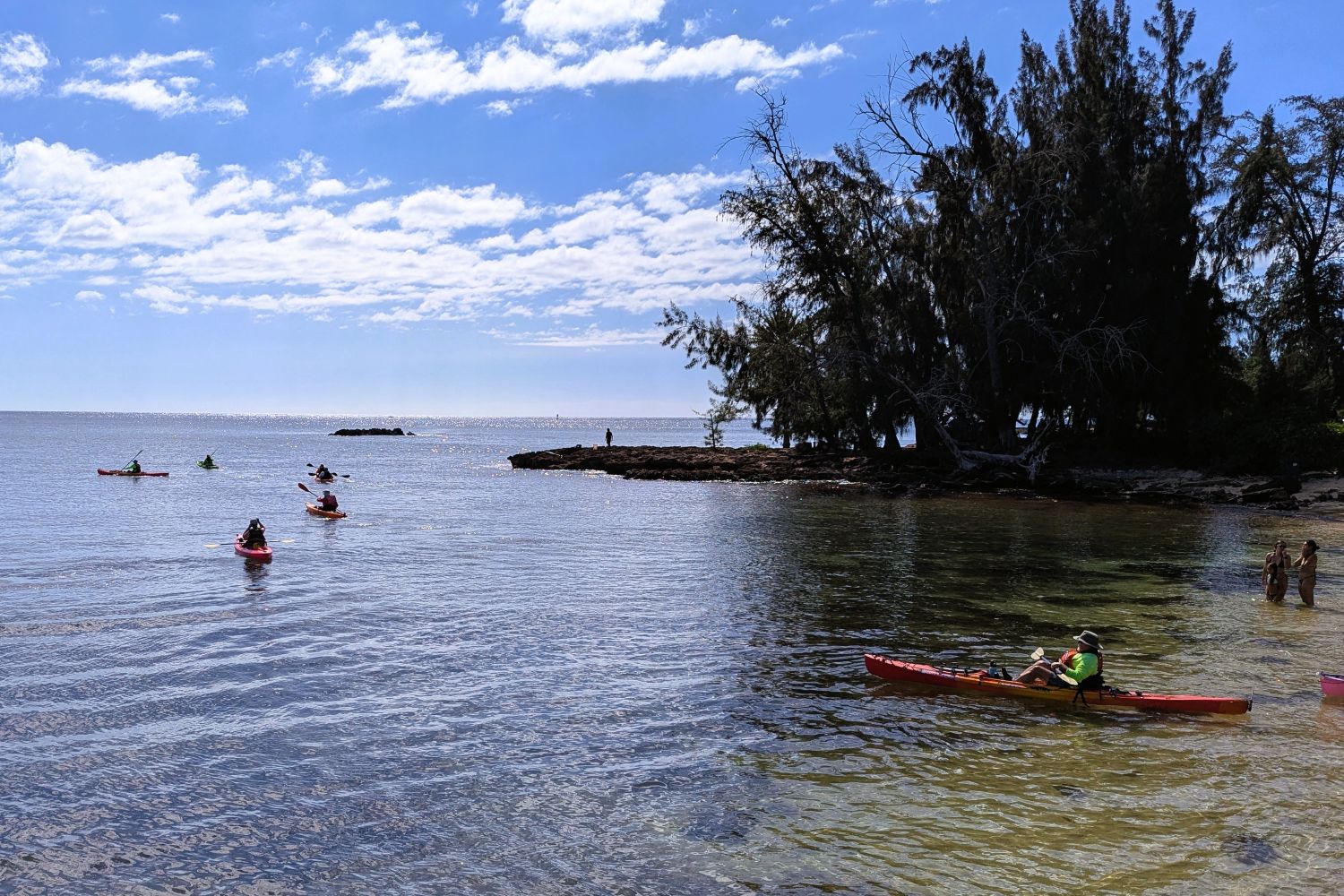
    Kayakers heading around a small point
    Away we go! – photo by Ruby

    On this day, the sun itself was the trouble. I’m sensitive to sun (I remember having something that sounds suspiciously like heat stroke as a kid), and waited to launch in the full afternoon rays for far too long. It was really hot!

    By the time we rallied, I was beet red and beginning to feel shaky. I thought getting on the water would help, and once there, I dumped hats full of water over my head to cool down. But the shakiness remained and my stomach was queasy. Four miles started to sound like 400, and I knew the smart thing to do was to turn around, land back at the beach, and sit in the water for 20 minutes.

    Always do the smart thing.

    [Editor’s note: Chuck Ehrhorn always preached that you are responsible for your own safety on our paddles. In spite of Susan’s strong desired to paddle this route she made the responsible choice to abort soon after launch. We appreciate her akamai decision.]

    So, you will have to hear the story of this event from those who went farther than the point (Puaʻena). Here are the tales they had to tell:

    Terry Shimabukuro: “While I was a little disappointed with the turnout, I was pleased that the ones who showed up were energetic and enthusiastic. This is the third location that we’ve used for the solstice celebration and this was the best with lots of parking, an easy beach launch and a nice picnic spot close to restrooms and showers. Great paddle to Laniakea! I’d never paddled that stretch with negligible surf before, so it was nice to be able to stay close to shore and admire the shoreline and beach homes along the way. No honu at Laniakea though. We saw more at Haleʻiwa. A thick bank of clouds on the horizon put a damper on sunset, but we still enjoyed a pretty orange sky.”

    Yeah. I missed out…
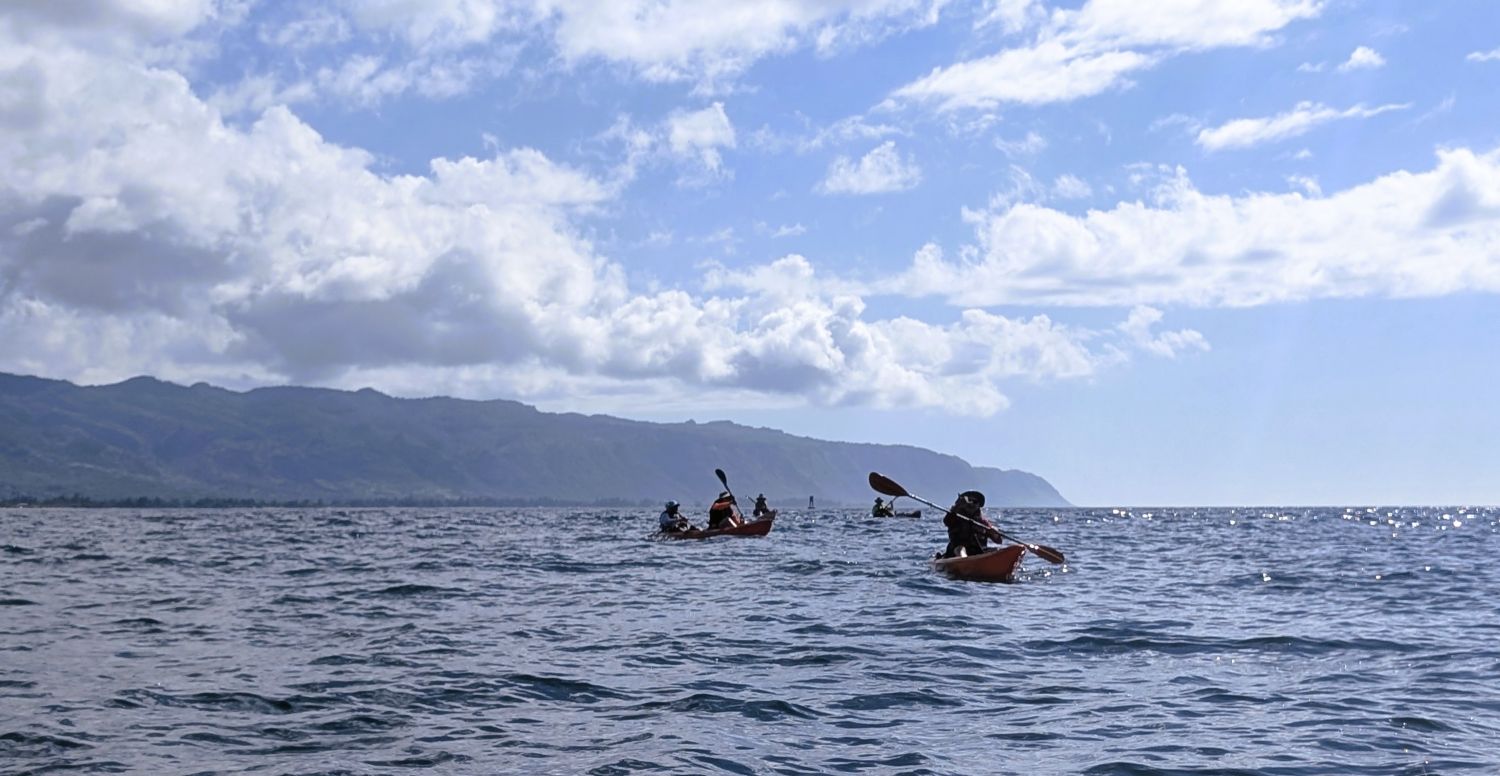
    Kayakers in silhouette with the Kaena coast in the background
    Leaving Haleʻiwa with the Mokūleʻia/Kaʻena Point coast on the horizon – photo by Terry
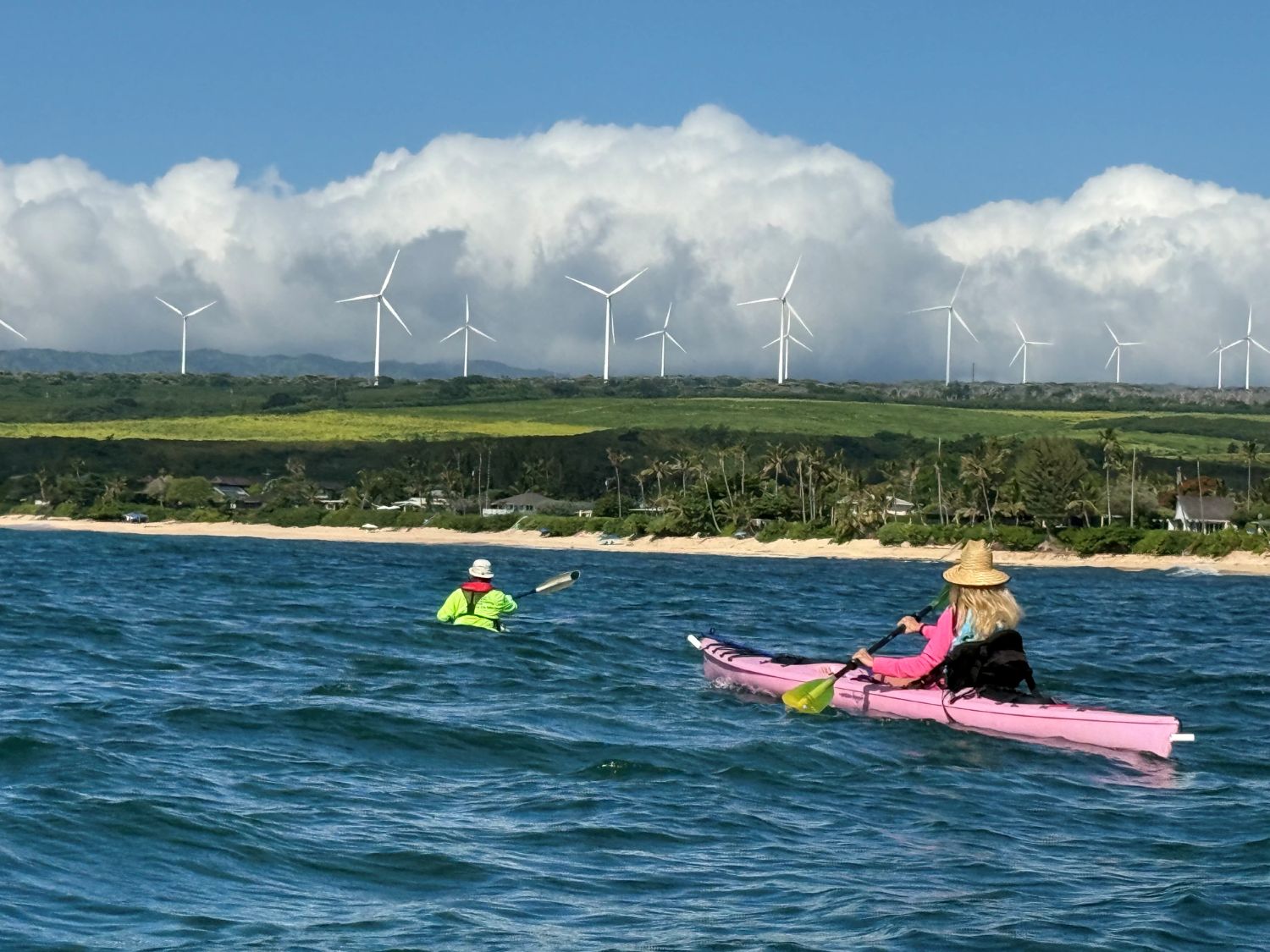
    Two kayakers with windmills in the background
    Terry & Debi chasing windmills – photo by Sandy

    Sandy Johnson: “It was a beautiful afternoon on the water. Too hot on the beach, but once we got out there, the pleasant breeze helped cool us off, and gave us a little resistance to work against. That meant a tailwind on the return leg, and what could be better than that?

    Our goal was to observe honu(s) at Laniakea, aka Turtle Beach and turn around, but alas, they may have been deterred by all the visitors on the beach and not one was seen there. Fortunately, we saw a few swimming as we paddled.

    The return leg went quickly, urged on by our grumbling stomachs, and we enjoyed an abundance of tasty food and an unusual sunset that looked like fire in the sky.”

    Nã honu obviously didn’t get the message that we were coming!
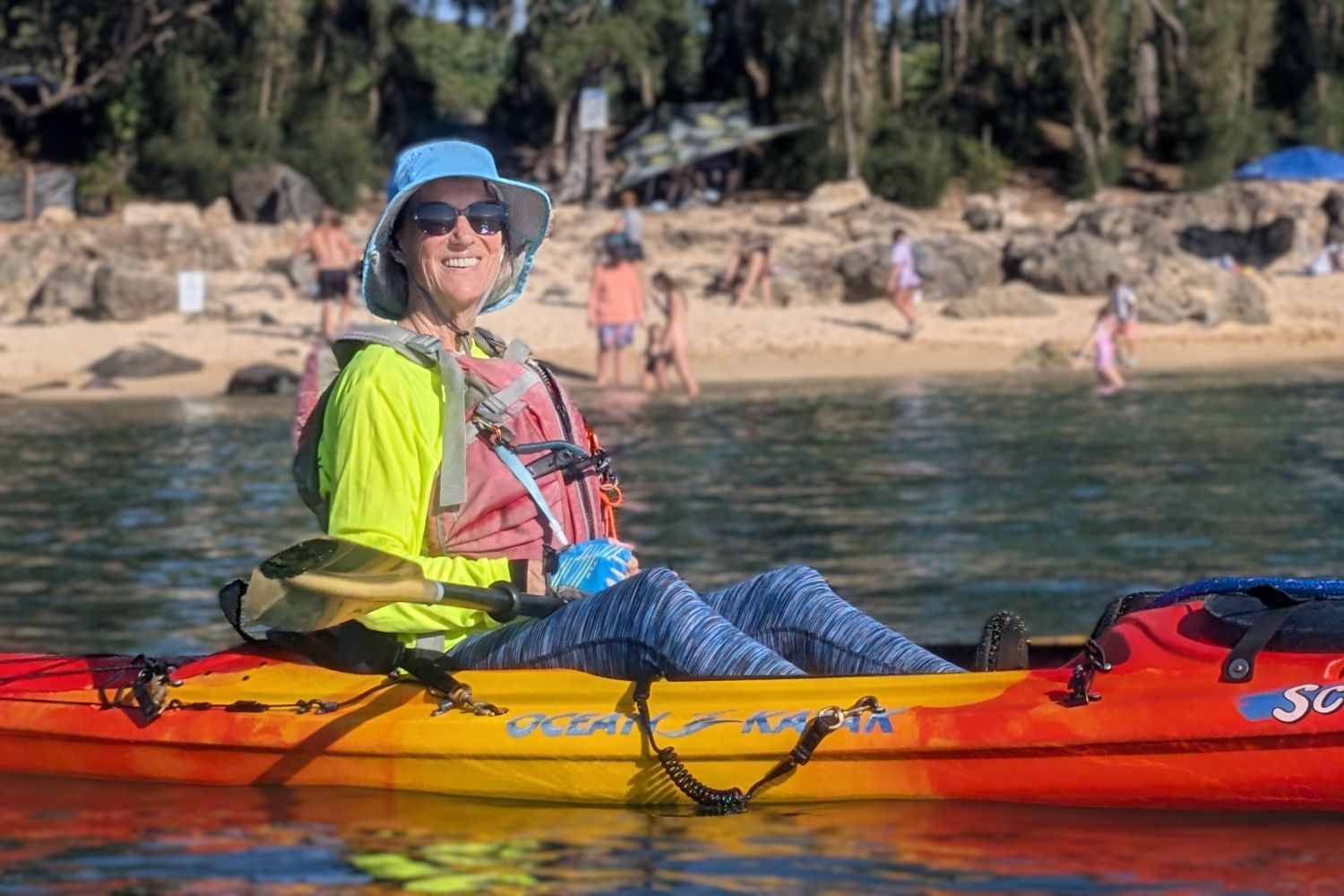
    Woman in orange kayak at Laniakea beach
    Sandy at Laniakea – photo by Terry
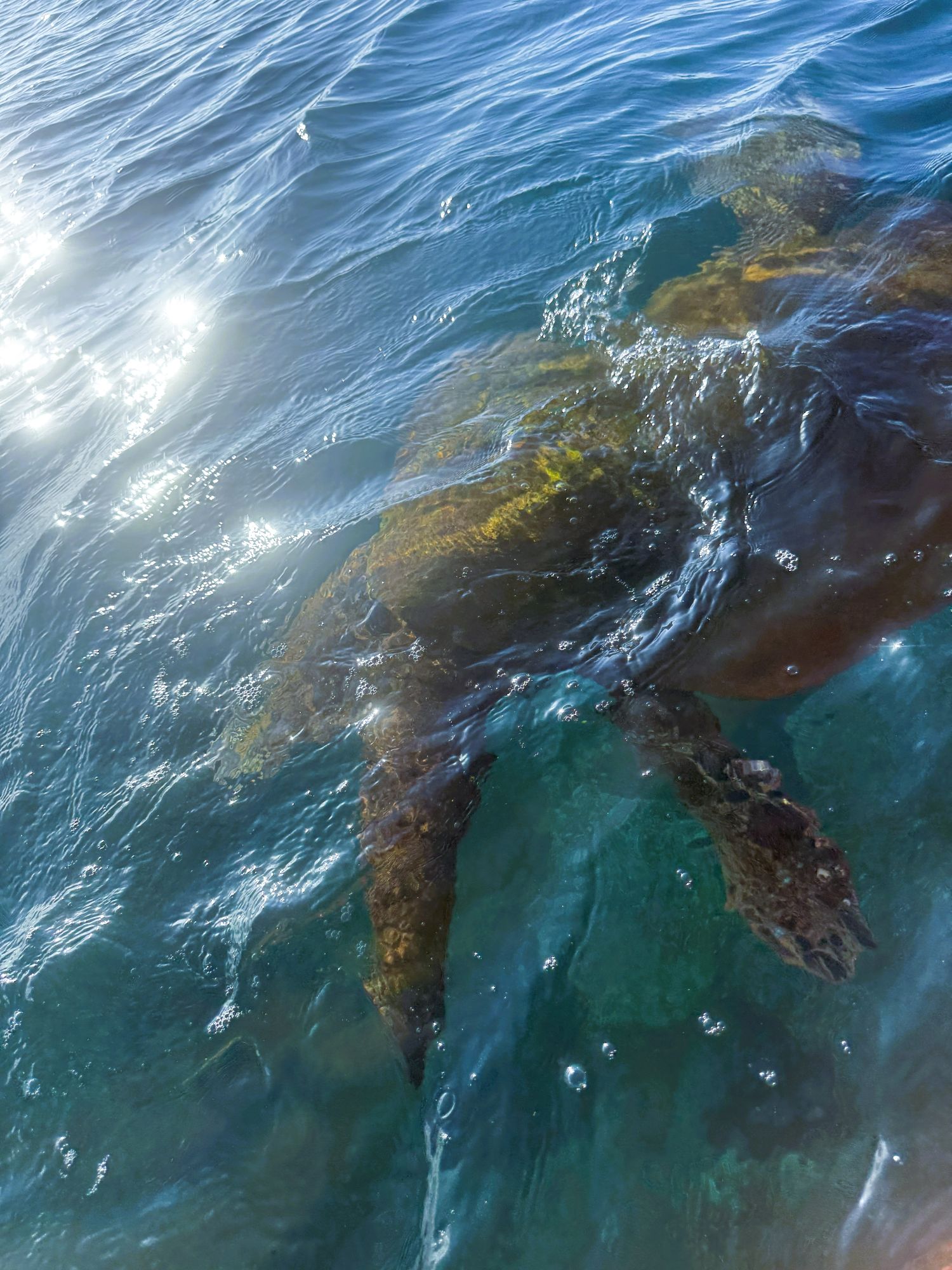
    A large honu said hello – photo by Sandy

    Bill Murphy: “The gale force winds were horrendous. A Yeti named Bob swept past us downwind on a SUP. He was being chased by a giant octopus. And we saw a few turtles on the way to Laniakea. Everyone survived, and there was a great potluck when we arrived back at Haleʻiwa Beach Park.”

    Facts or hallucination? You decide.
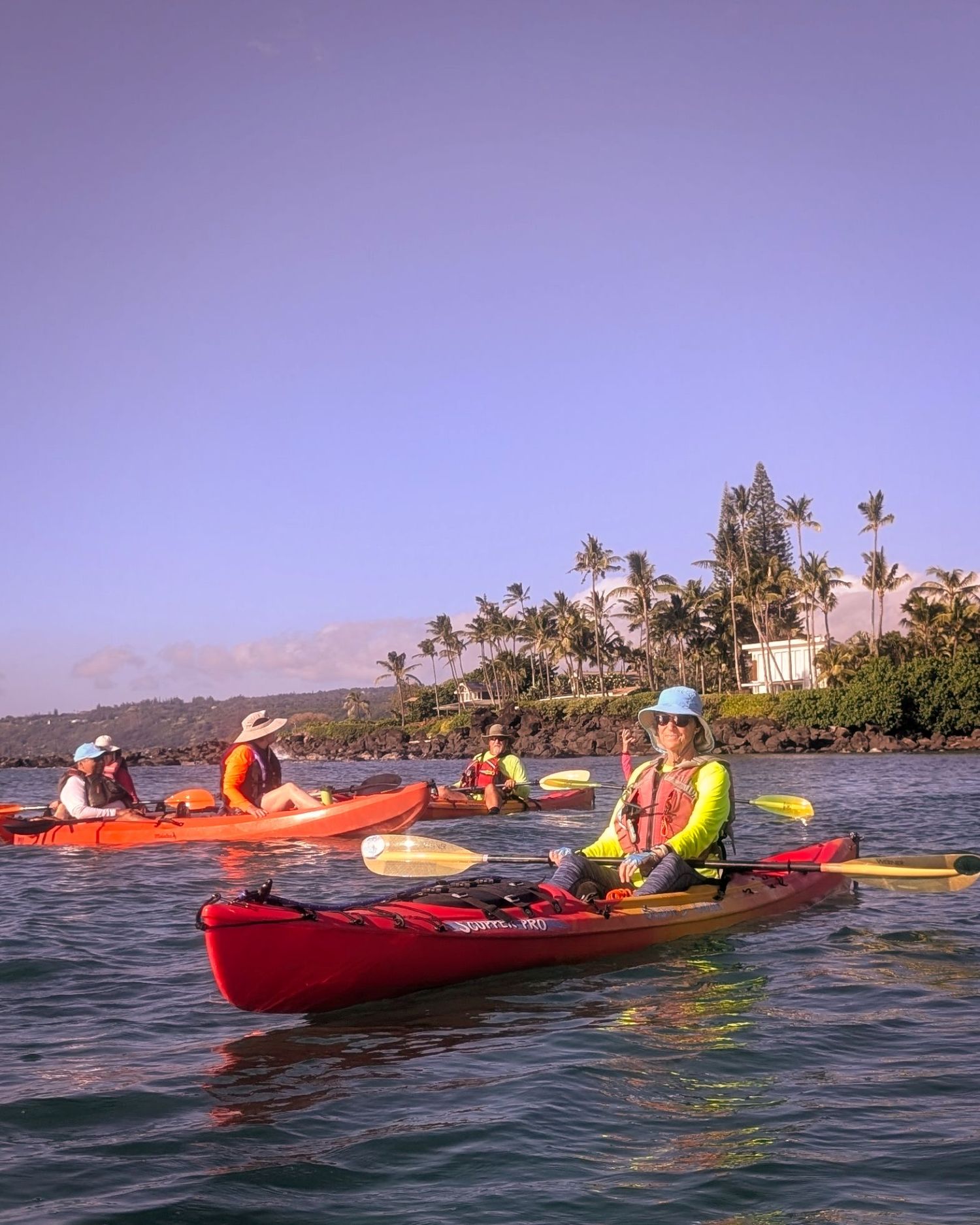
    Kayakers paused off of Laniakea beach
    A brief break at Laniakea before the return leg – photo by Terry
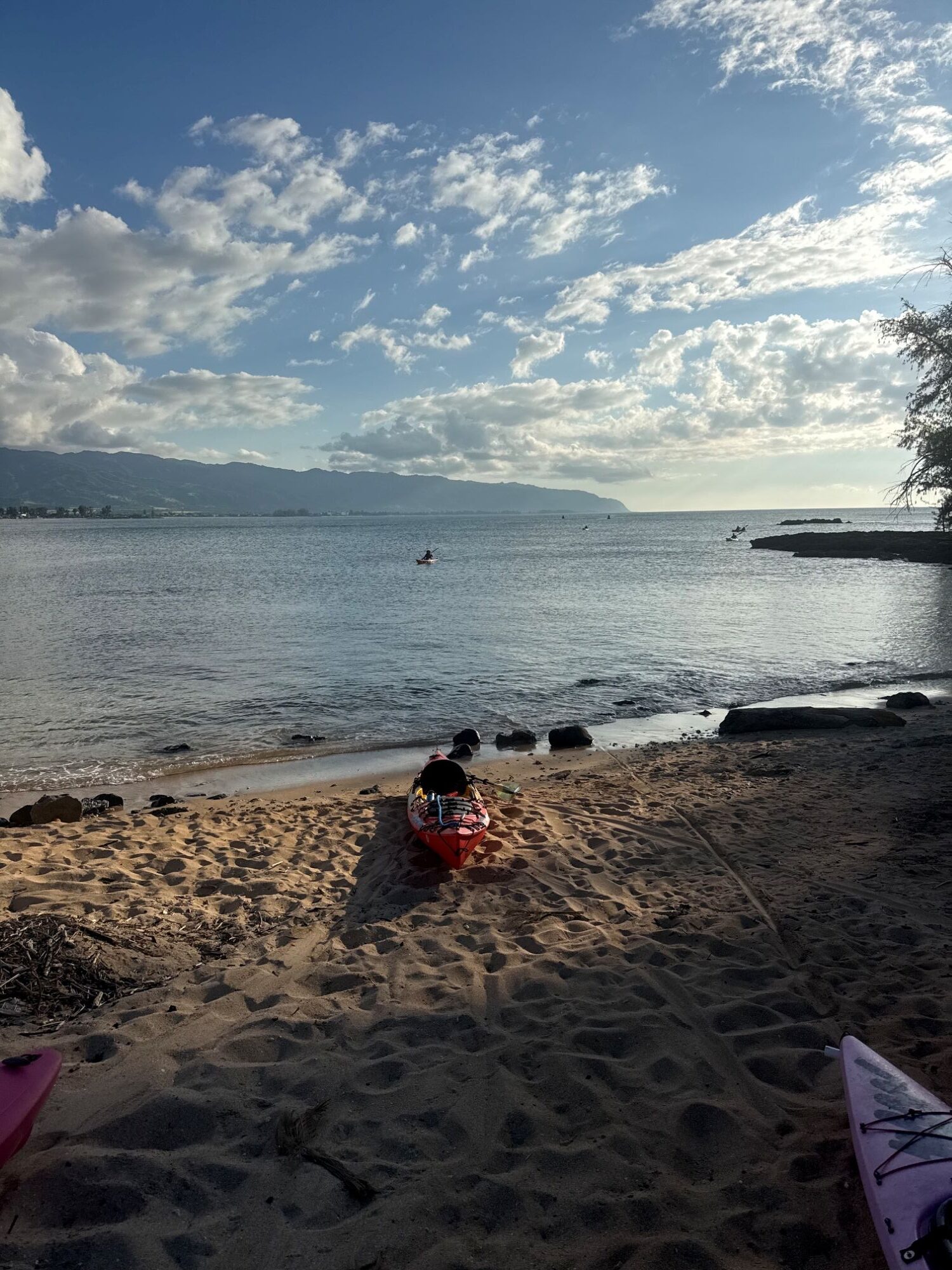
    An empty kayak on the beach with the late afternoon sunʻs backlight
    Returning in the early evening sun – photo by Sandy

    Katrena Kennedy: “Several attendees remained on shore and talked story, some enjoyed the Hawaiian public art installation on the pillars beyond the restrooms, others explored the wooded grounds north and found remnants of an estate, and some walked the beach viewing multiple turtles.”

    I can confirm that the on-shore experience was a lovely time!
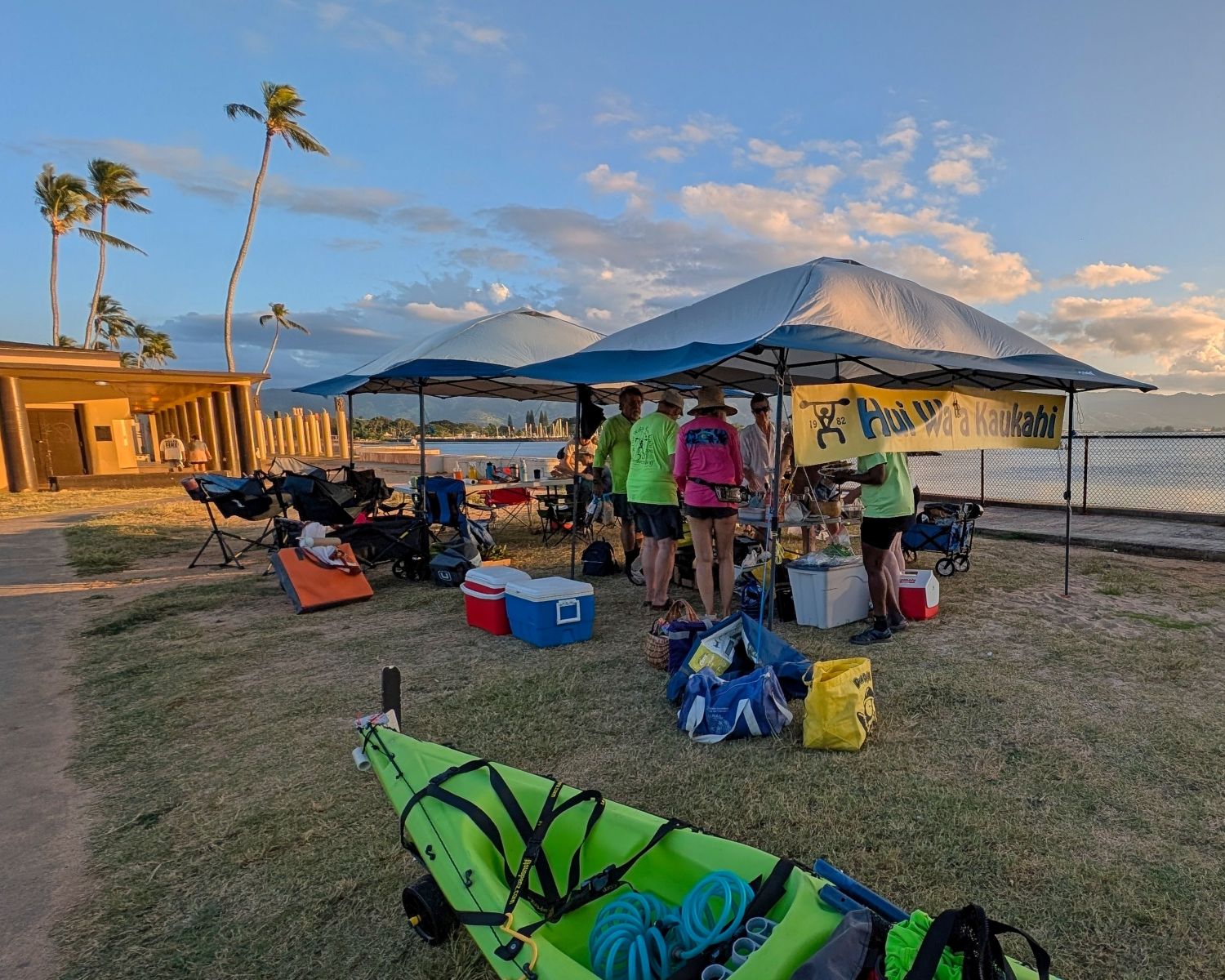
    Two canopies with the club banner and a kayak in the foreground
    The picnic site – photo by Terry
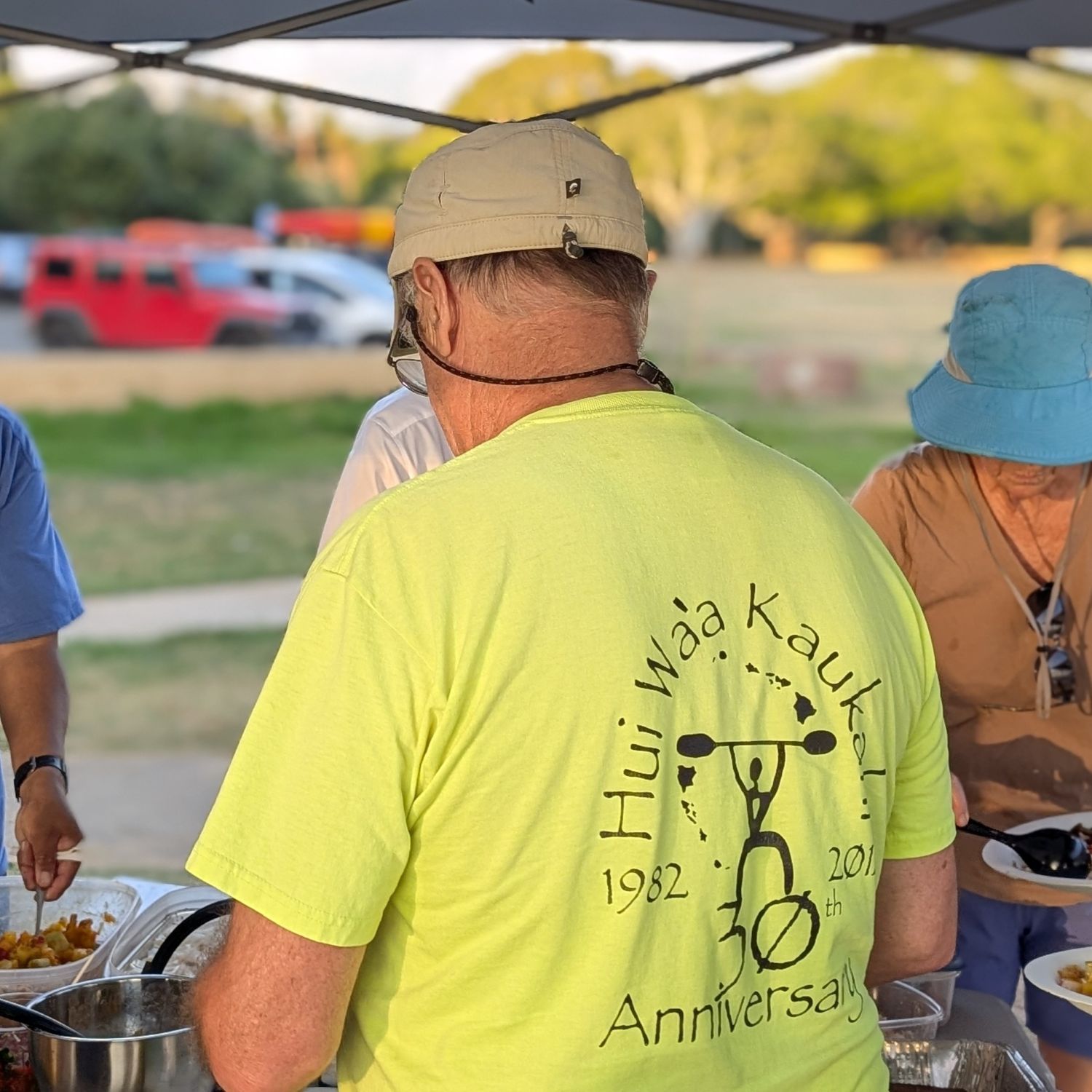
    Back of man wearing the clubʻs 30th anniversary t-shirt
    Randy rocking the 30th anniversary t-shirt – photo by Terry

    Claris Olson: “As a new(ish) member, I came to the solstice paddle and brought my husband Ramon and our friend Barry Pollack along for the adventure. We all learned a lot from kayaking pros Bill Murphy and Terry Shimbukuro, and we also enjoyed meeting new friends, watching the sunset and the fabulous food.  Thanks to Terry and all the Hui Waʻa team that organized such a fun event!”

    I think that sums up the day perfectly. Fun always counts!
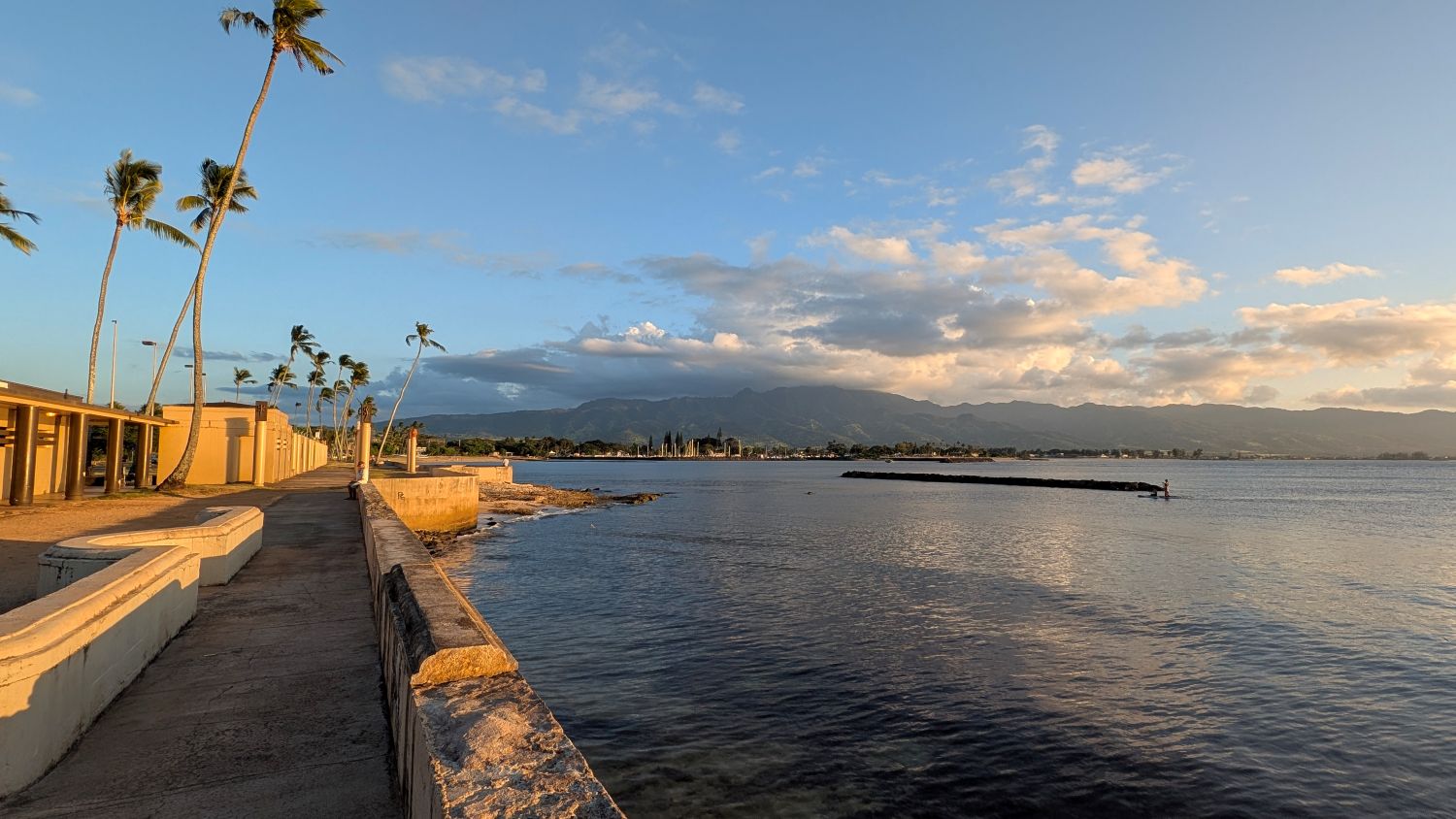
    The Haleiwa beach park pavilion in the golden light with the harbor in the background
    Haleʻiwa harbor at golden hour – photo by Terry
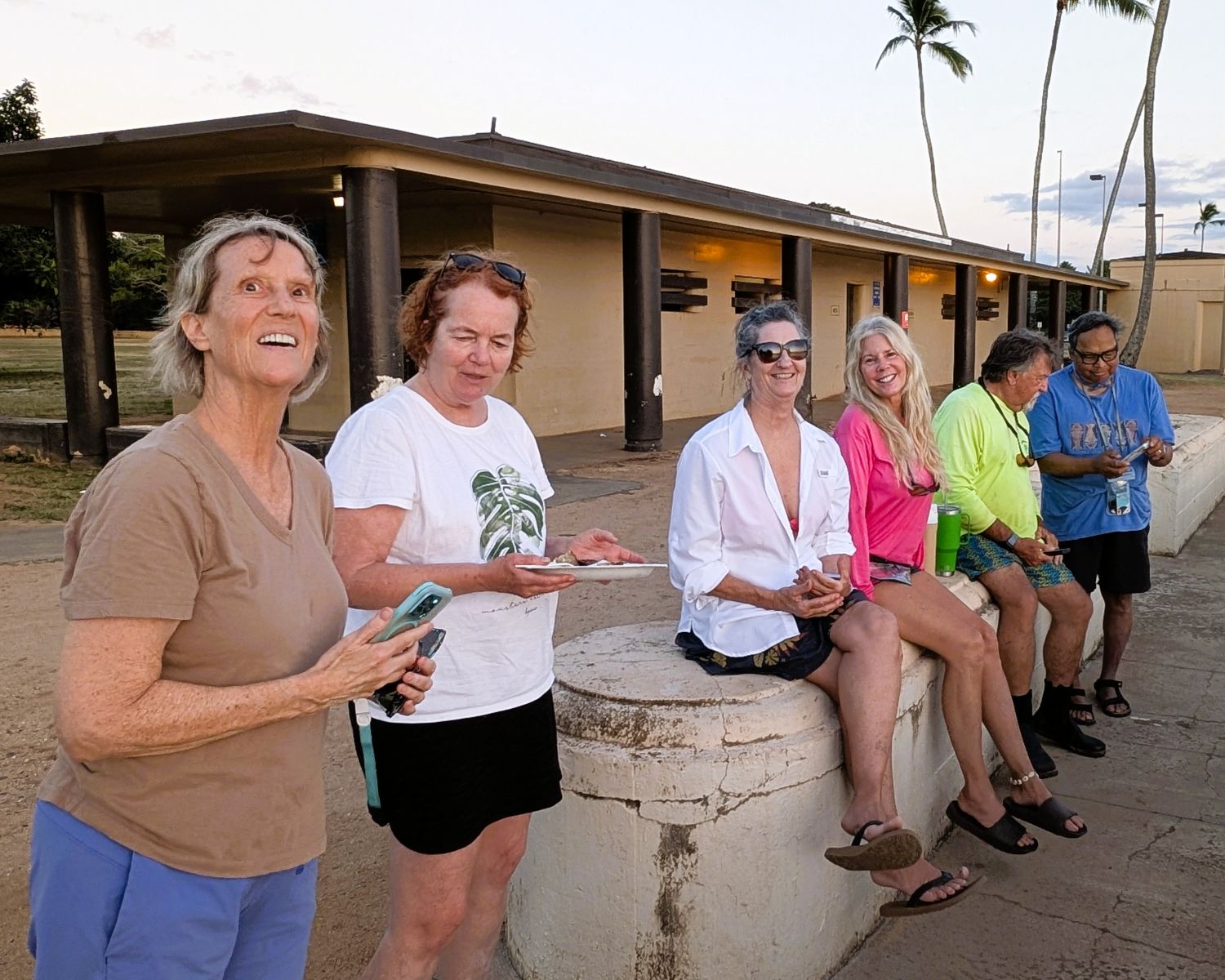
    Four women and two men lined up for sunset viewing
    Happy sunset watchers – photo by Terry
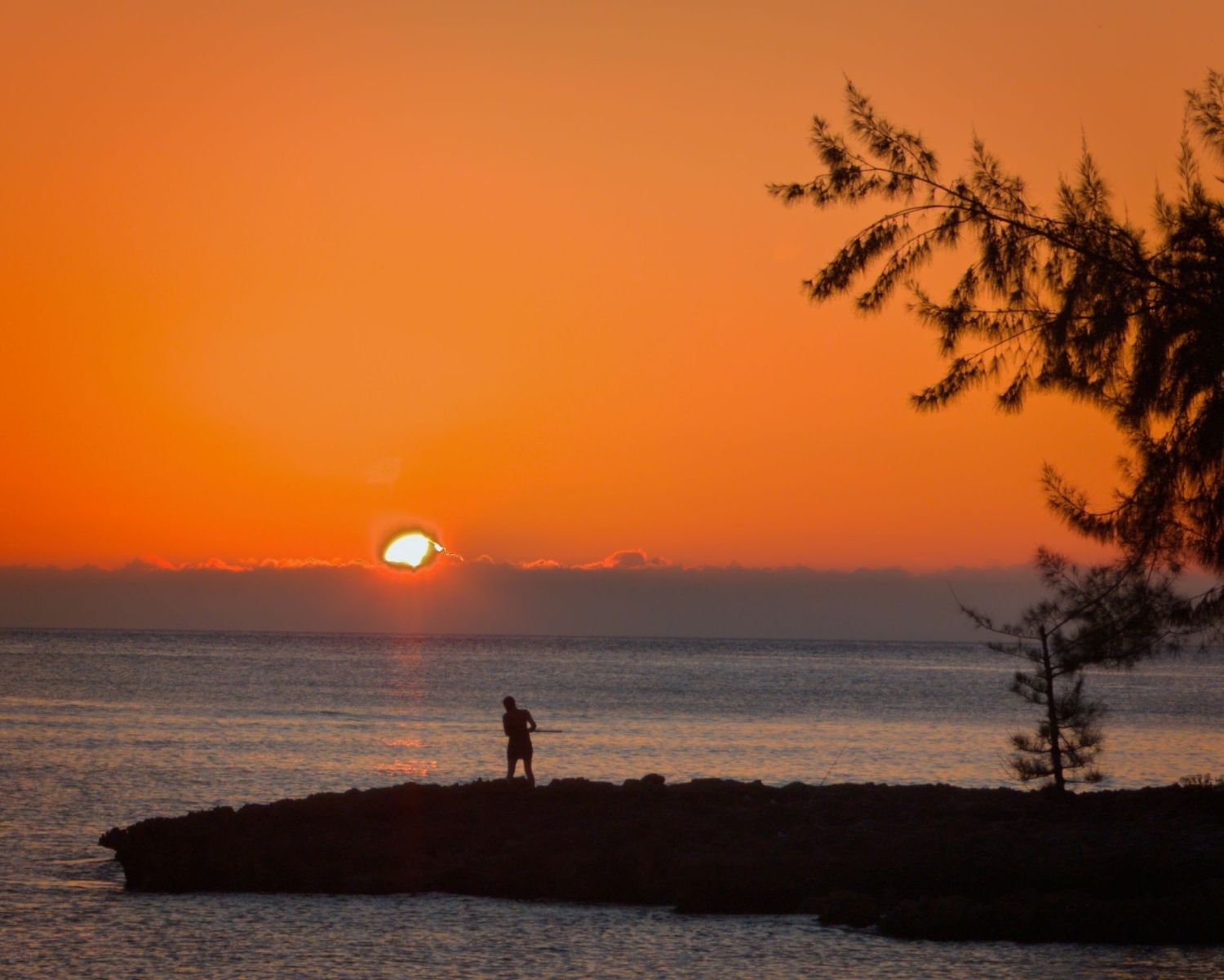
    The sun disappearing behind a thick cloud bank with a fisherperson on a point in the foreground
    Thick clouds swallow the setting sun – photo by Terry
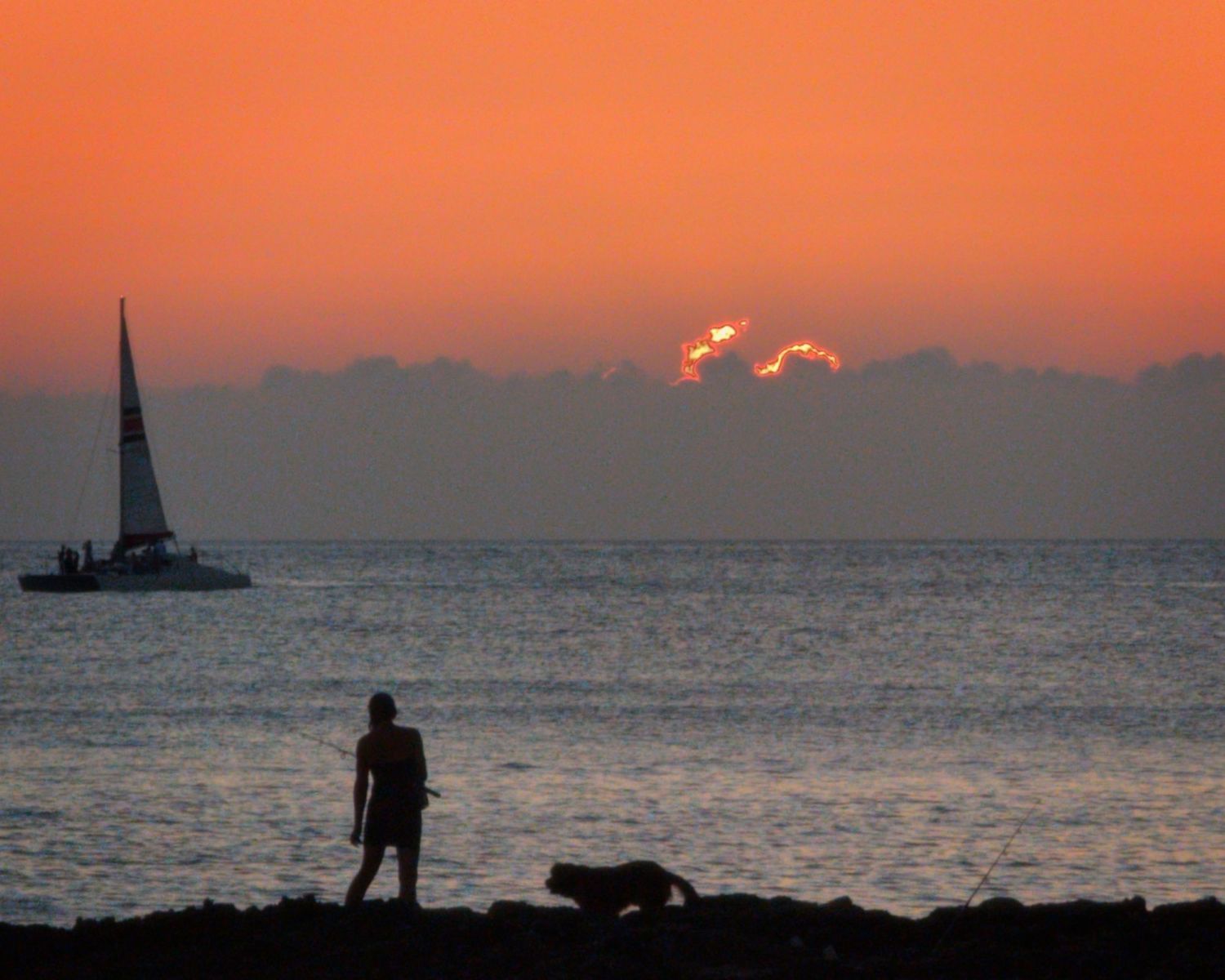
    Orange sky above a bank of clouds with fiery wisps of clouds. Silhouettes of a sailboat and fisherperson in the foreground.
    Fiery wisps reach up from the cloud bank – photo by Terry
  • Kapapa Island

    Kapapa Island

    Story and photos (except as noted) by Susan Wilcox

    August 24, 2025

    What paddler hasn’t gazed longingly at the many small islands surrounding the major islands and thought, “I’d love to paddle there — that route needs a kayak on it!”?

    The smart paddler, however, knows not to make this trip without some local knowledge of the reef, the winds, the breaks and the currents. It’s what you don’t know that can get you into trouble. So, when the club announced a paddle to Kapapa Island, a bird sanctuary 2.5 miles offshore via Kāneʻohe Bay, I was all in!

    Twelve of us gathered at the Canoe Hale at Heʻeia Kea Boat Harbor on Sunday, August 24. As Eileen, one of the leaders for this paddle, described the route and conditions, I gulped a little. I expected there to be some wind (when is there not?), but waves were clearly breaking at the island. Eileen said the swell was maybe 2 feet and I pictured a wall that could be three feet, not big by Hawaiian standards, but my Venus 11 had not yet been surf-tested in any kind of break. Knowing how powerful Hawaiian waves can be, how would I do in that?

    We headed toward the island under a partly cloudy sky with 12-15 knot winds, gusts higher, and a rising tide. The route took us over the sandbar (Ahu o Laka), which is always a pleasure, and the water was high enough so that most of us were able to paddle over it, although a few hopped out to walk their kayaks across it.

    I’m not a fan of paddling where I can’t see the bottom, because it seems like I am working hard and getting nowhere. Much of this paddle, however, was over reef, and I have an ongoing enjoyment of dipping my paddle in the water, pushing forward, and seeing the coral and reef life pass beneath me. It doesn’t get any better than that.

    The wind picked up as we approached the island. My focus was on staying on course (no rudder) and musing about how I hate wind, when suddenly I felt a sting on my right arm and then my left. My paddle had picked up a Portuguese Man of War and it had wrapped a tentacle around my right arm and then been tossed onto the left. I swished the paddle through the water to get it off, but a tentacle was stuck to the Velcro of my glove. I managed to pick it off and rid myself of the pest, but “Auwe!” Those stings hurt! (Side note: the irony here is that a month earlier, I had declined to go into the water at the Crash and Burn clinic because signs were posted that Portuguese Man of War were in the water. I had been stung before and wanted no part of it. Now I had surf and the sting! The ocean will have its way with you.)

    The sting was a welcome (?) distraction as I approached the surf. Eileen, knowing I was nervous, gave clear instructions plus the reassurance that no matter what it looked like (which was not as bad as I had feared) the waves were low energy. I wisely put my trust in her and the other club members and followed instructions. It was fun! Plus, I discovered that my kayak does just fine in surf, if I don’t do anything stupid.

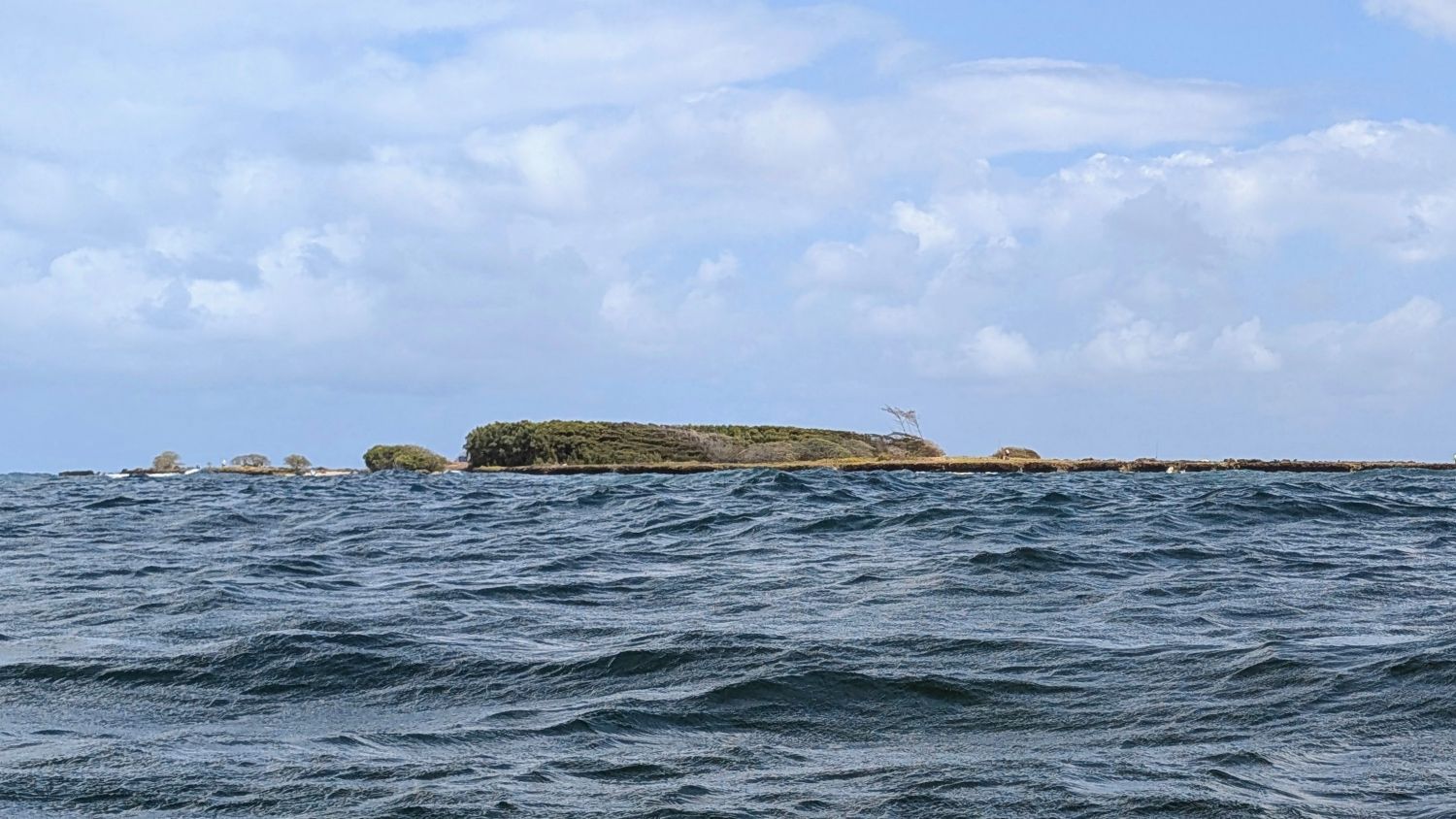
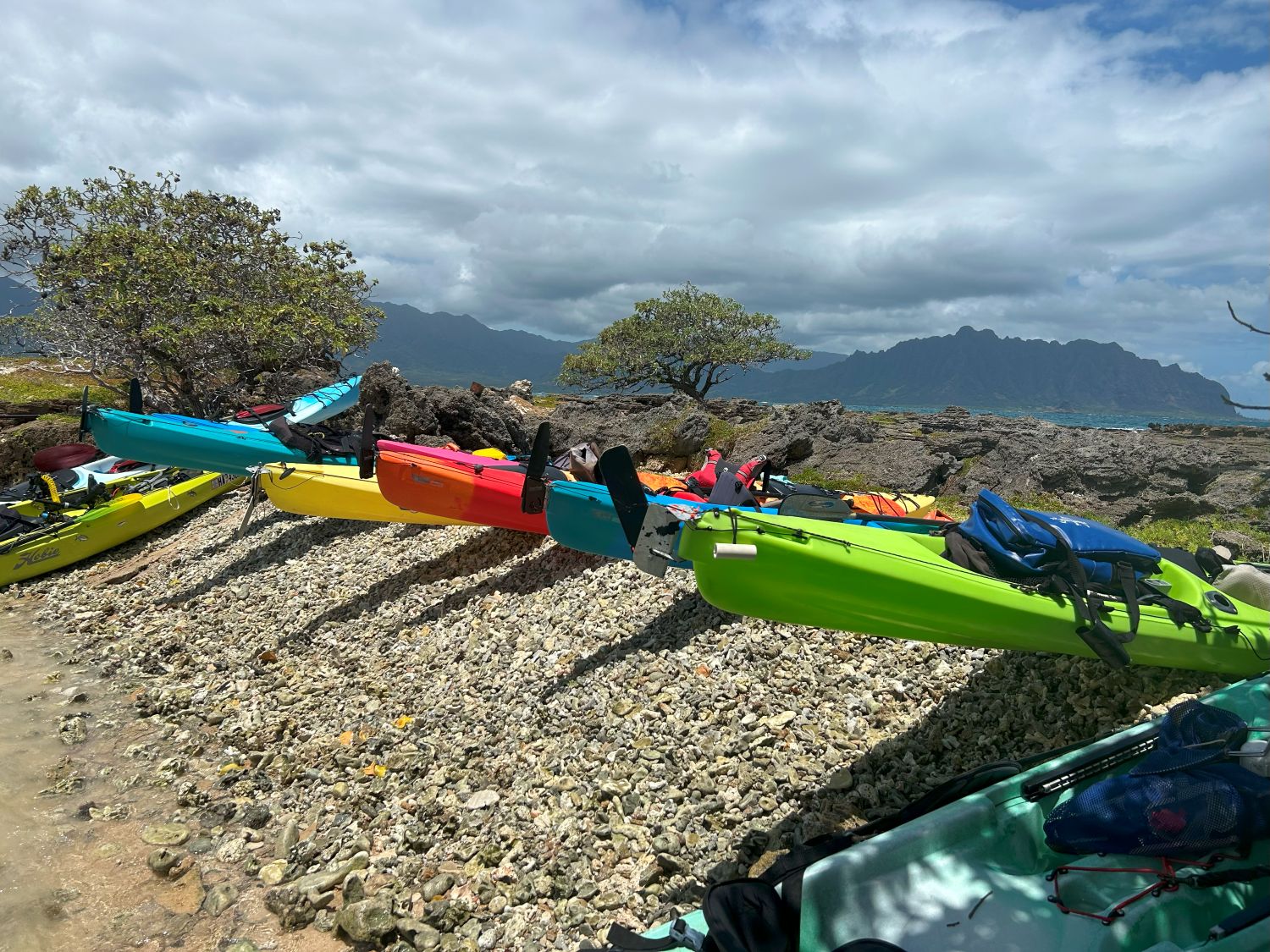
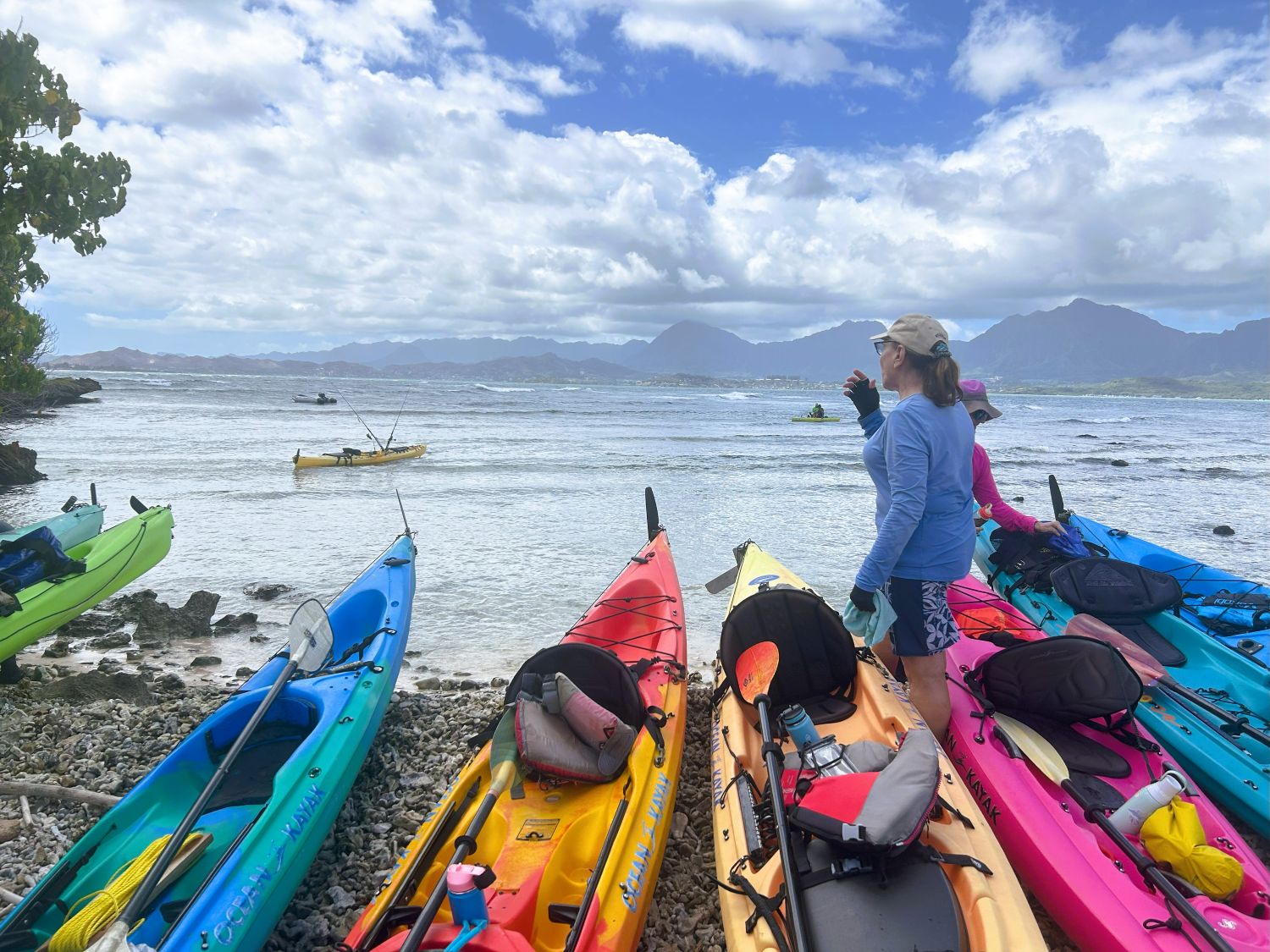
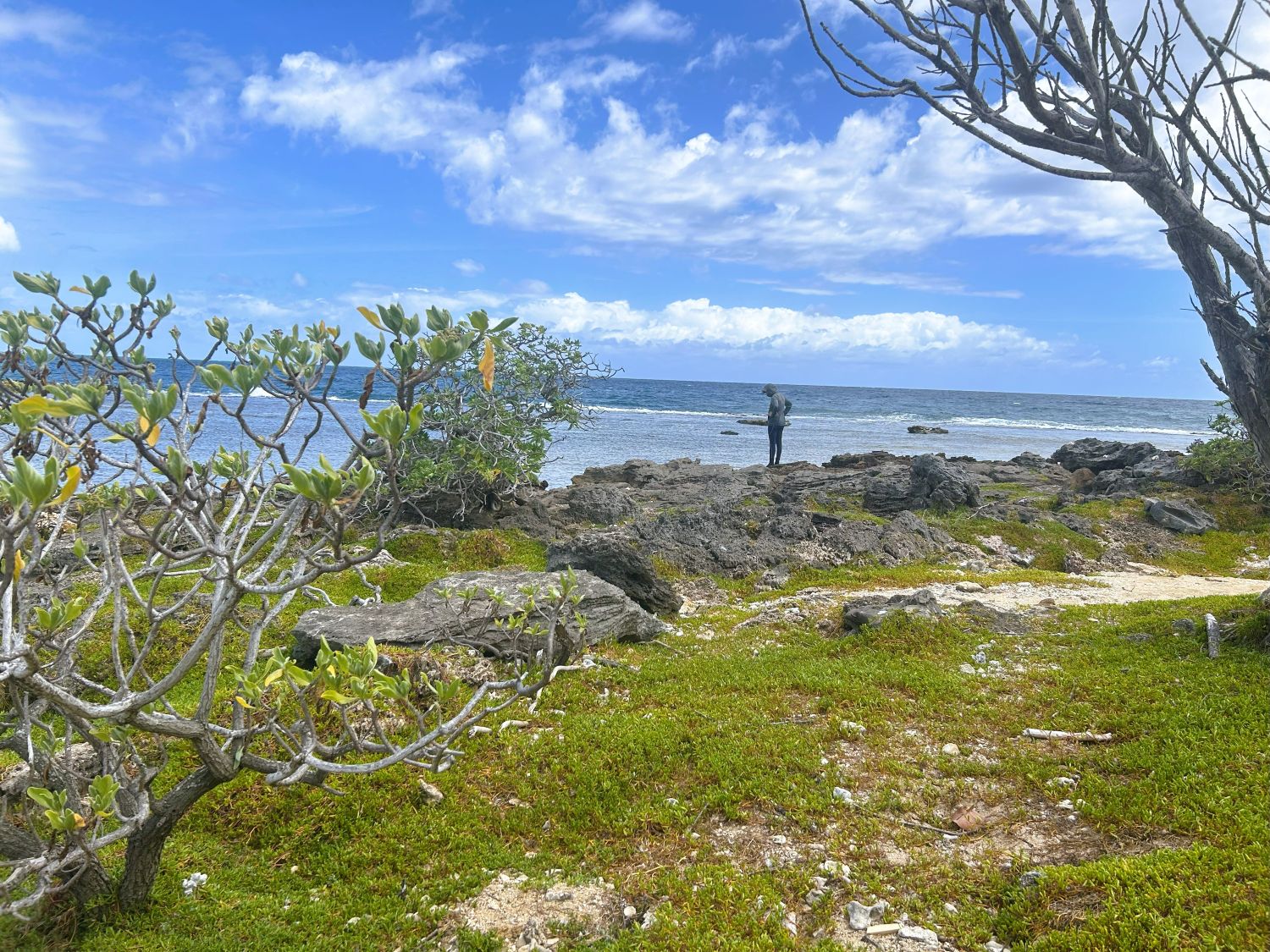
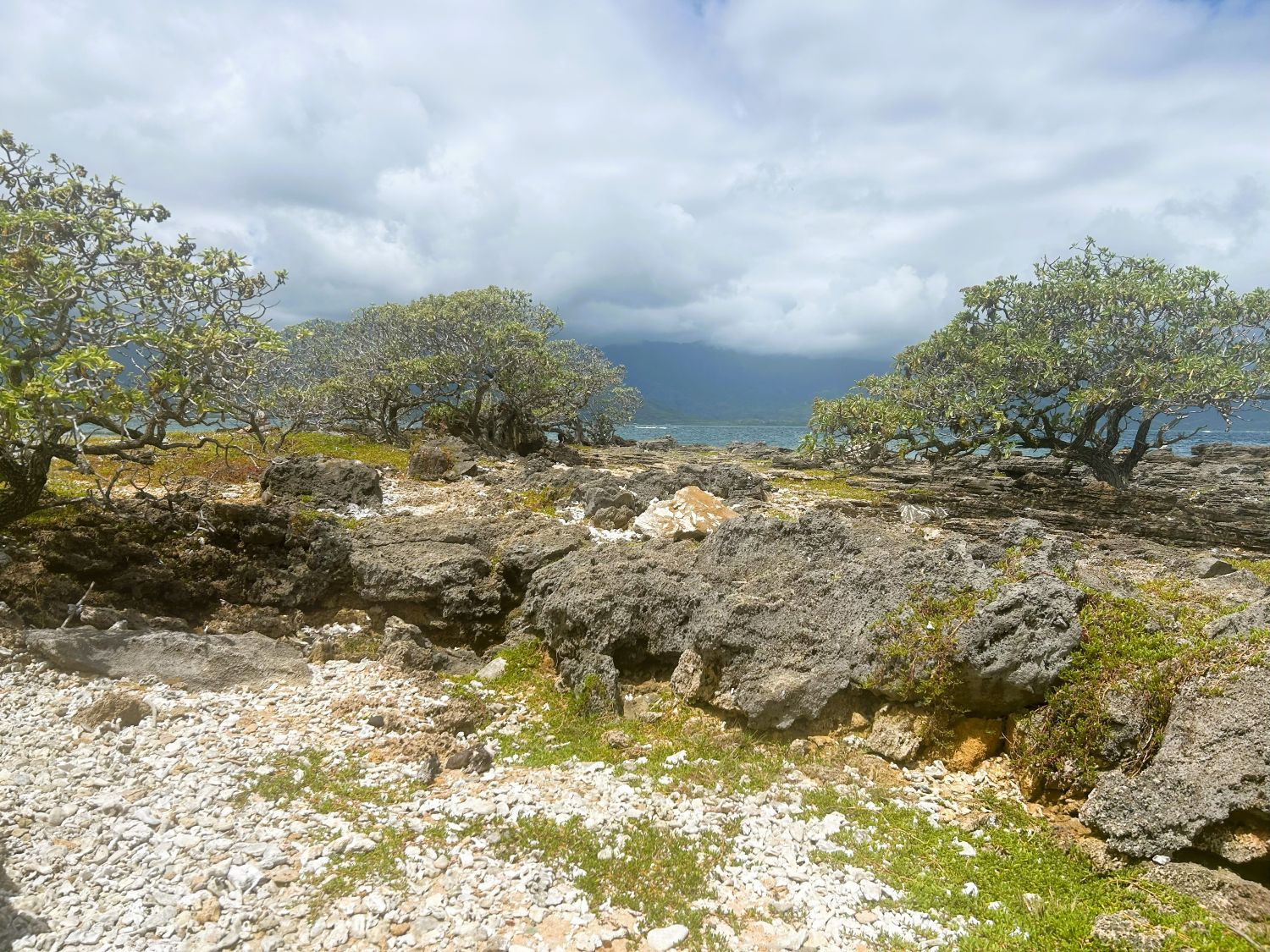
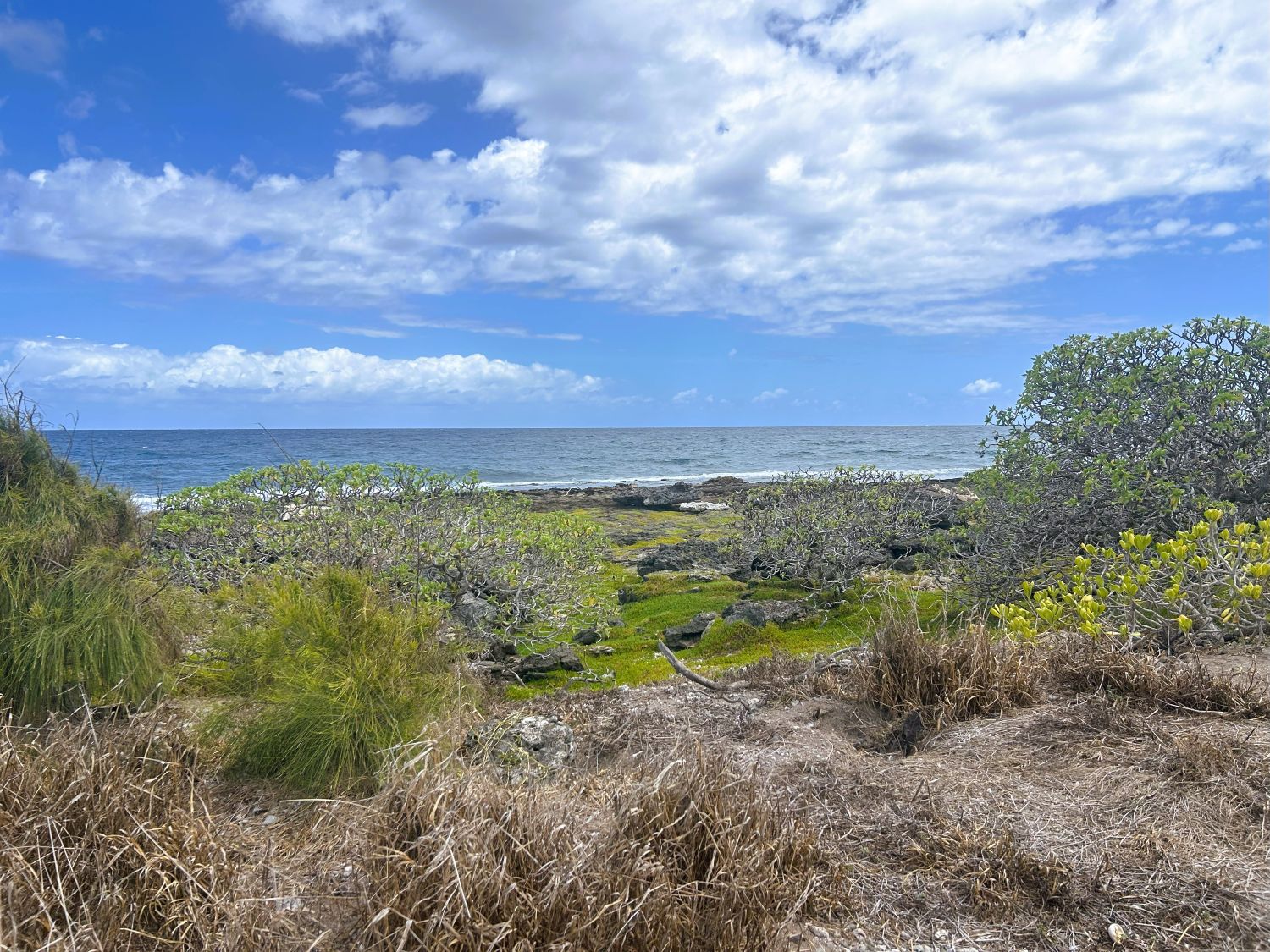
    We landed on a beach made up of shells and broken coral. Kapapa is a 9.5 acre islet just outside the reef in Kāneʻohe Bay. It is what geologists call “calcareous,” composed of reef and shells, rising to 14 feet above sea level. Stan calls it “magical” and he’s not wrong.

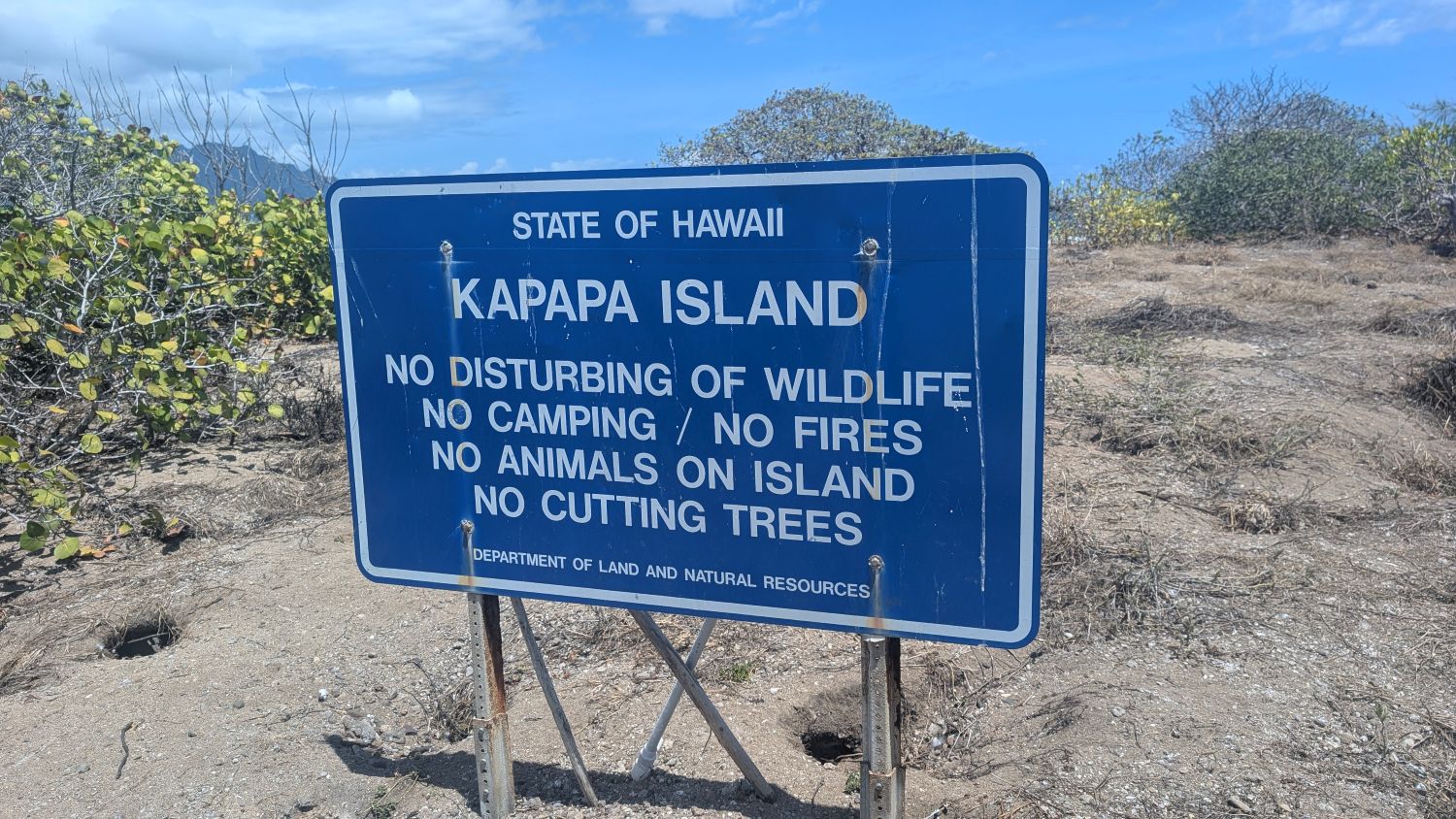
    Its primary reputation is as a nesting site for seabirds, mainly shearwaters and petrel. It was first protected in 1917 and was designated as a seabird sanctuary by DLNR in 2010. The island also has historical and cultural significance, as many artifacts have been found, including evidence of a heiau, canoe house and fishing shrine. It is listed in the U.S. National Register of Historic Places.

    It would be tempting to look for artifacts, but there are rules, clearly stated on a prominent sign, designed to keep humans from disturbing the seabirds. Still, it’s a good place to relax and enjoy a whole different view of the windward coast.

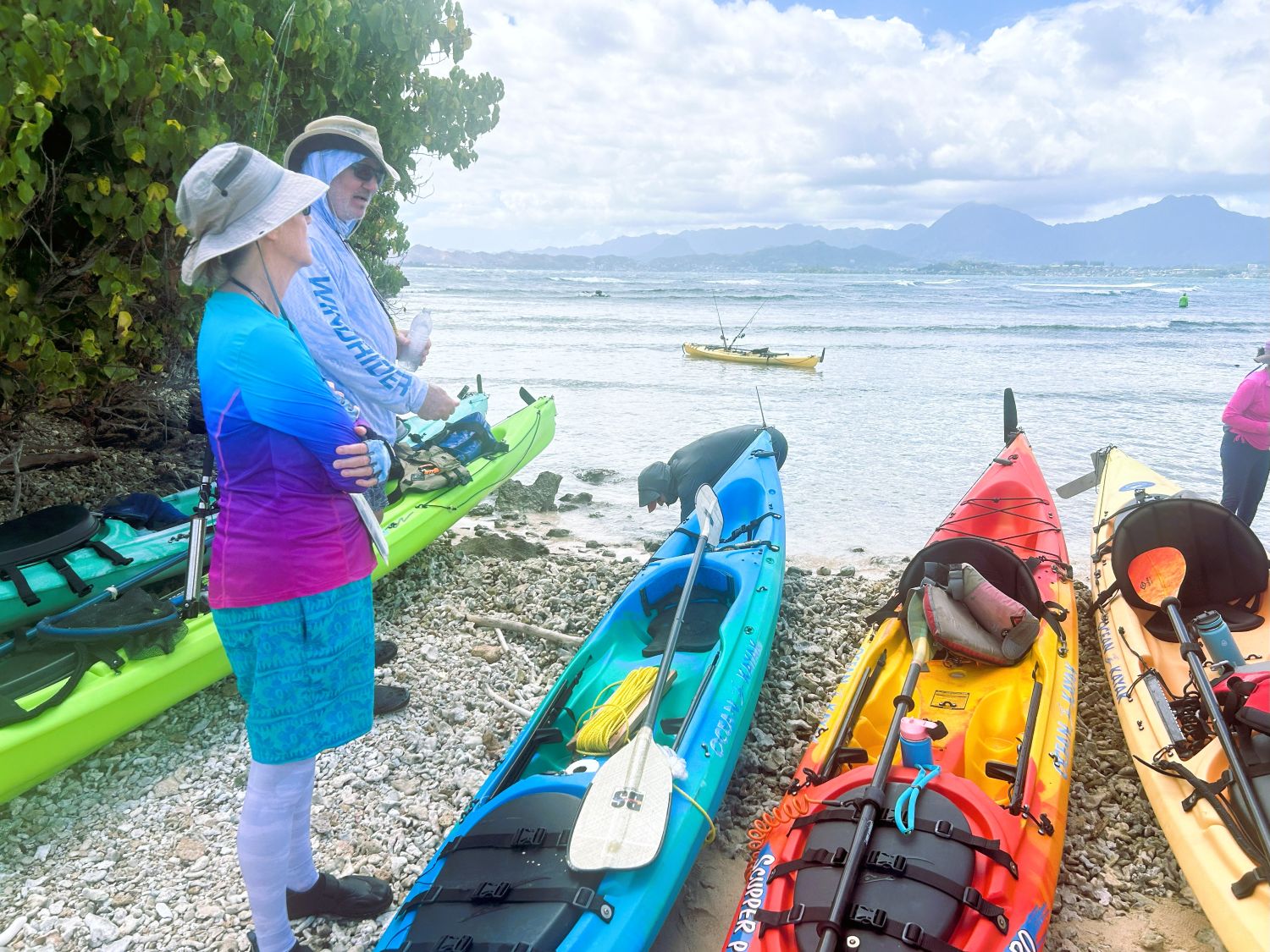
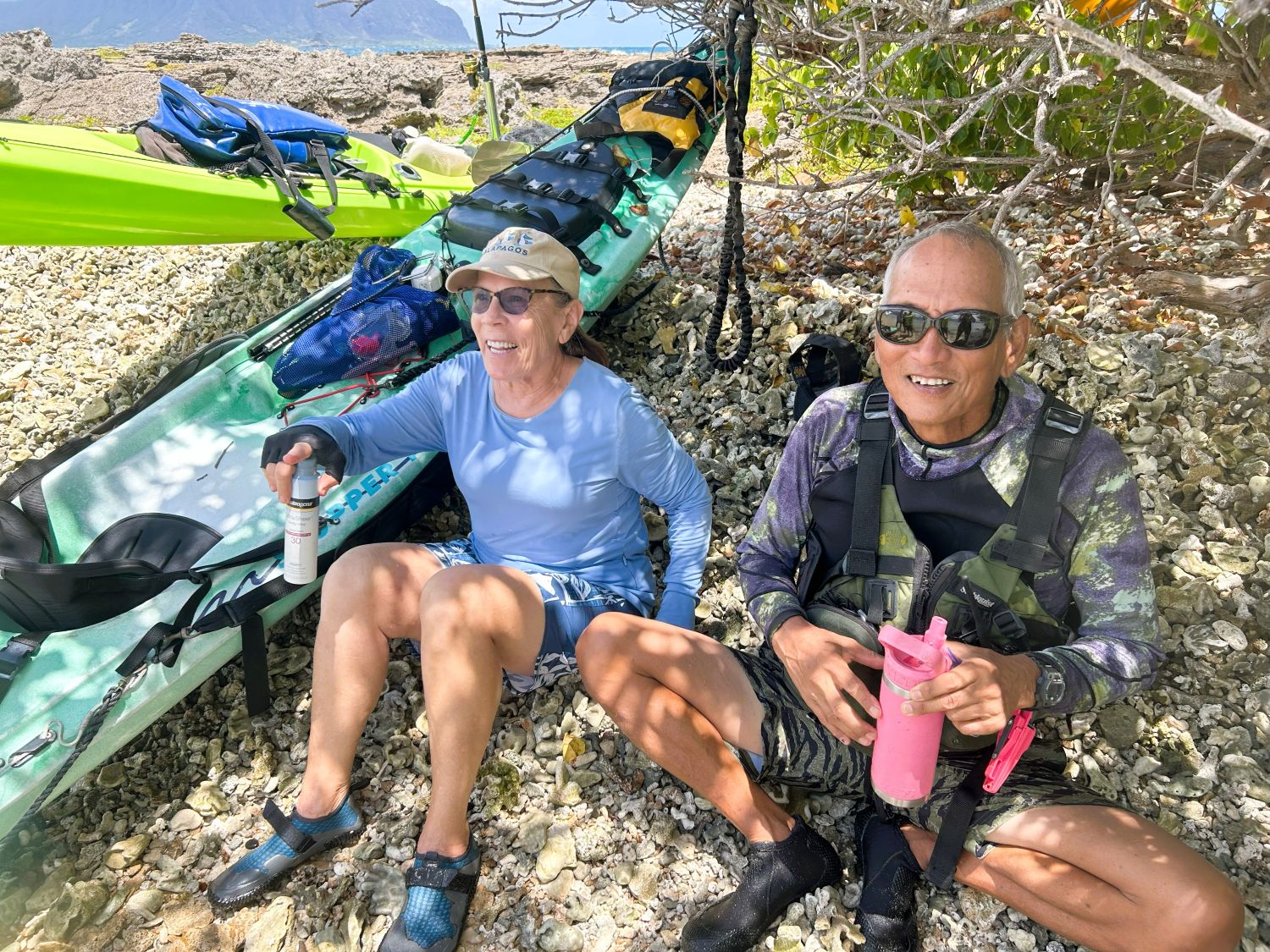
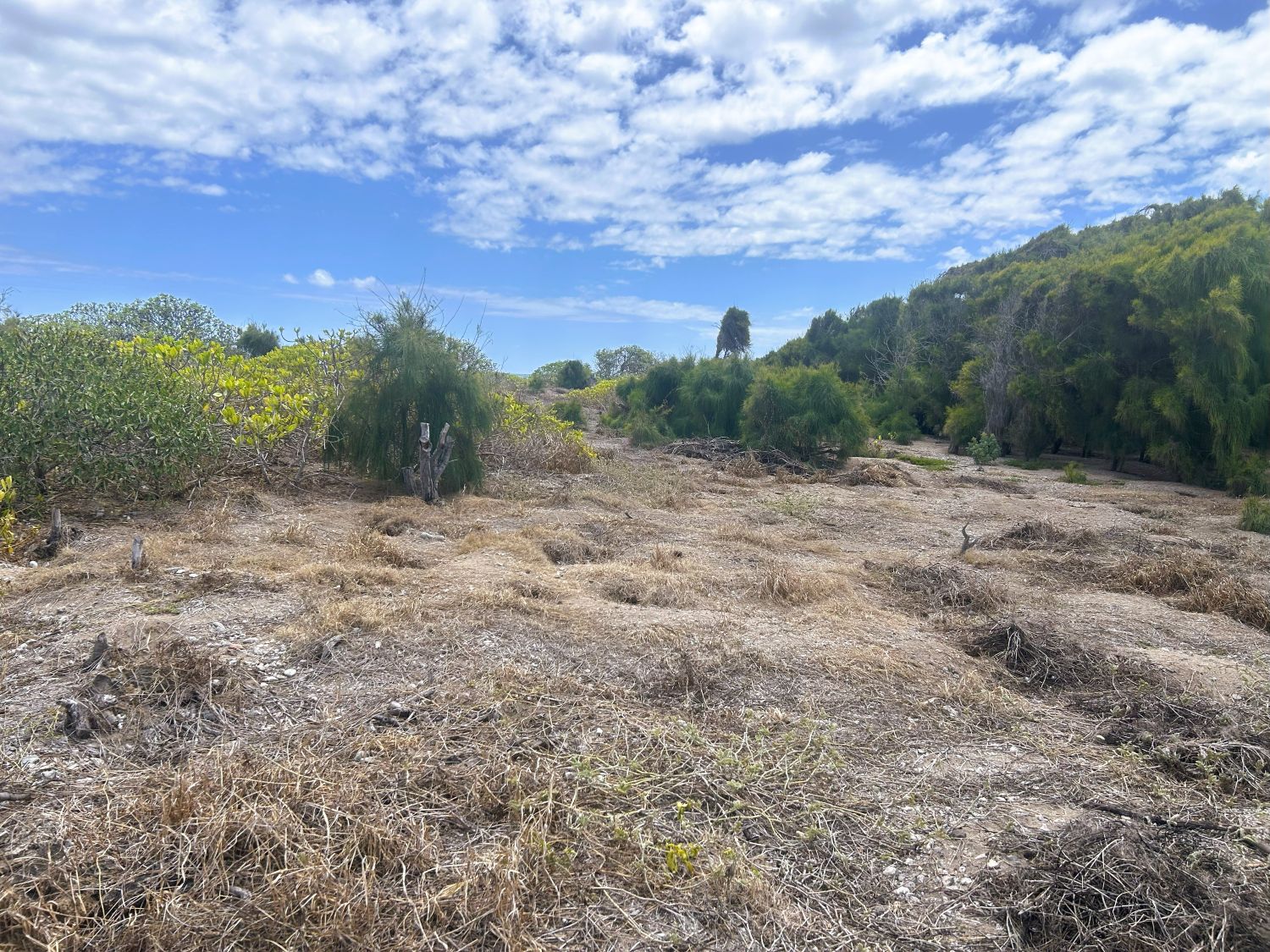
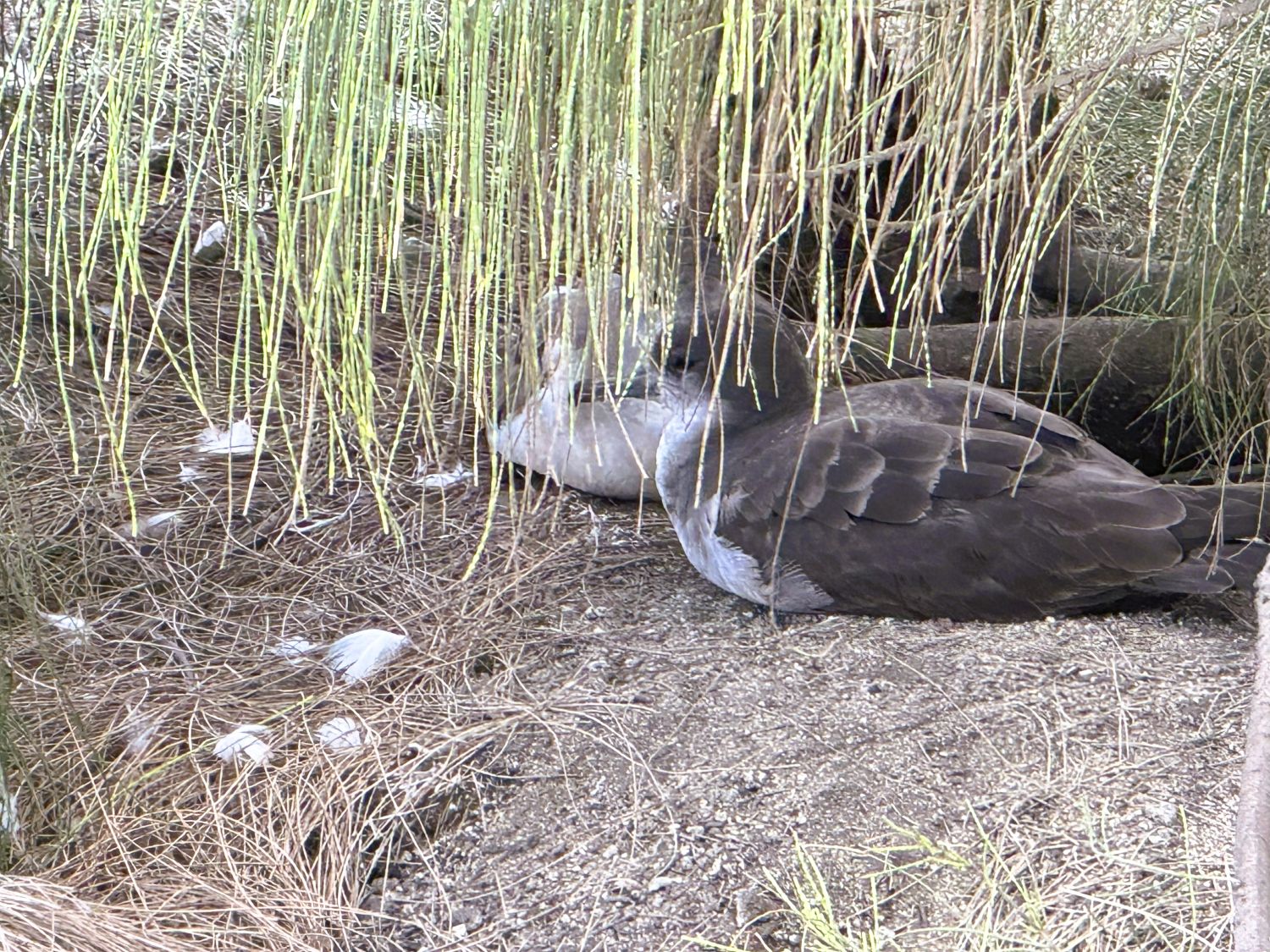
    Some in our group found shade to eat lunch. Some of us walked around the perimeter a bit and some did both. I was surprised at the lack of birds, but apparently this was to be expected as it wasn’t nesting season. Sharp-eyed Marie found two shearwaters cozying up under a tree.

    Then it was time to return. More instructions for how to get around the breaking waves (easy peasy), and then, with the wind at our backs and a couple of honu waving us through, the paddle back to Heʻeia was quick and easy.

    Next island: Manana in September. I will definitely be there. Come join us!