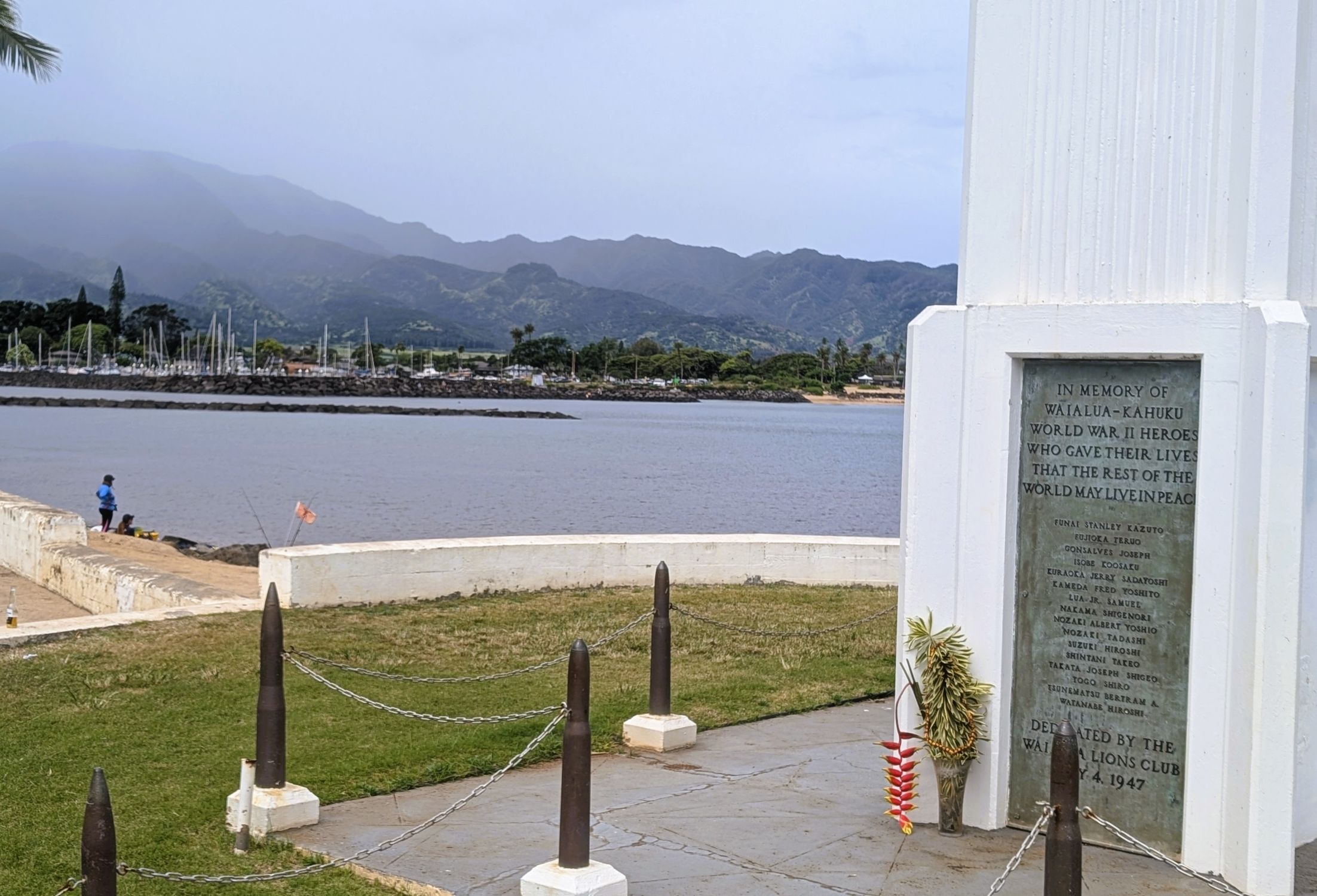
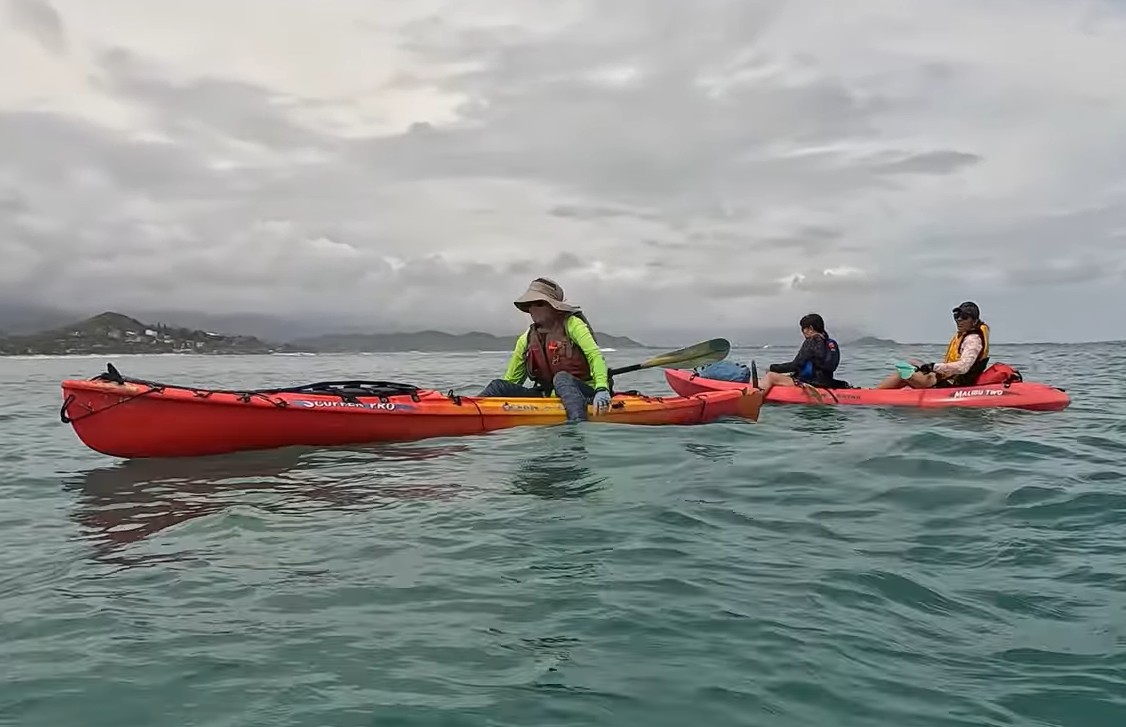
On the way to the North Shore we had a uh-oh moment when the rain started pouring down. Being the fearless paddlers we are, we kept going. Luckily, when we reached Haleiwa Beach Park it was a gorgeous island day.
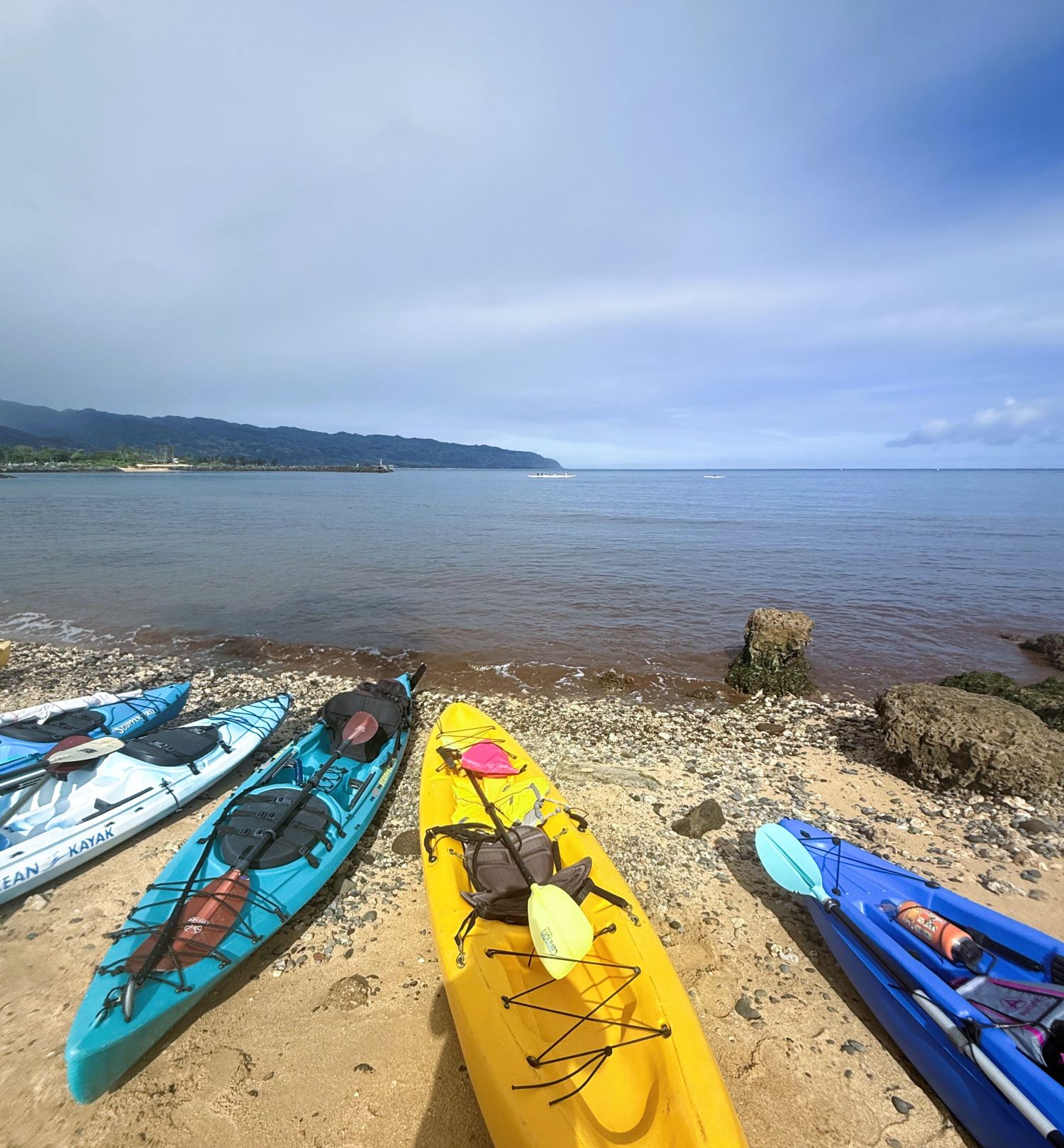
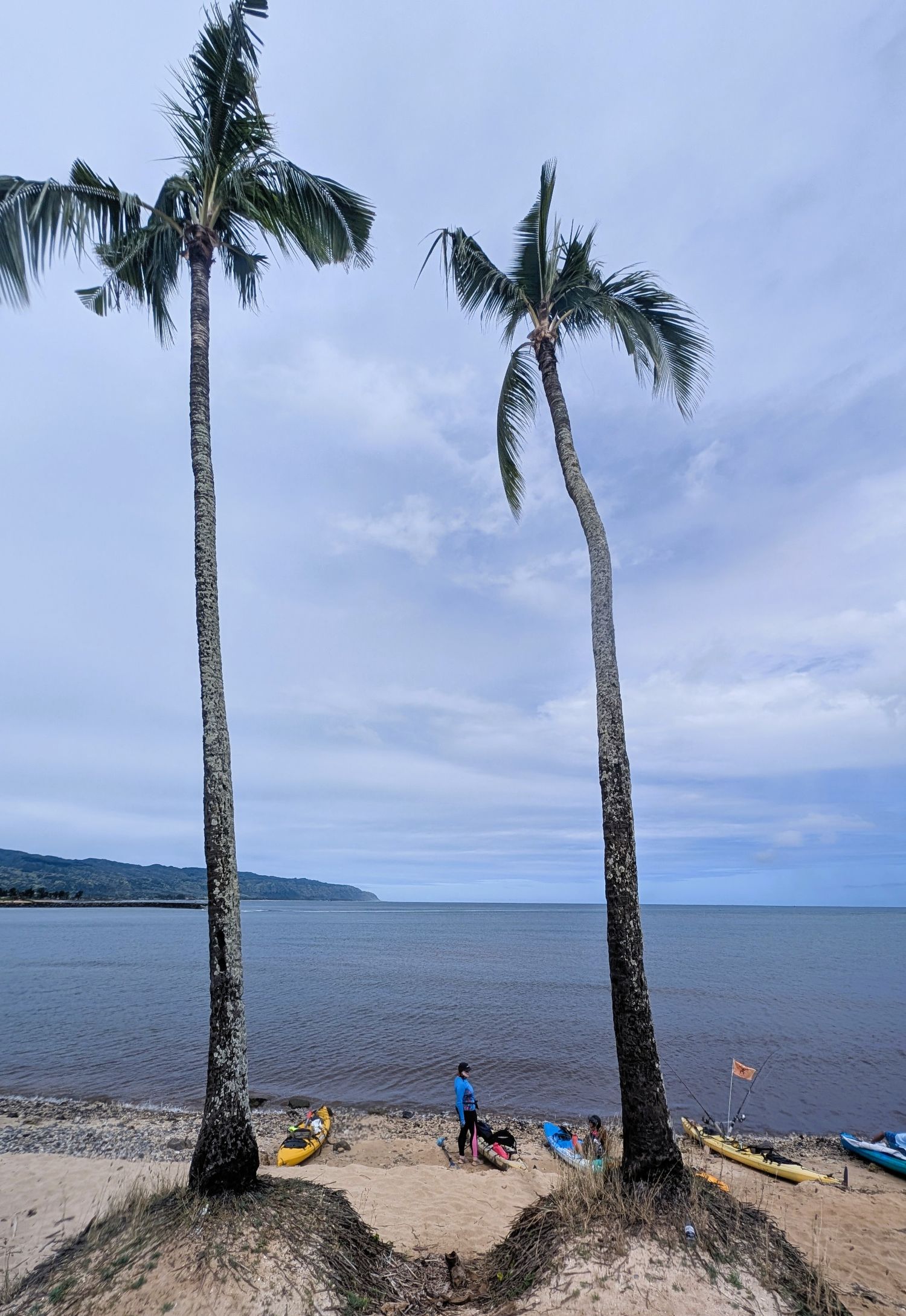
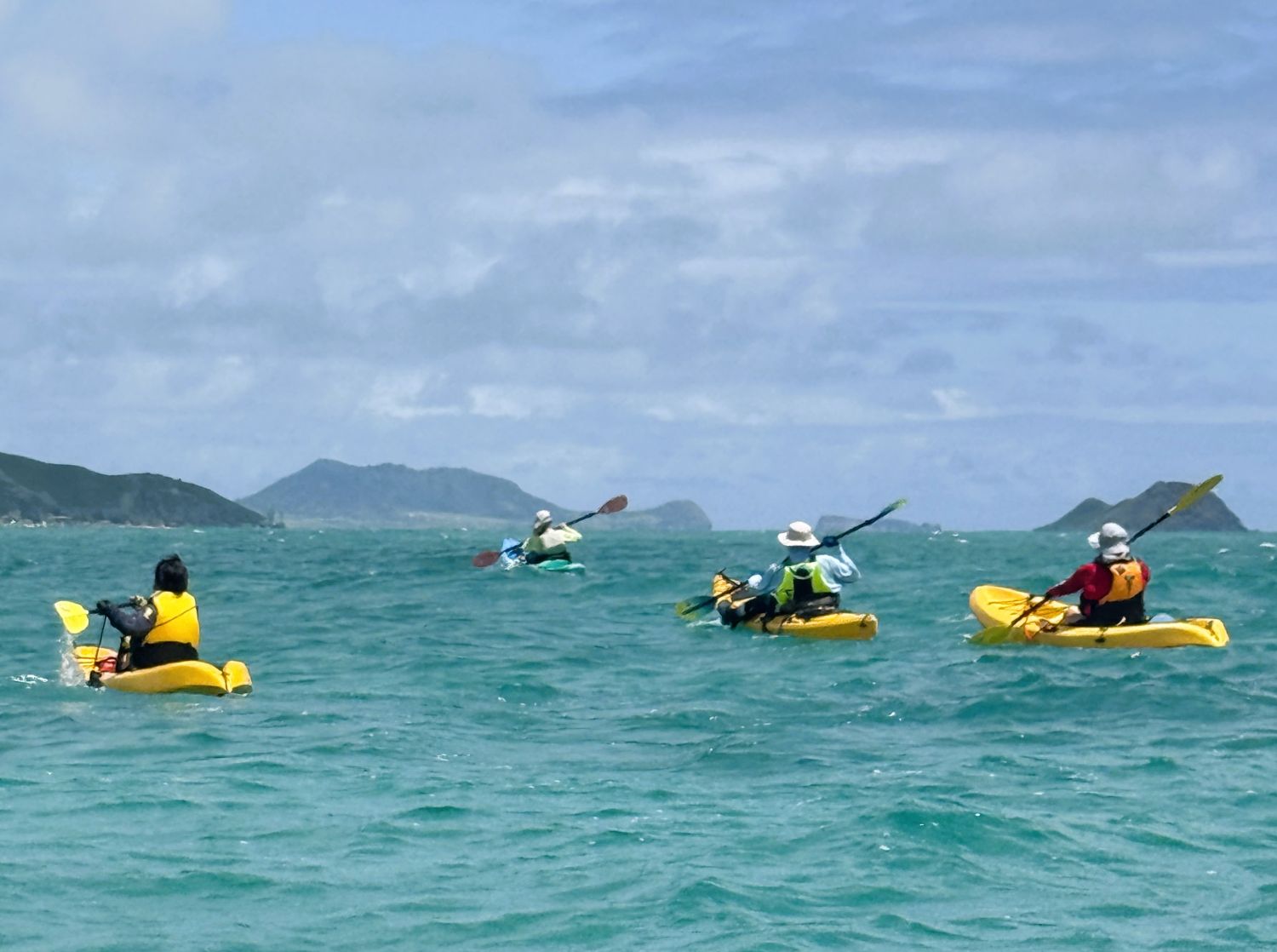
Kayaks aimed at their destination – photo by NadineSarah and Roya watching the kayaks – photo by Terry
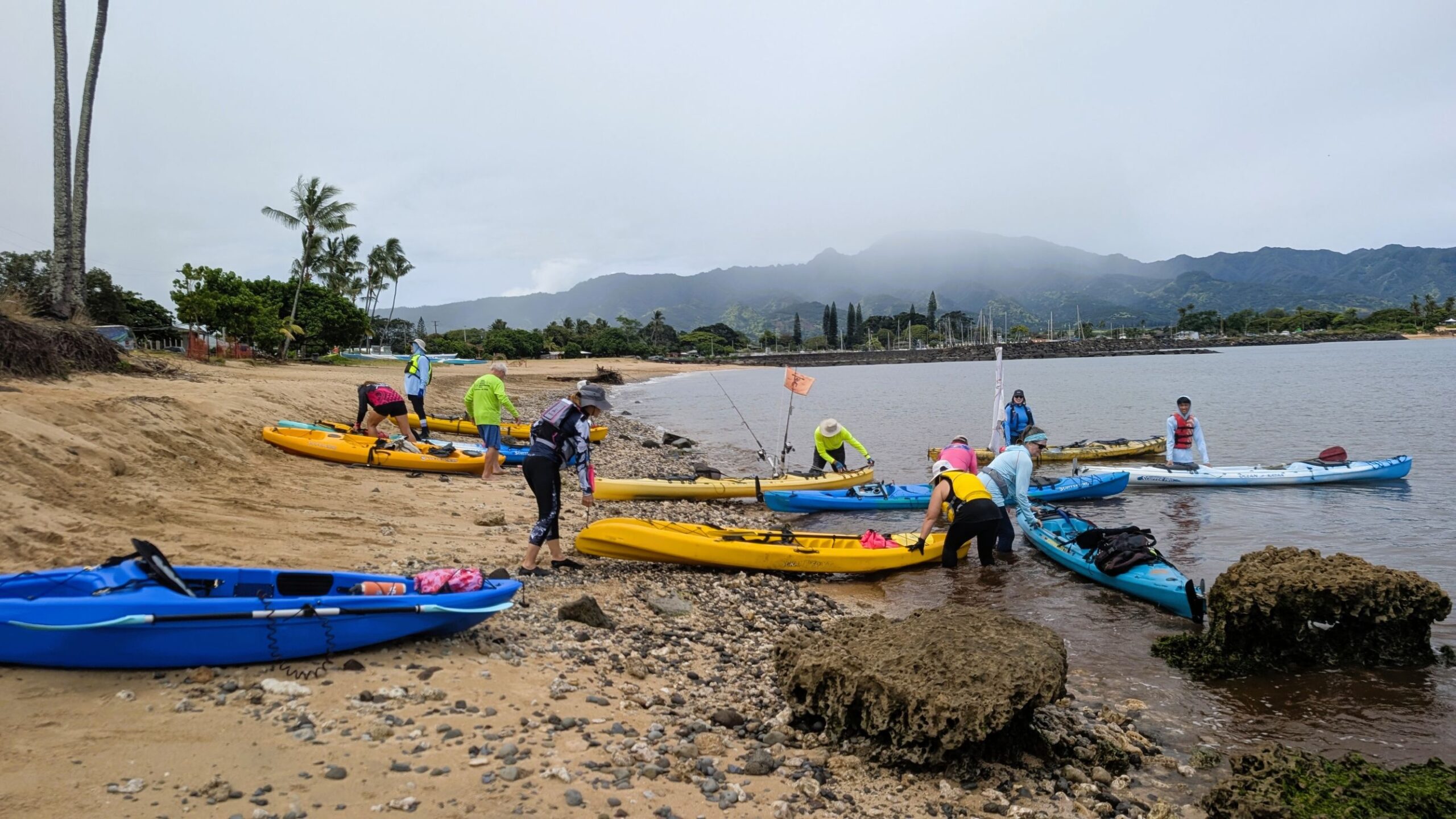
Once the logistics of getting the kayaks down and taking the cars to the landing location, we were off. The ocean had enough ebbs and flows with a nice gentle breeze to make this casual kayaker appreciate the wonders of Mother Nature.
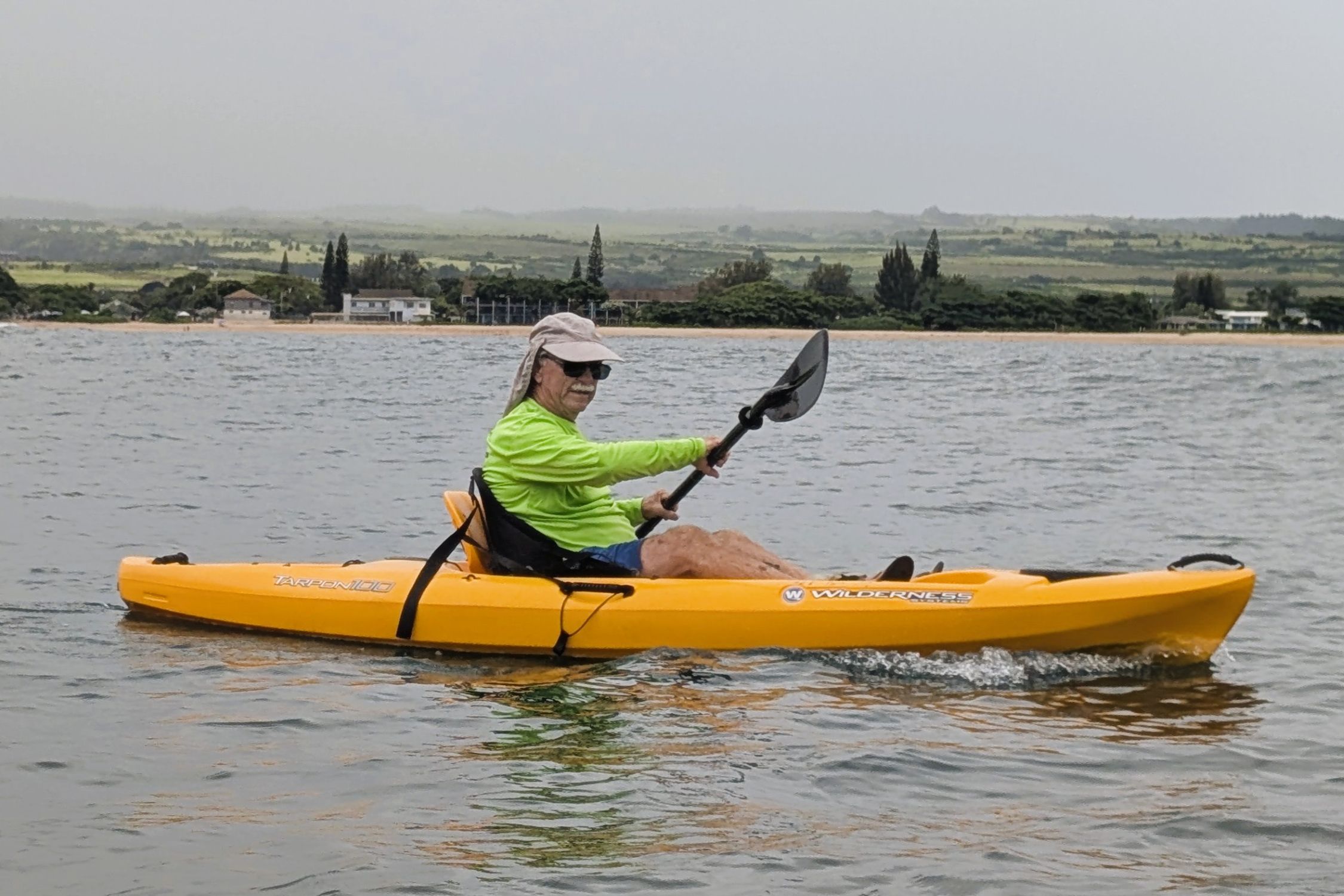
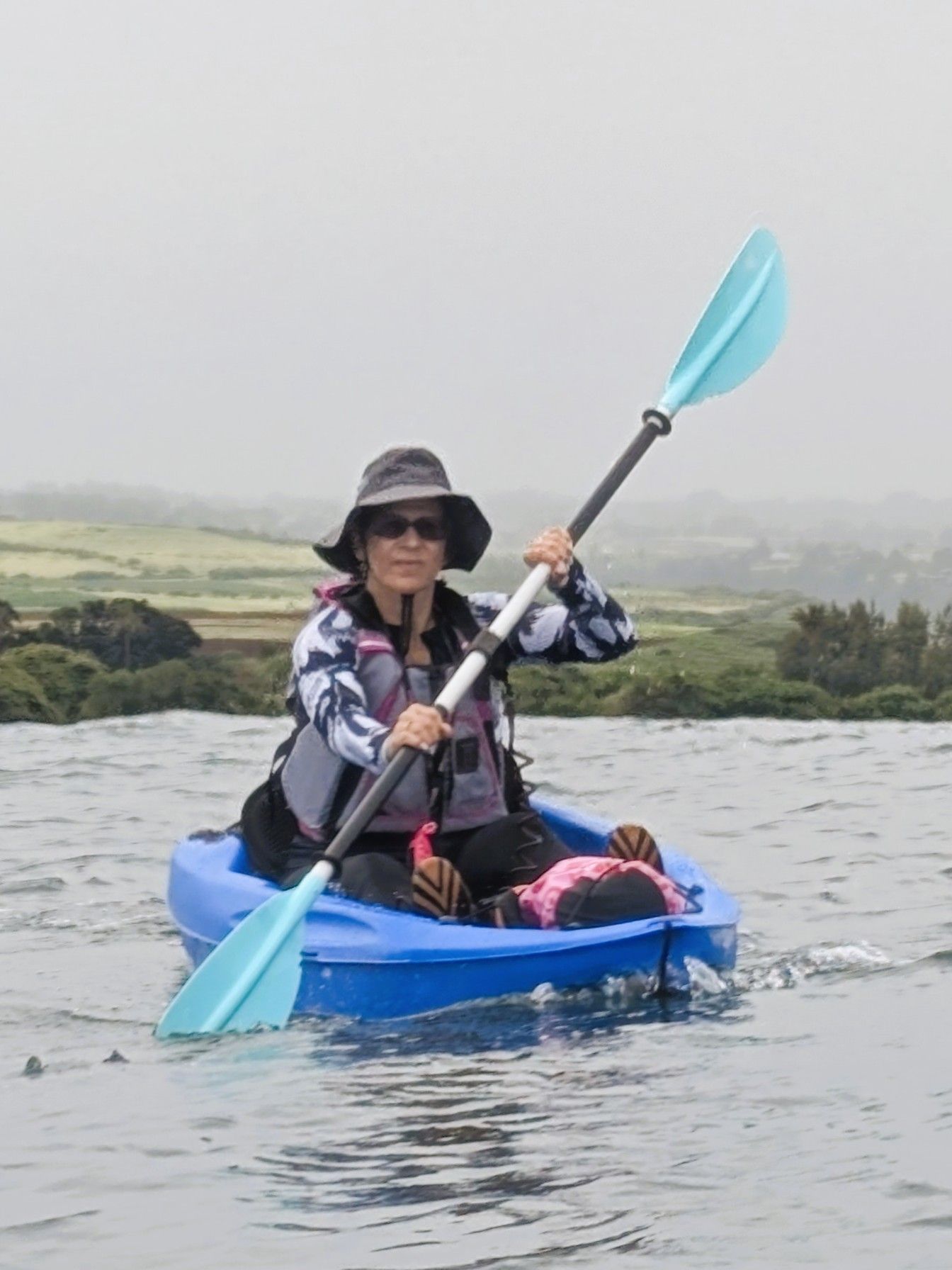
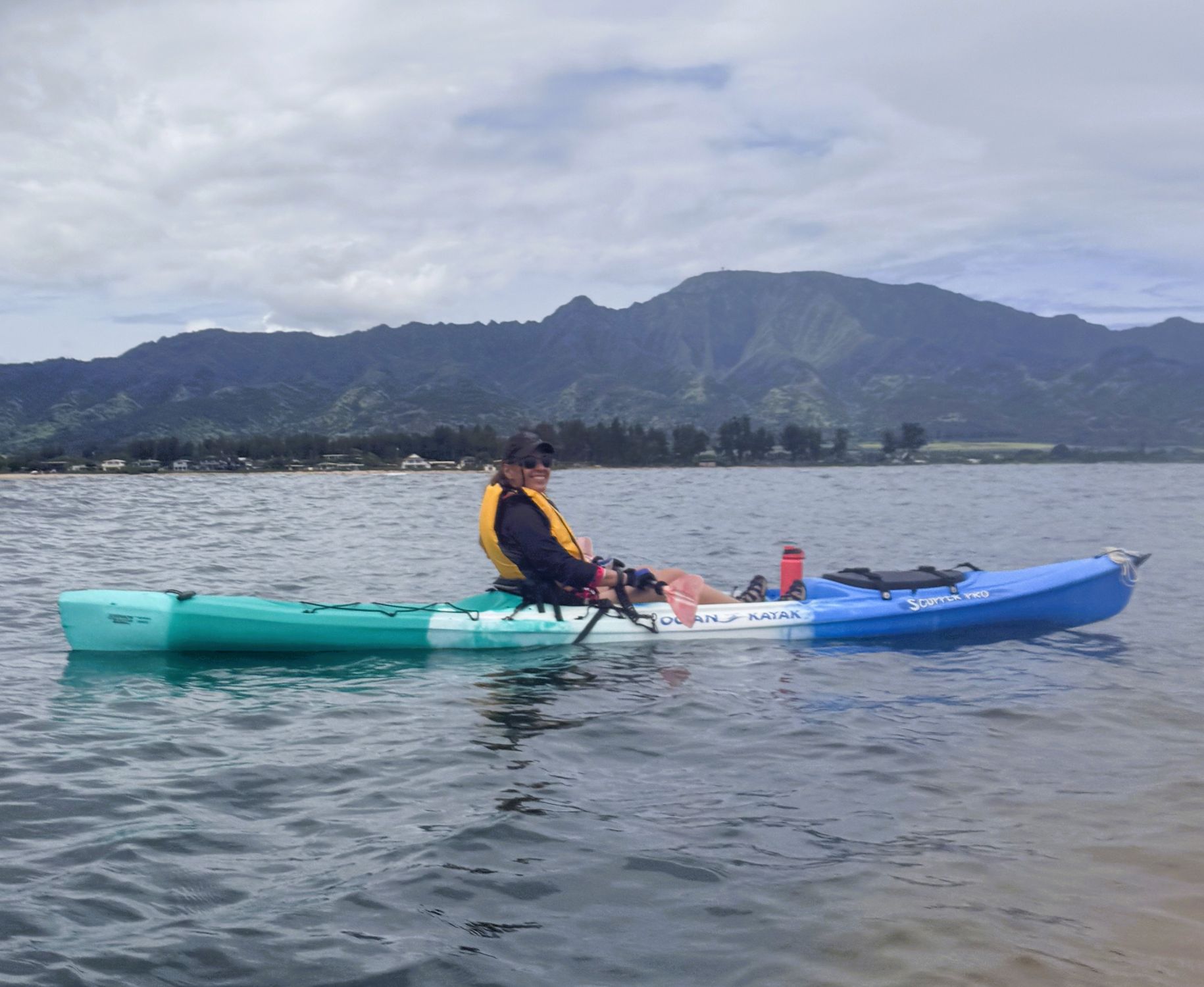
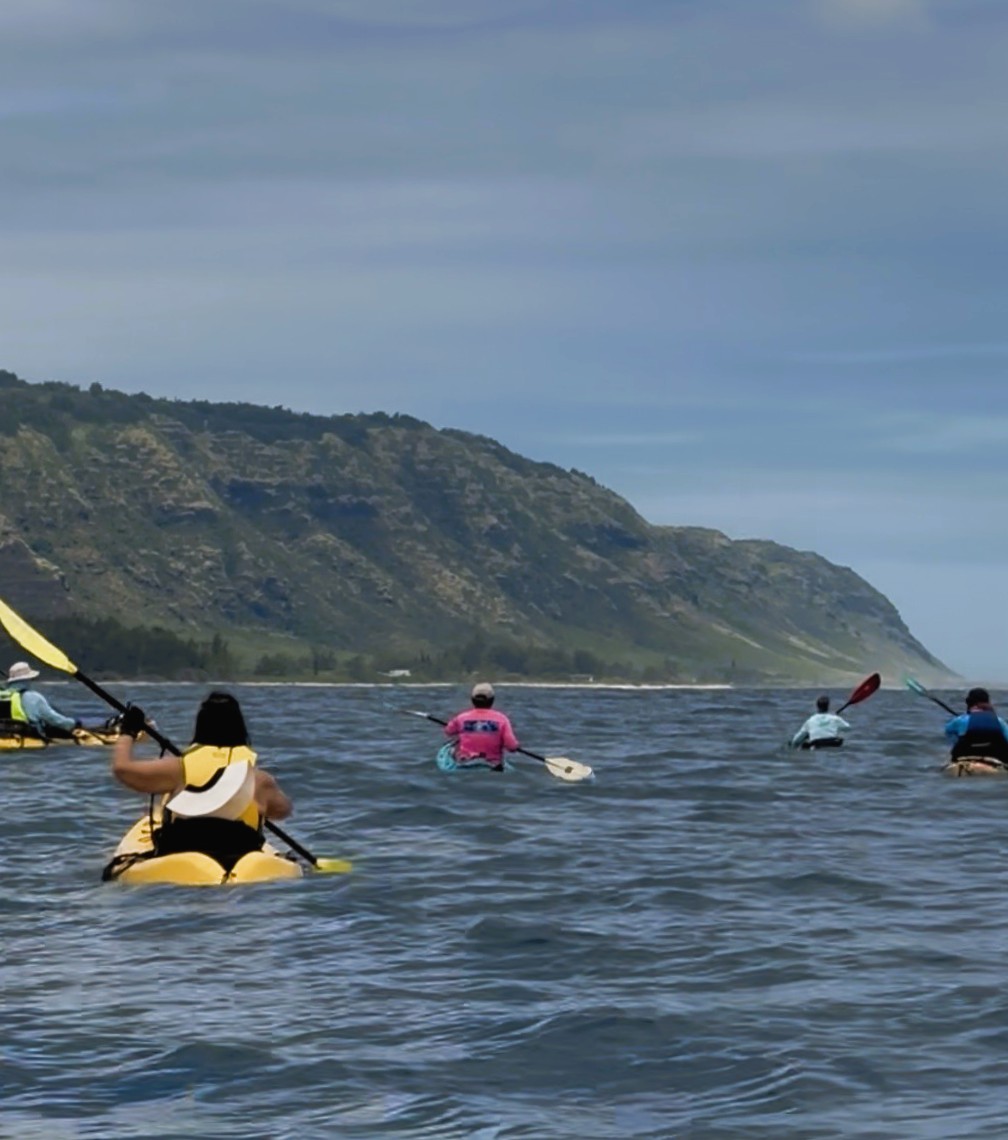
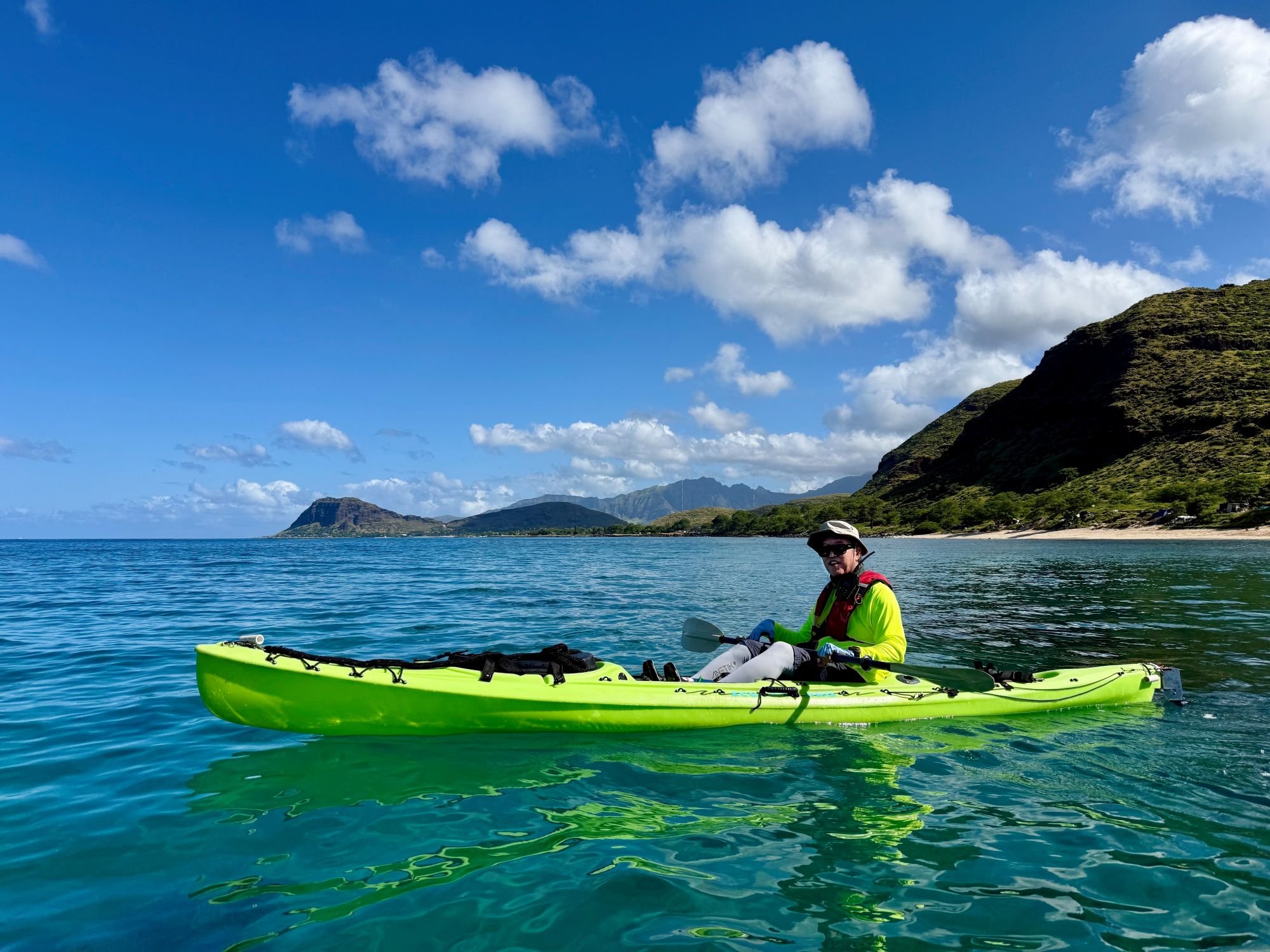
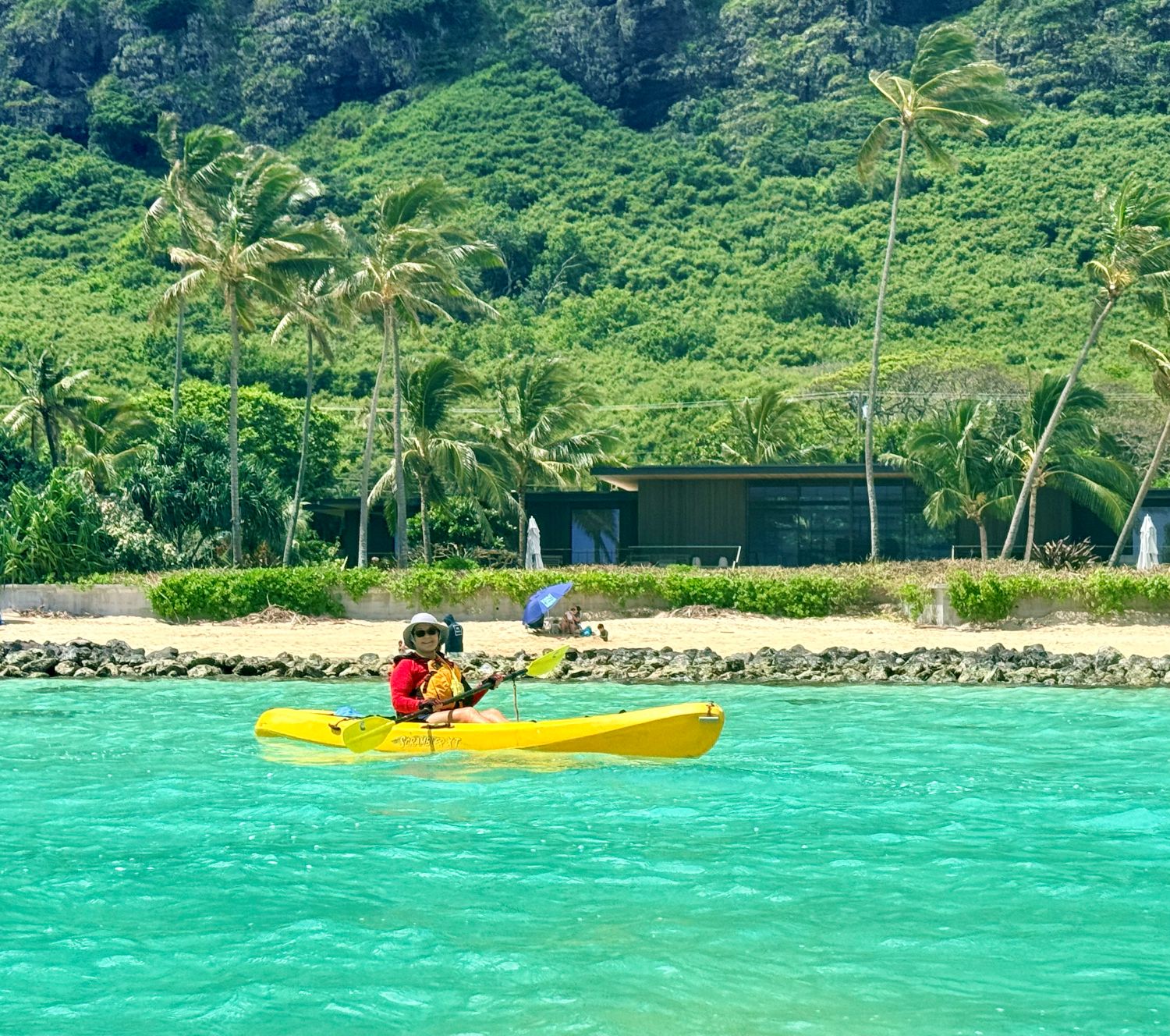
Ready, set, go! – photo by TerryStan in his Tarpon 100 – photo by TerryTrina in her Motherʻs Day gift- photo by TerryThe author appreciating Mother Nature – photo by NadineHeading down the coast – photo by Roya
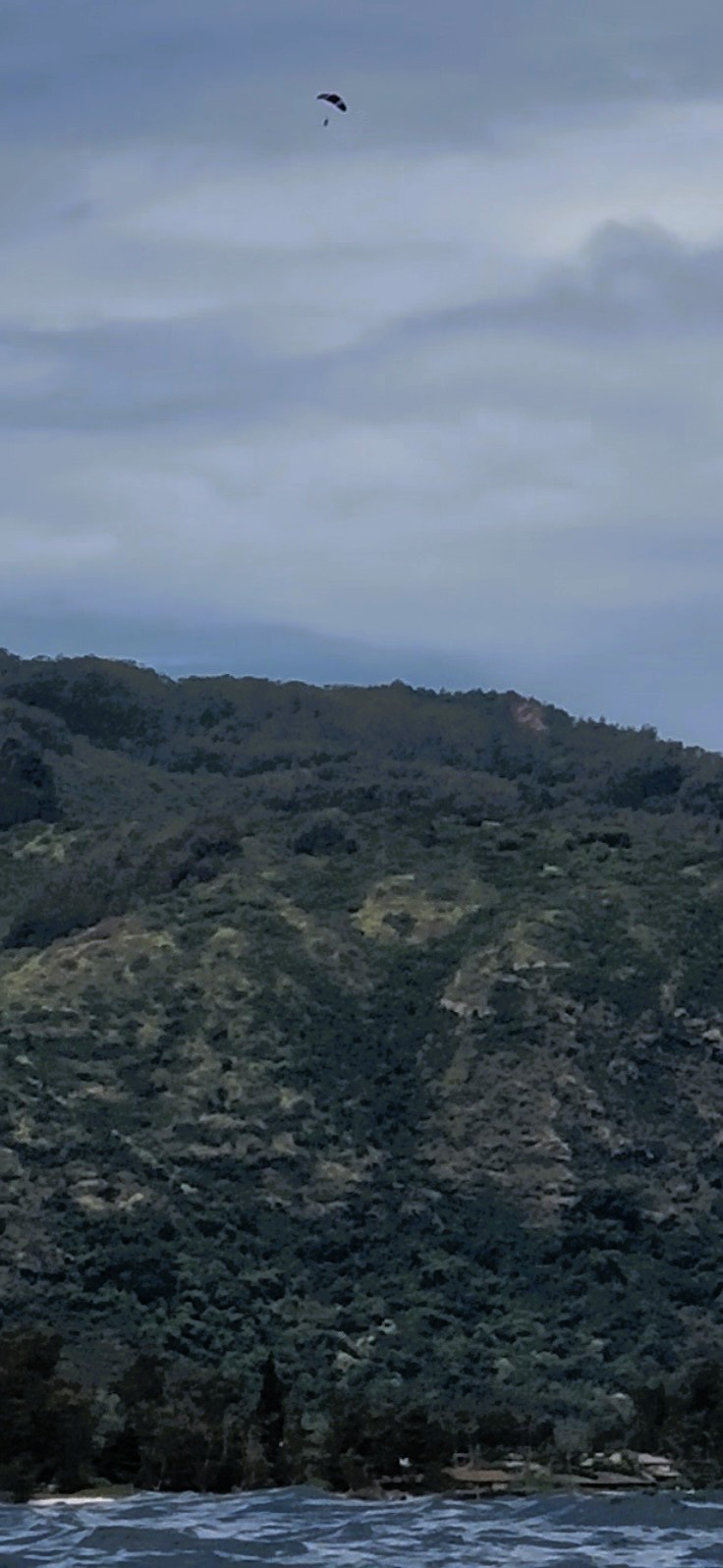
As an added bonus, all of us saw the parachuters gently falling out of the ski. A lucky few also got to see spinner dolphins. No one was left behind and we all made it to the finish.
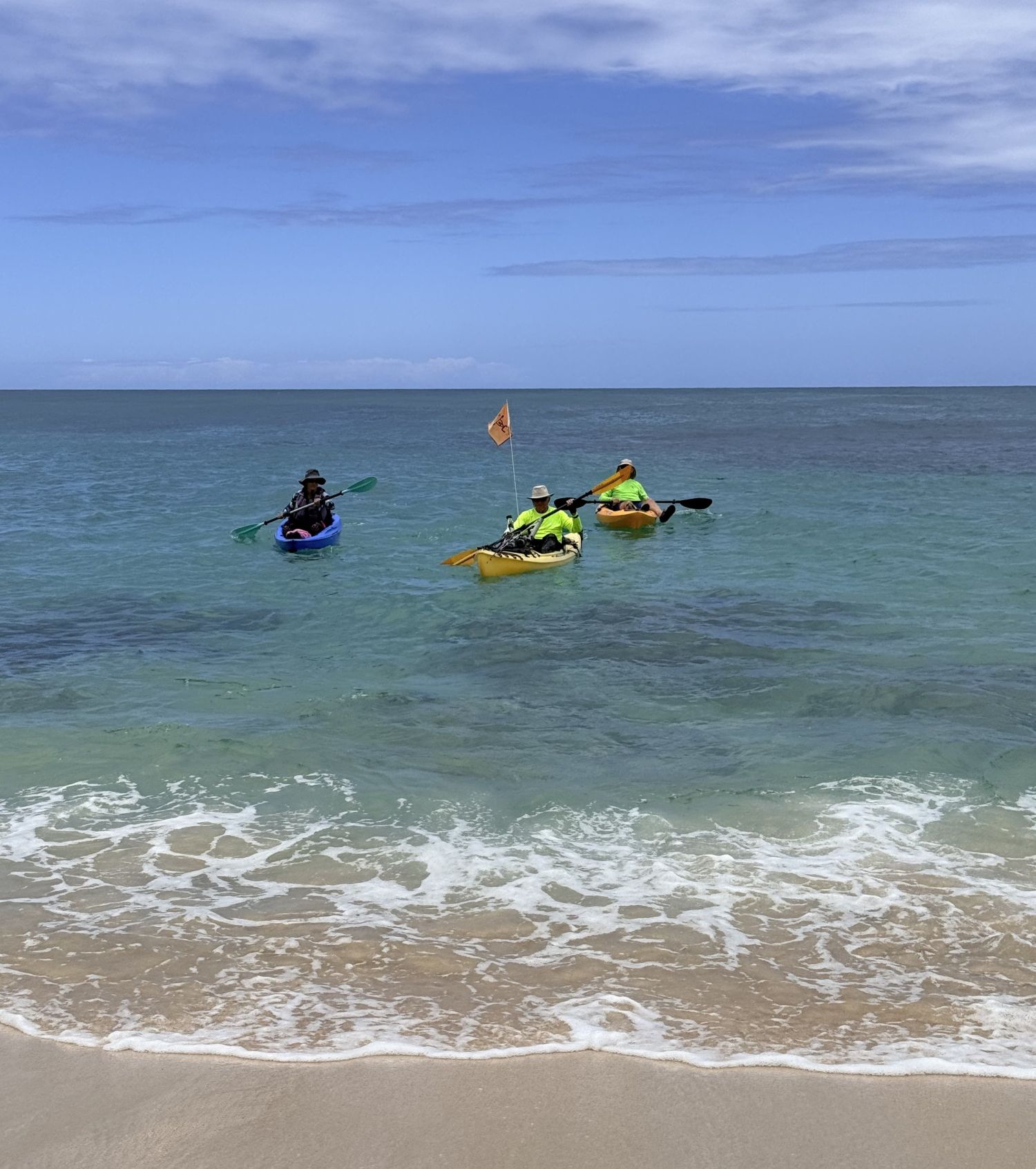
A skydiver aims for the Dillingham Airfield – photo by RoyaA large pod of Naiʻa – video by TerryTrina, Steve and Stan coming in for a landing – photo by Nadine
What an absolutely gorgeous day with a fabulous group of kayakers! Adieu until the next adventure.
Our Tracks to Pōkaʻī Bay paddle was canceled due to a Small Craft Advisory. We did an unofficial casual paddle in the lee of the trade winds from Tracks to Ko Olina and back instead. It was a short, but beautiful outing with just a few strong gusts of wind. A brief, but dynamic dolphin encounter capped off the day. No story, just a quick video.
Photos by Nadine Owen, Debi Lyle and Trina Takasato
May 3, 2026
What a glorious day at Makai Pier—one of those “this is going to be amazing” mornings that slowly turns into “this is going to be a story we tell forever… because we survived it.”
Miraculously, everyone showed up on time (already suspicious), and Stan orchestrated the carpool like a logistics wizard who definitely missed his calling at NASA. Once on the water, we formed what I can only describe as an elite kayak security system: Stan up front, Sandy guarding the flank, and Debi bringing up the rear—basically a human triangle of protection shielding the rest of us, who were far too excited (and underqualified) to notice minor details like fishing lines, shallow reefs, swimmers… you know, hazards.
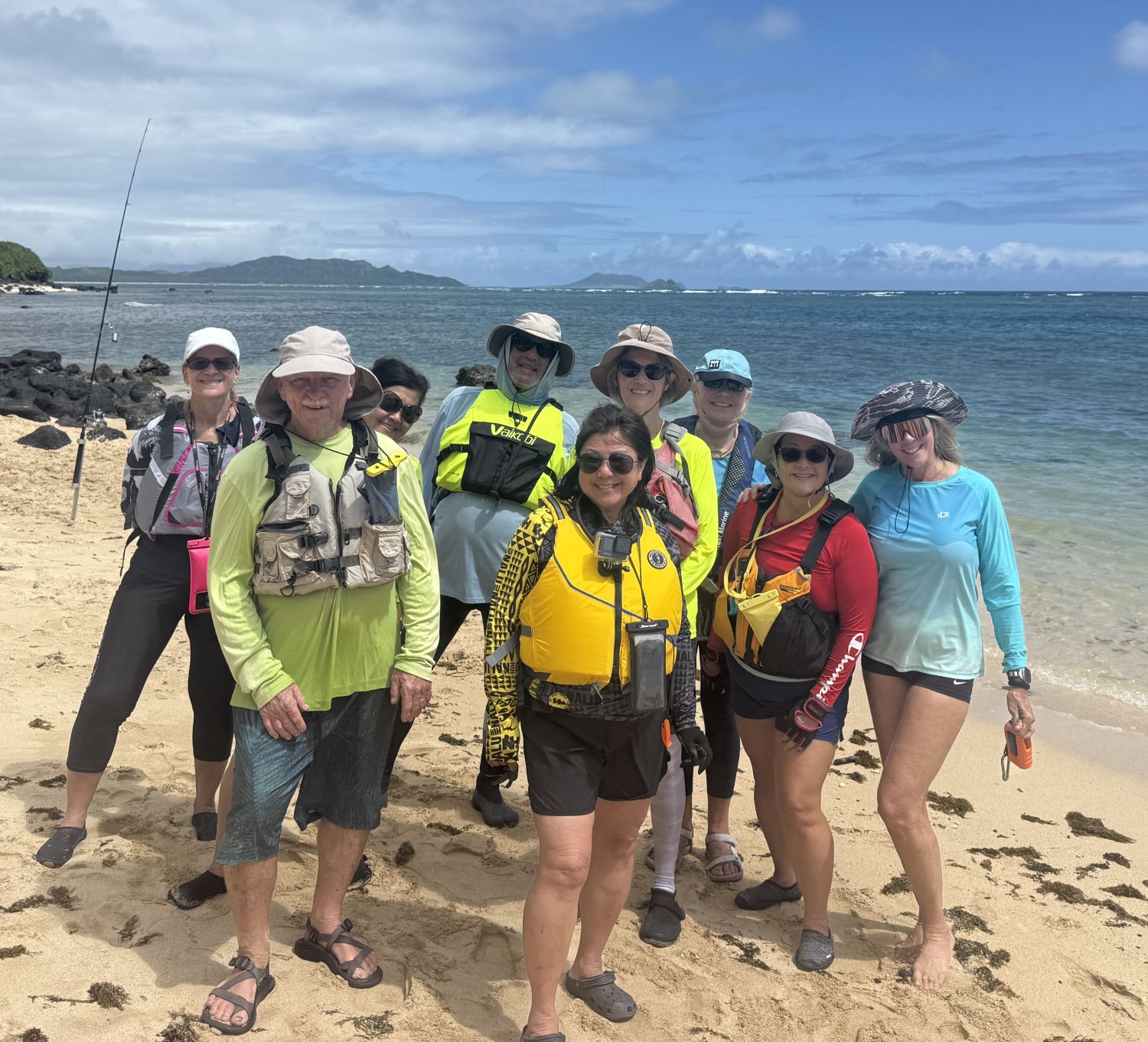
Ready to launchAll smiles before launching
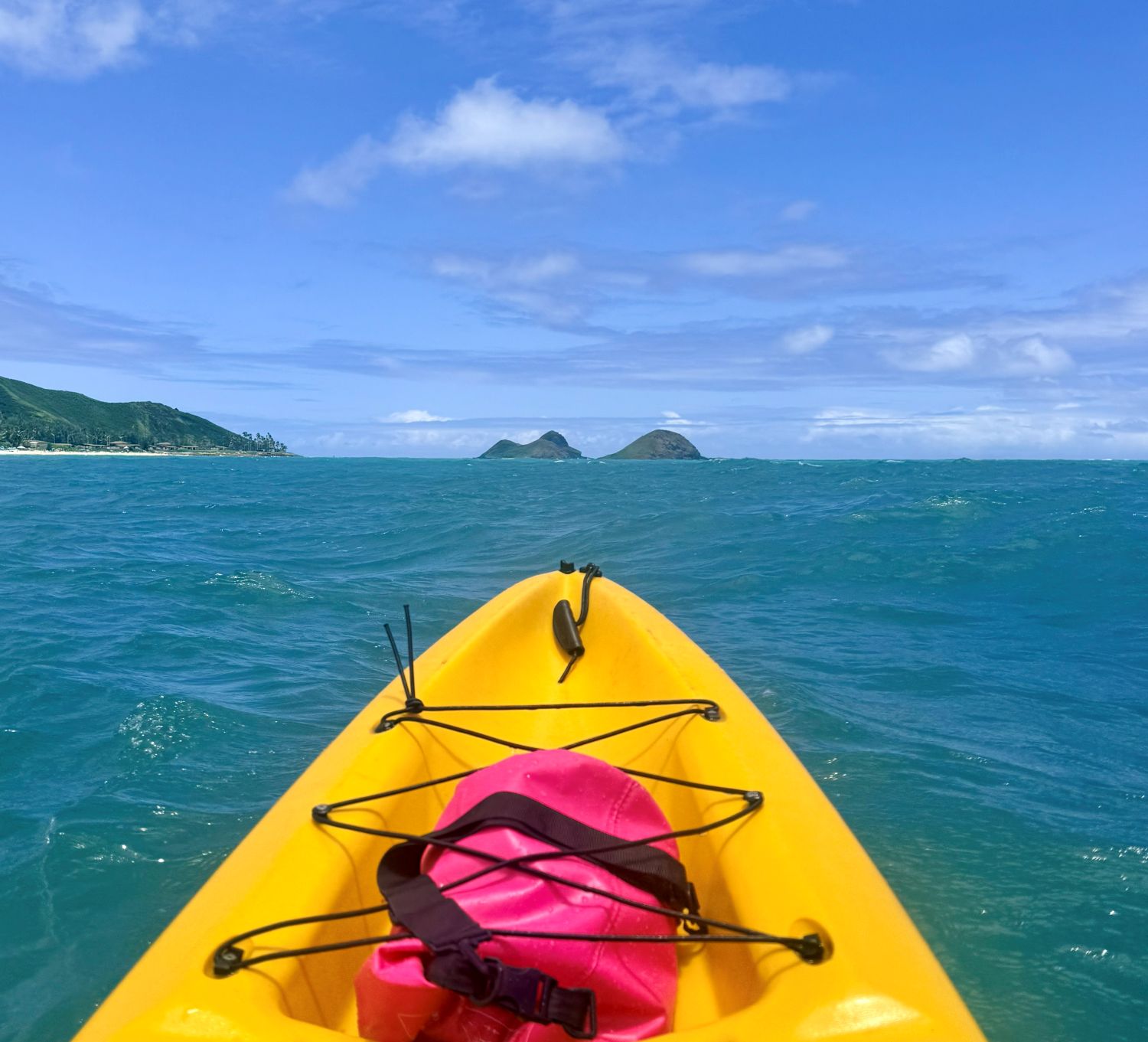
The wind started out as our best friend—gently pushing us along like, “You got this!”—and we were cruising toward Waimanalo and the Mokes feeling like absolute champions. And then, about 15 minutes in, the wind flipped personalities. Suddenly it was in our faces like, “Actually… no.” Every paddle stroke became a negotiation.
Still, the aquamarine water of Waimanalo was so ridiculously beautiful it almost felt rude to complain, so we kept going… and going… and going. At some point—3 hours? 4 hours? a lifetime?—time lost all meaning. I was too tired to check my phone, and the wind had upgraded to aggressively exfoliating my eyeballs.
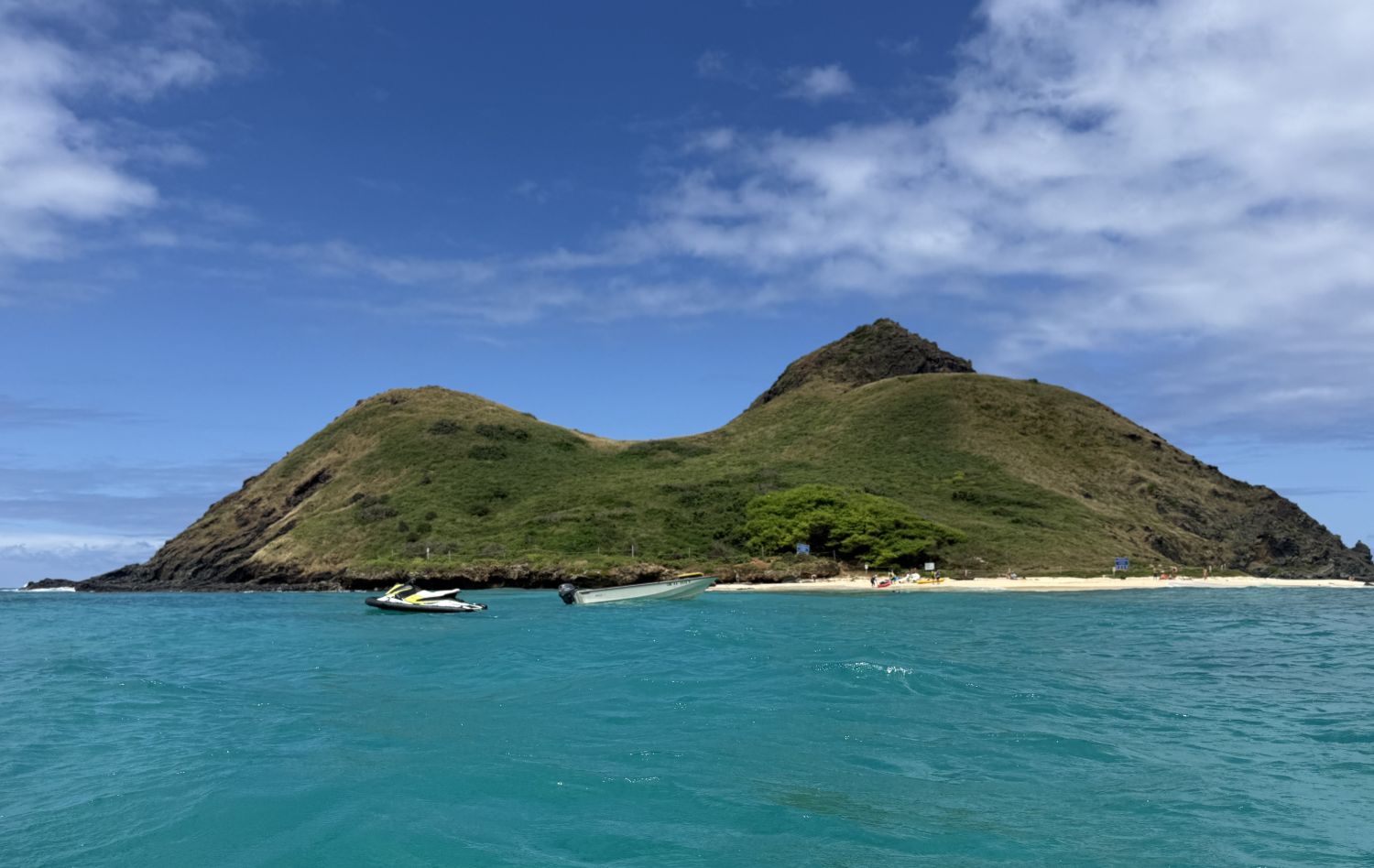
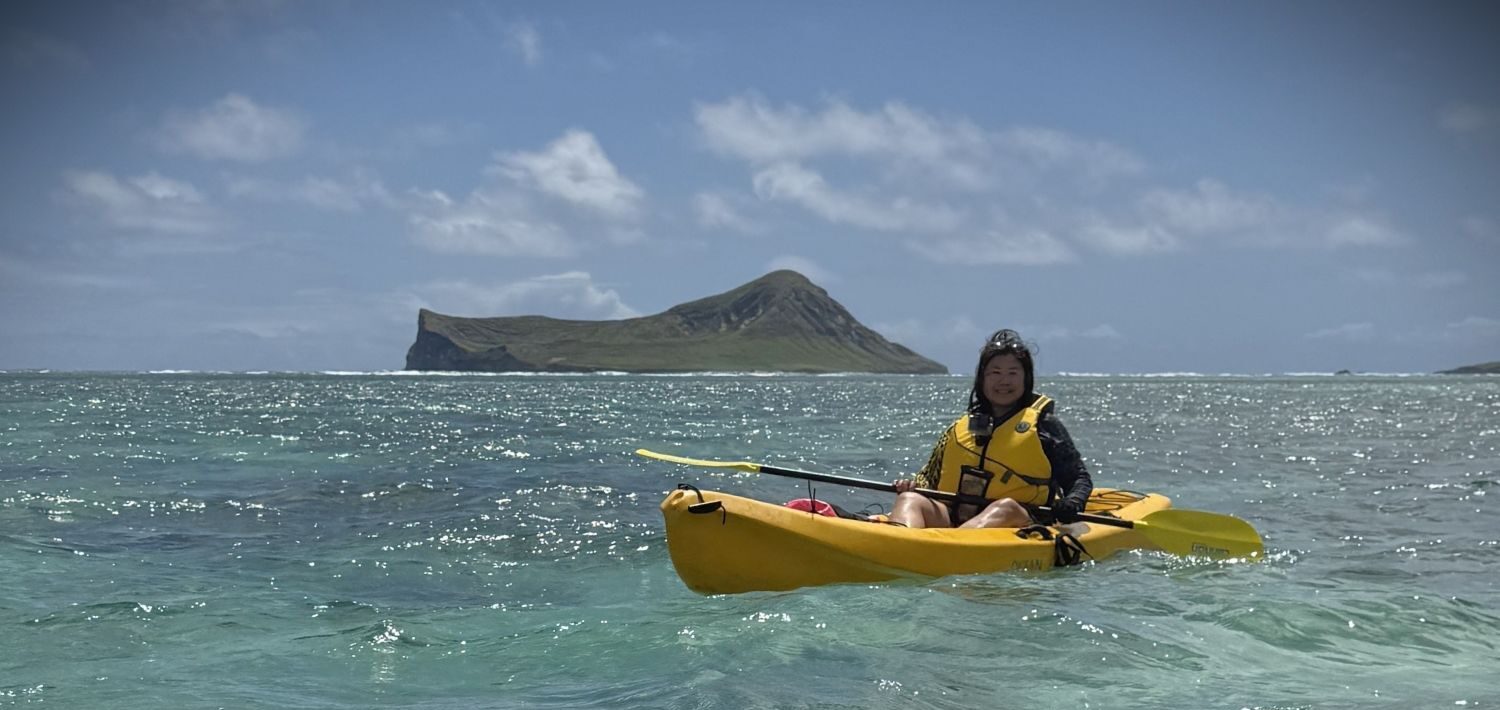
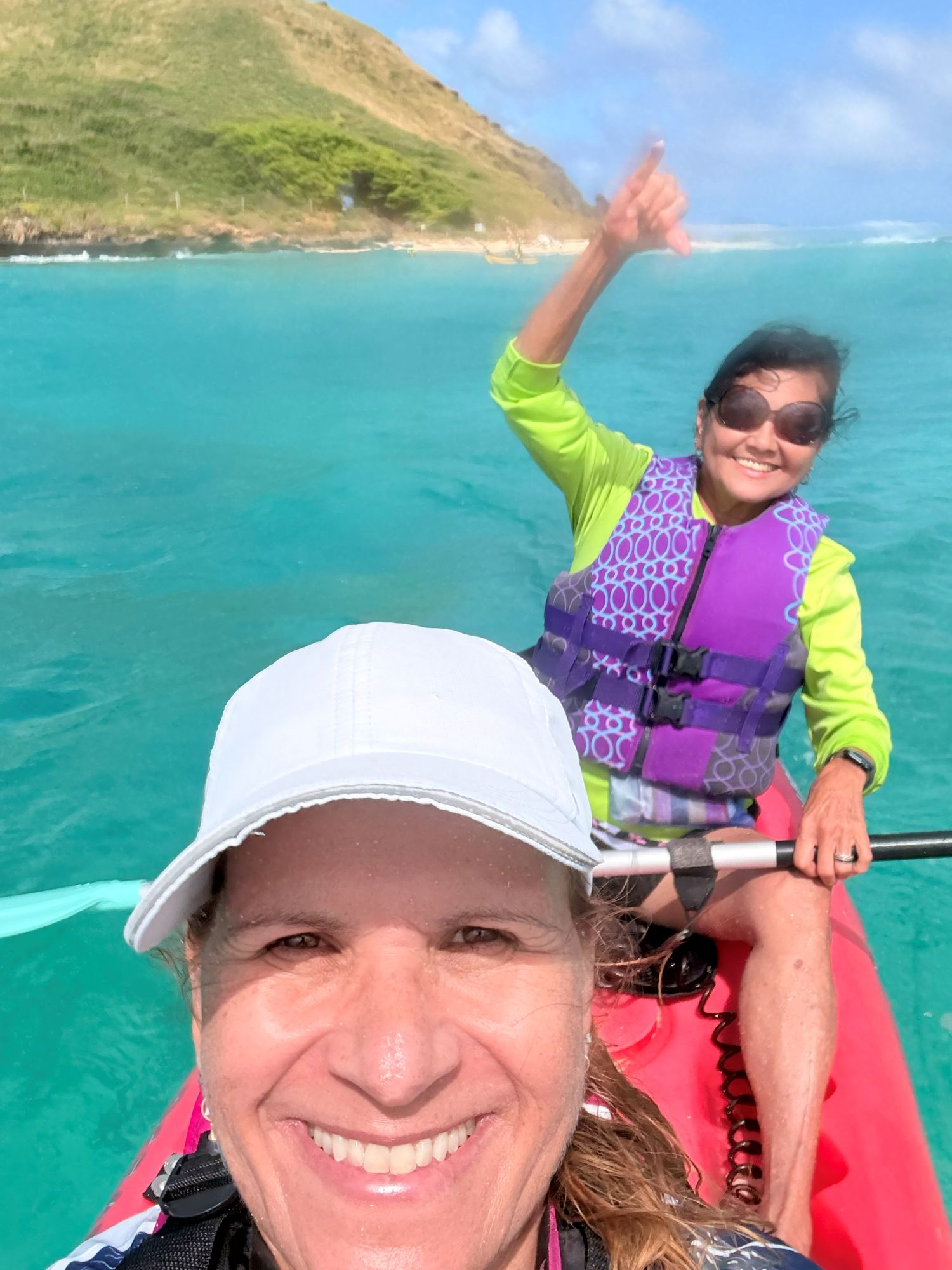
The author with Manana behind herJeanine says Aloha to the ObamasWhitecaps aheadTarget Mokuluas
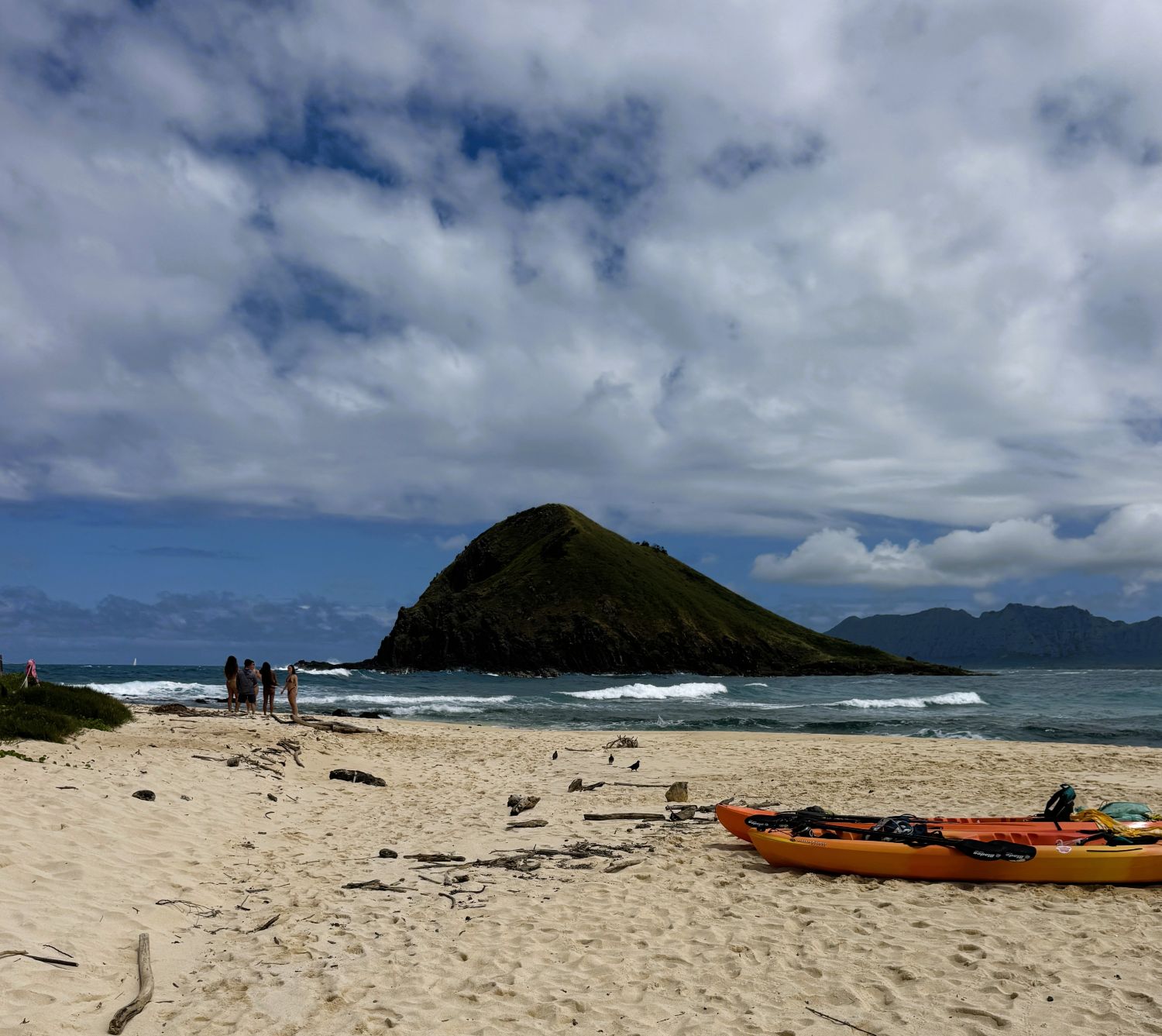
But then—land! Sweet, glorious sand at Moku Nui!
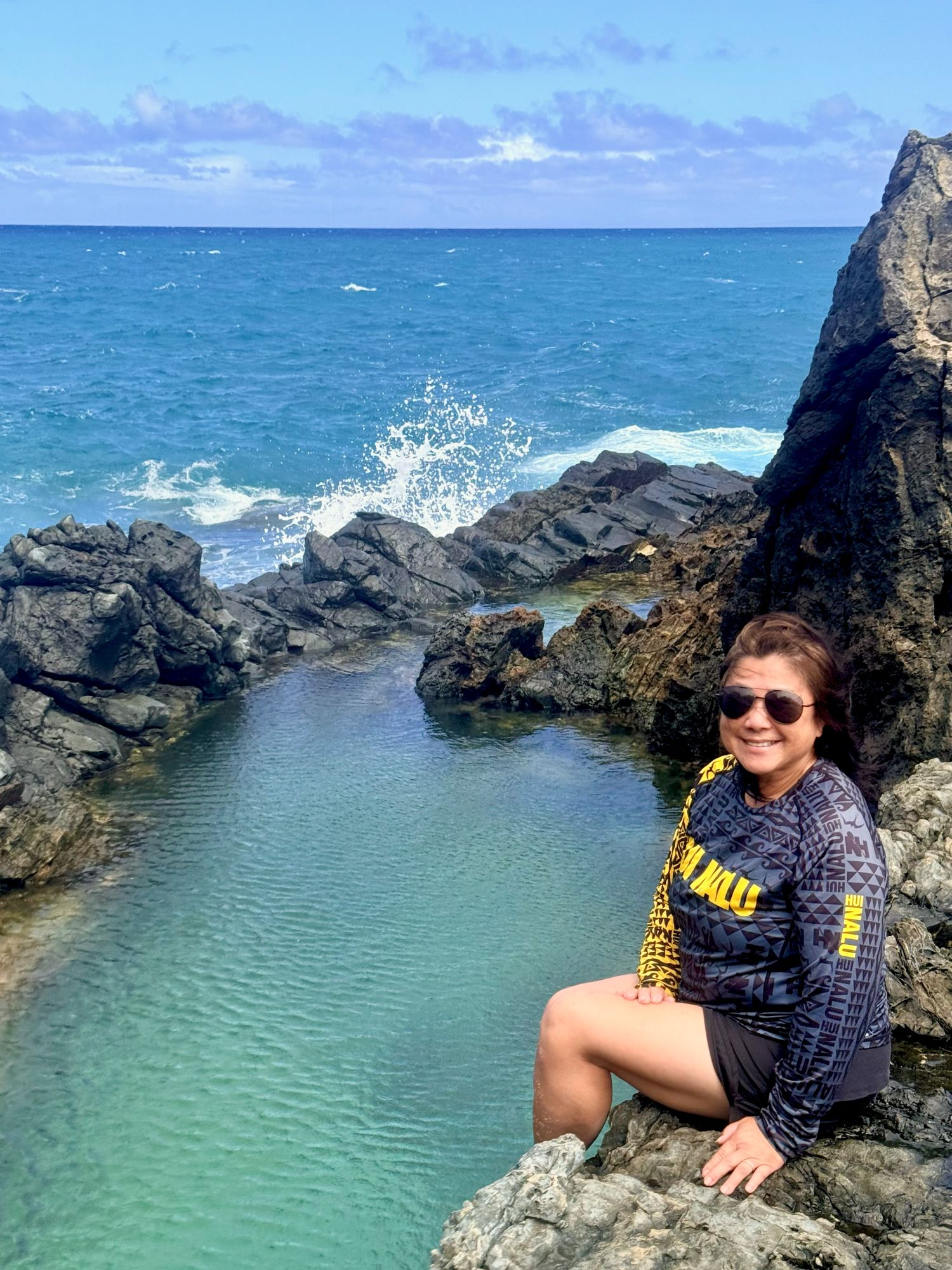
Looking at Moku IkiNadine at the Moku Nui pool
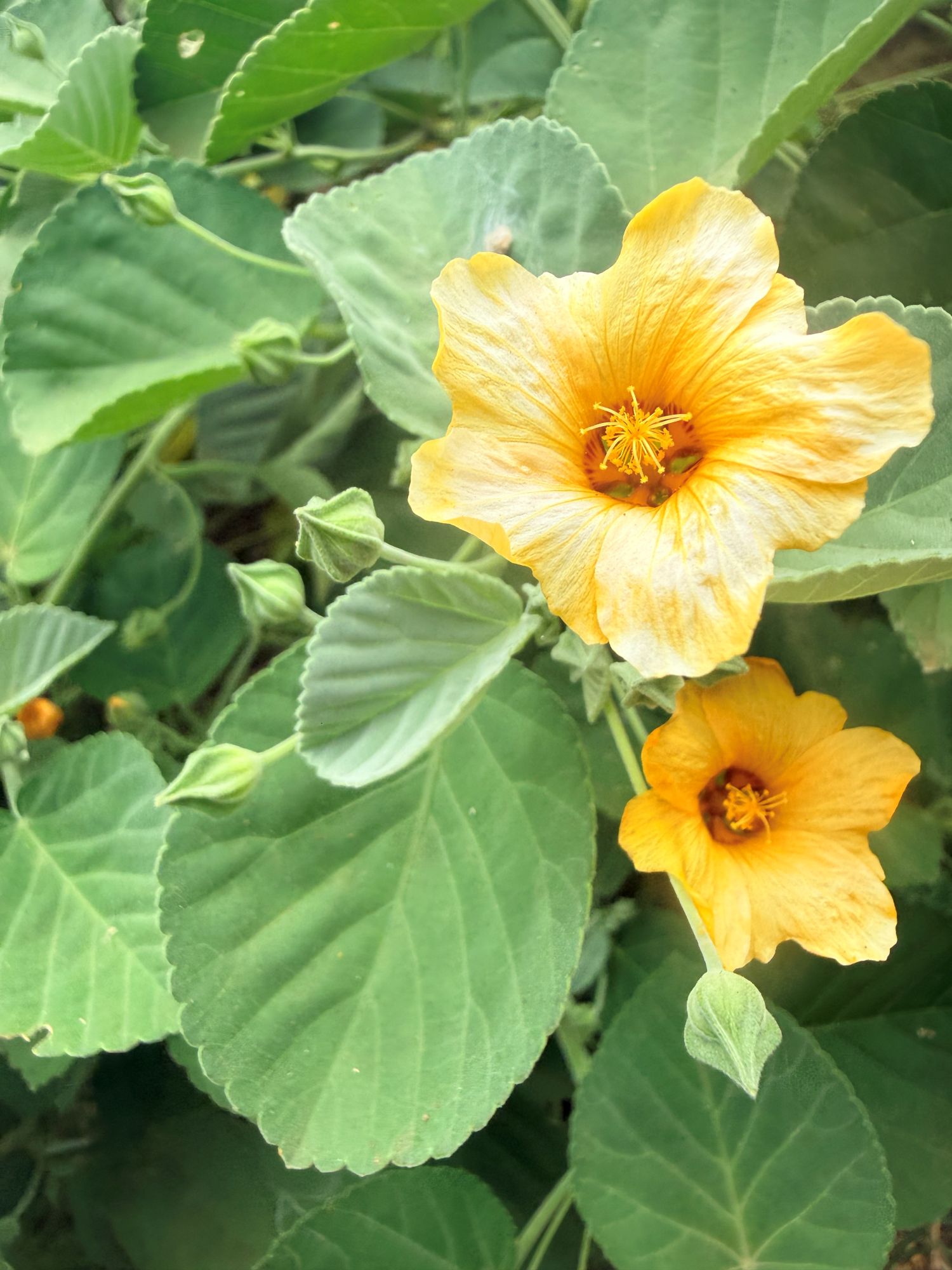
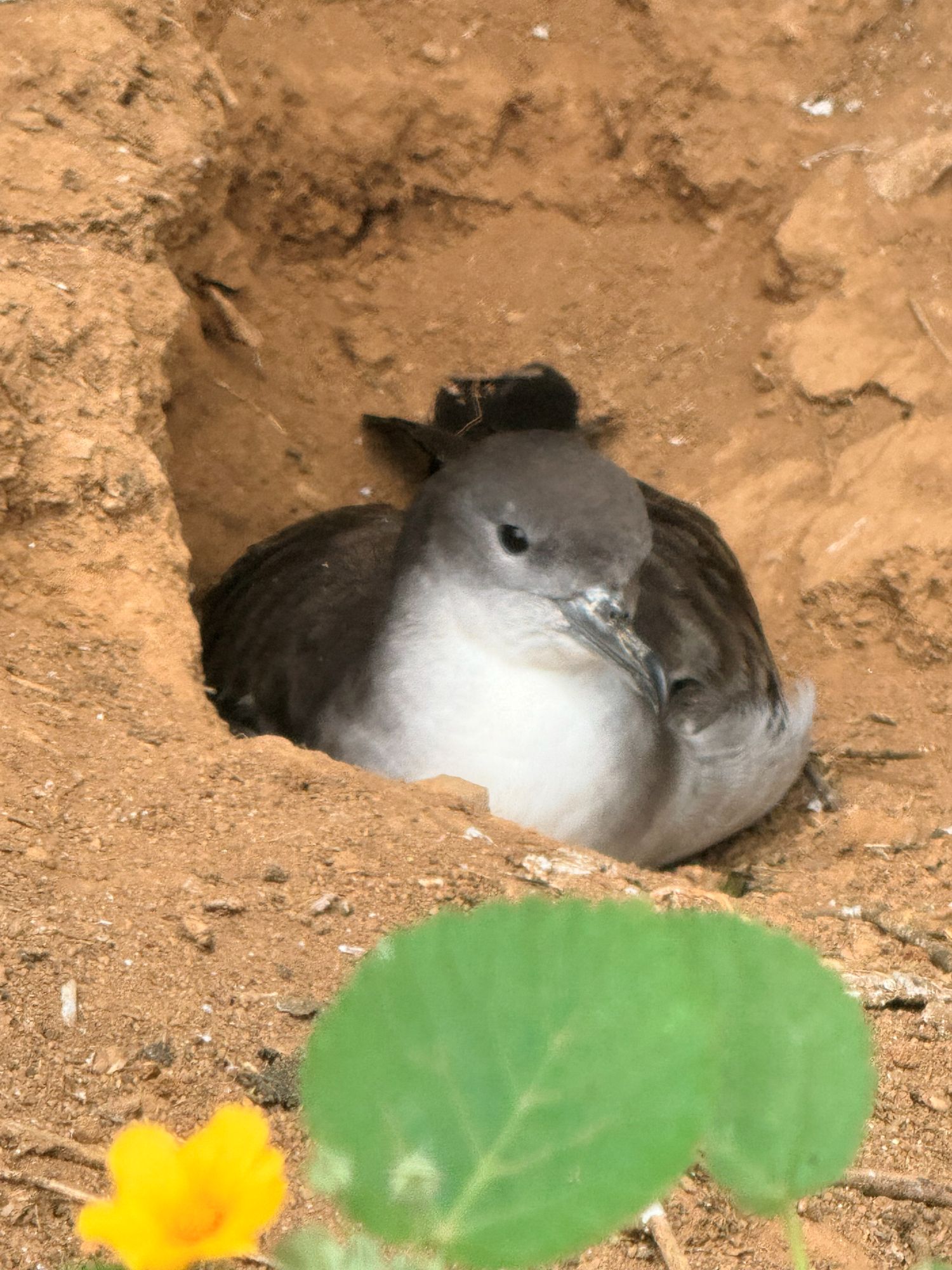
My friends Trina and Lila were beyond stoked since it was their first time stepping onto the island, and honestly, we all felt like we’d just completed an expedition worthy of a documentary. I showed them the mini Queen’s Bath tidepool, where we celebrated with a dip and approximately 400 selfies (for survival documentation, obviously). Then we wandered the trail, stumbled upon a stunning bloom of fragrant ‘ilima flowers, and spotted shearwater birds tucked into their little nesting holes.
Ilima blossoms‘Ua’u kani (wedge-tailed shearwater) in burrow
And yes… we also witnessed two birds enthusiastically continuing their lineage in a way that made us all suddenly very interested in looking elsewhere. Nature is beautiful. Nature is also…bold.
After snacks, water, and Stan taking what can only be described as a heroic nap, we set out again—this time toward Kailua. Somehow, we made it back to shore. Total paddle time: about 7 hours. Emotional time: 3–5 business days.
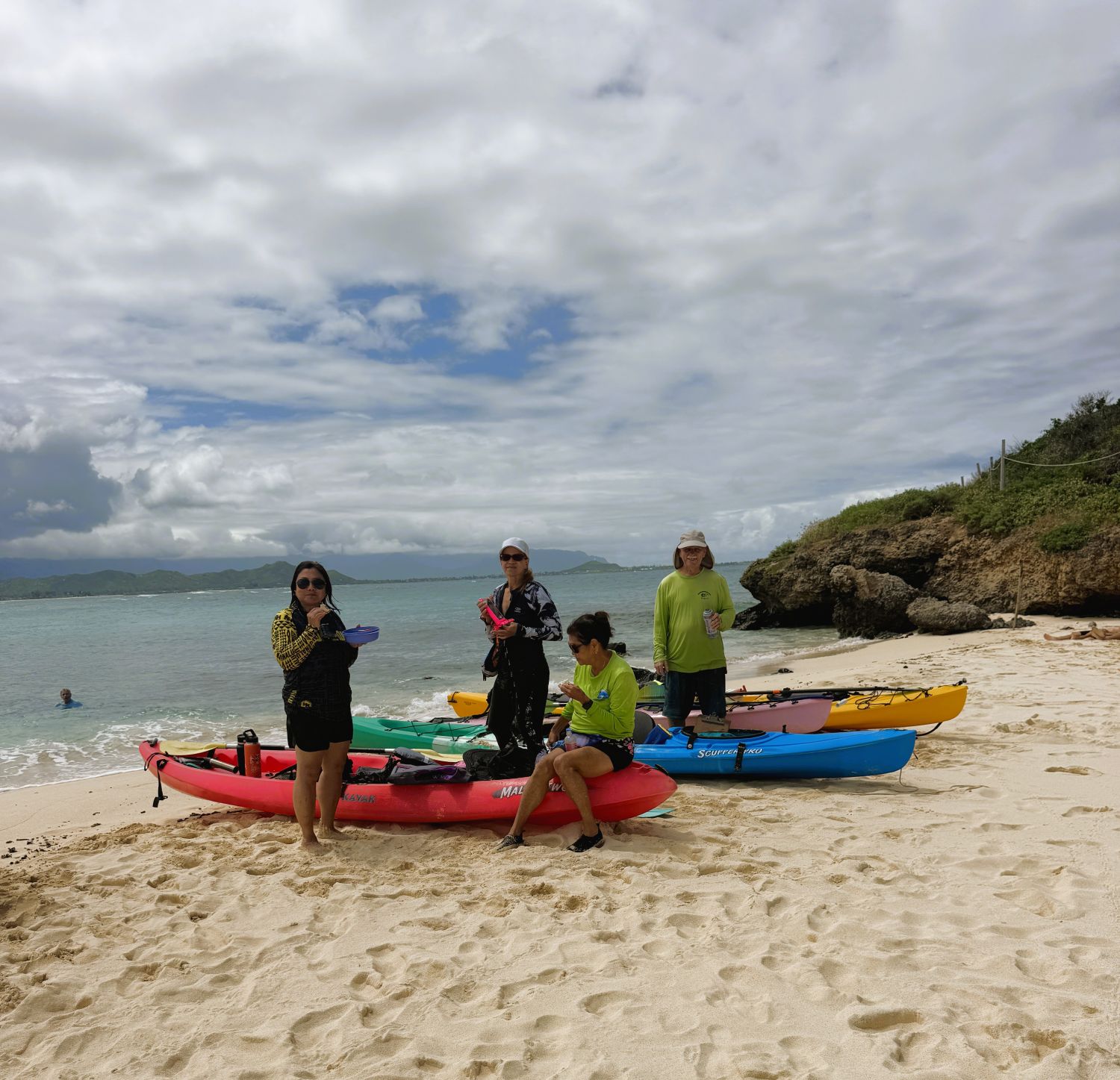
Snack time on Moku NuiLeaving Moku Nui
Then came the final boss battle: dragging and lifting kayaks back to the cars for another 2 hours. Because apparently, the ocean wasn’t done with us yet.
I made it home just in time for dinner… and immediately lost the will to eat it. But shoutout to my $200 used massage chair, which stepped up like an MVP. I melted into that thing for what felt like 7… maybe 9… possibly 12 hours.
All in all: slightly chaotic, mildly traumatic, absolutely unforgettable. Would I do it again?…ask me after my arms stop hurting.
[Editor’s note: The author recovered quickly enough to put together this awesome video the day after.]
Exactly 3 weeks later, the Super Bowl Surf Clinic transformed into the Super Mokulua Island Surf Clinic, Sunday March 1st 2026. The original date was doomed by a storm front which materialized on the day of the clinic, so I was concerned about the new date. The weather had been so unstable, all the reports were different this time. The wind would calm and the storm front approaching was all vapor and no substance. Still I was concerned since there was considerable cloud coverage after a week of pretty nice weather. Driving over the Pali in darkness, the clouds were more extensive on the windward side of the Koʻolau.
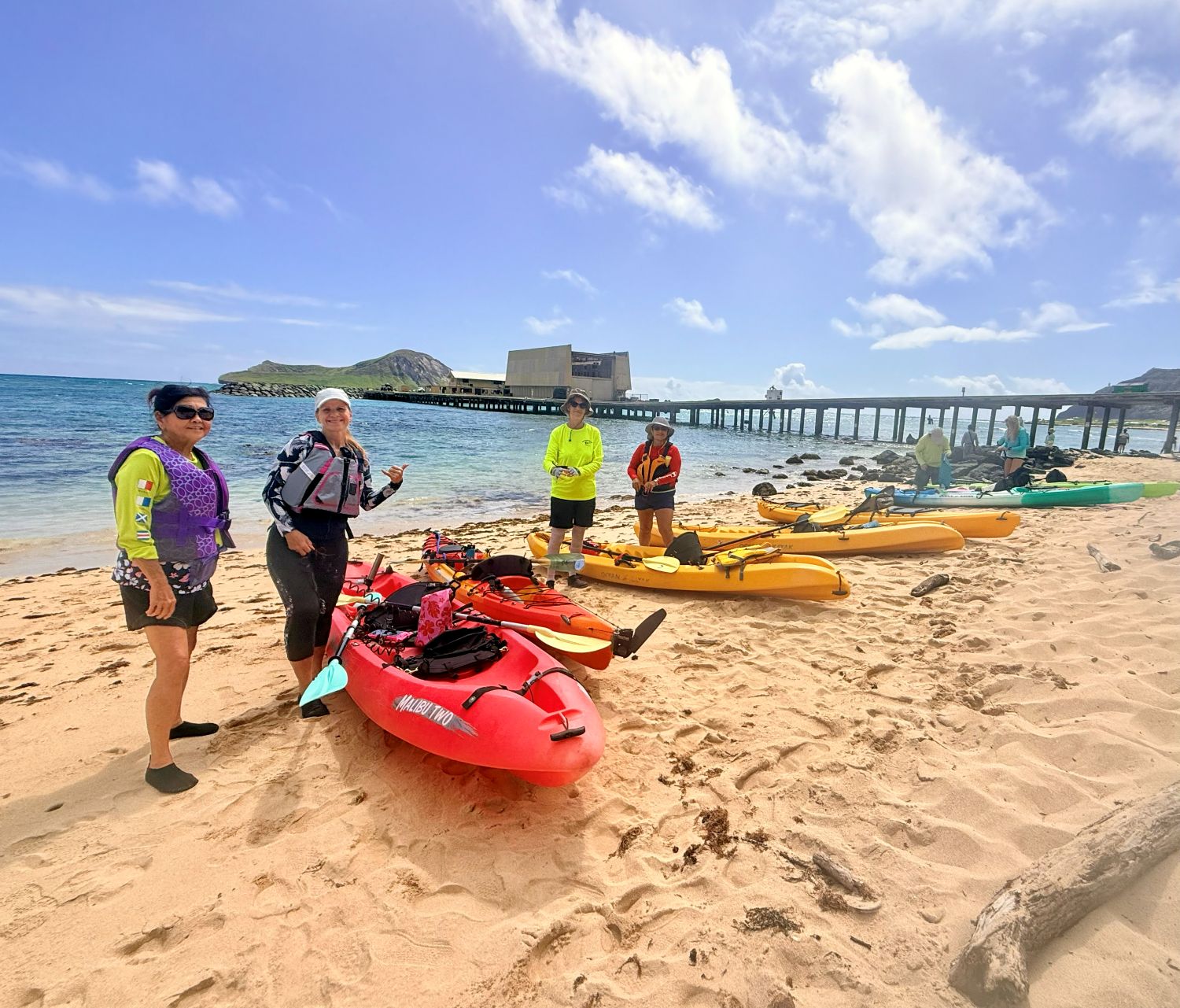
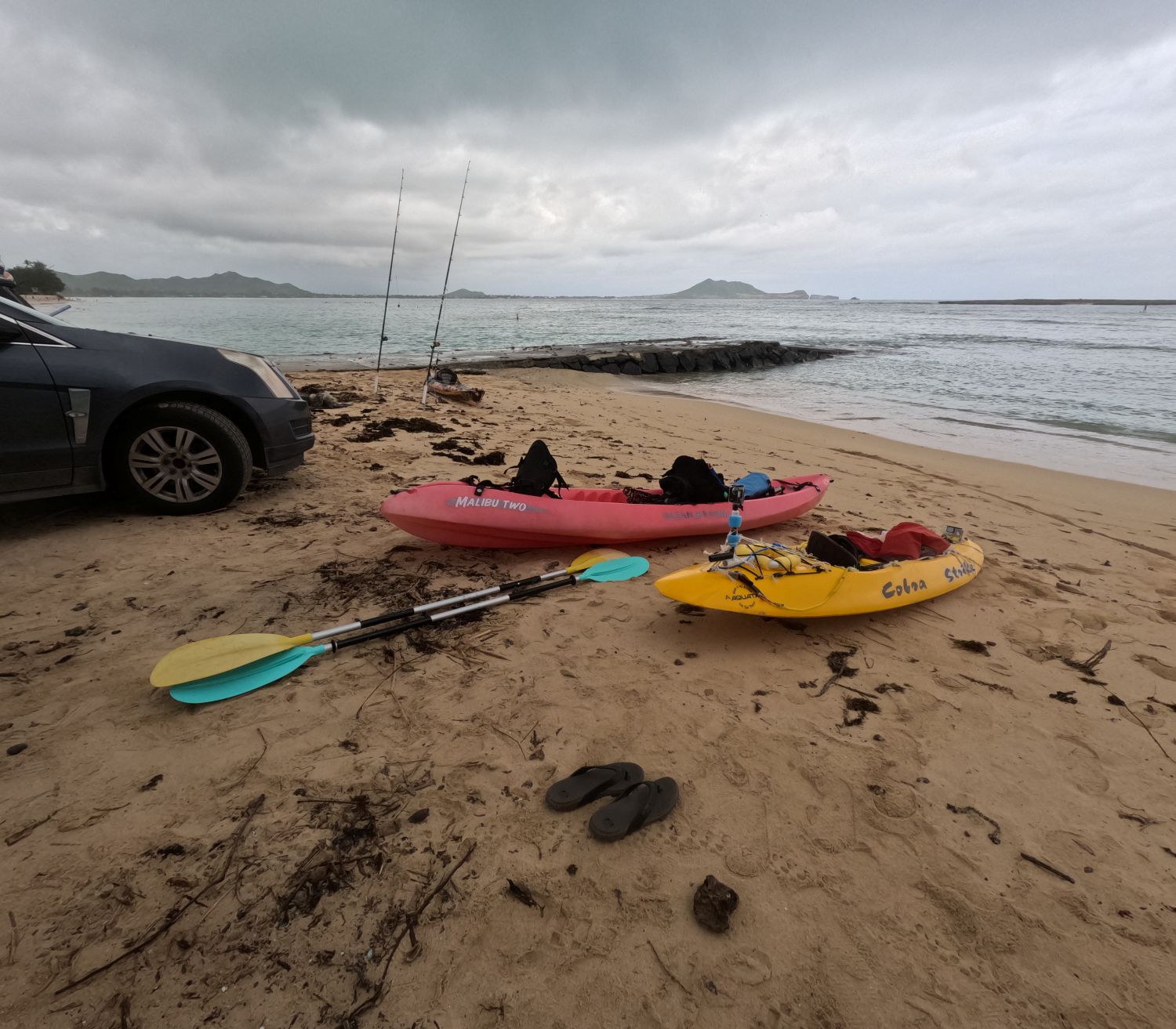
Arriving at the boat ramp, still before sunrise, I was surprised to see all the parking stalls taken, “Wow these guys come early!” I knew that quite a few paddlers had signed up for the clinic, so where are they all going to park? I parked in the trees and took my Strike off the truck and started to set it up. Before long, Carol and Roya showed up with their red Malibu 2 and they found a spot and one by one all 17 paddlers unloaded their kayaks and somehow found a parking spot, pretty amazing considering how busy this place can get.
Kevin and Royaʻs kayaks ready for launch
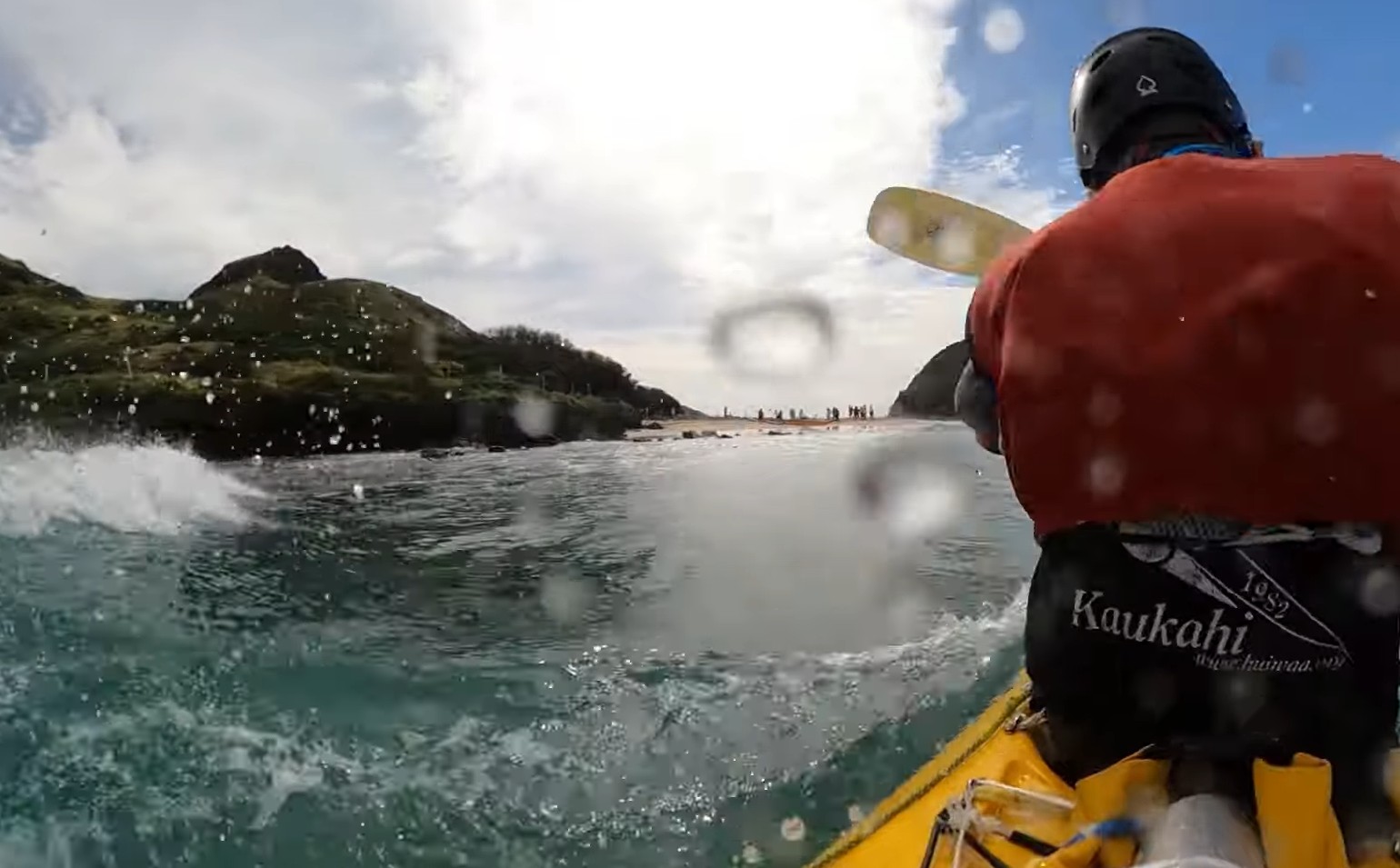
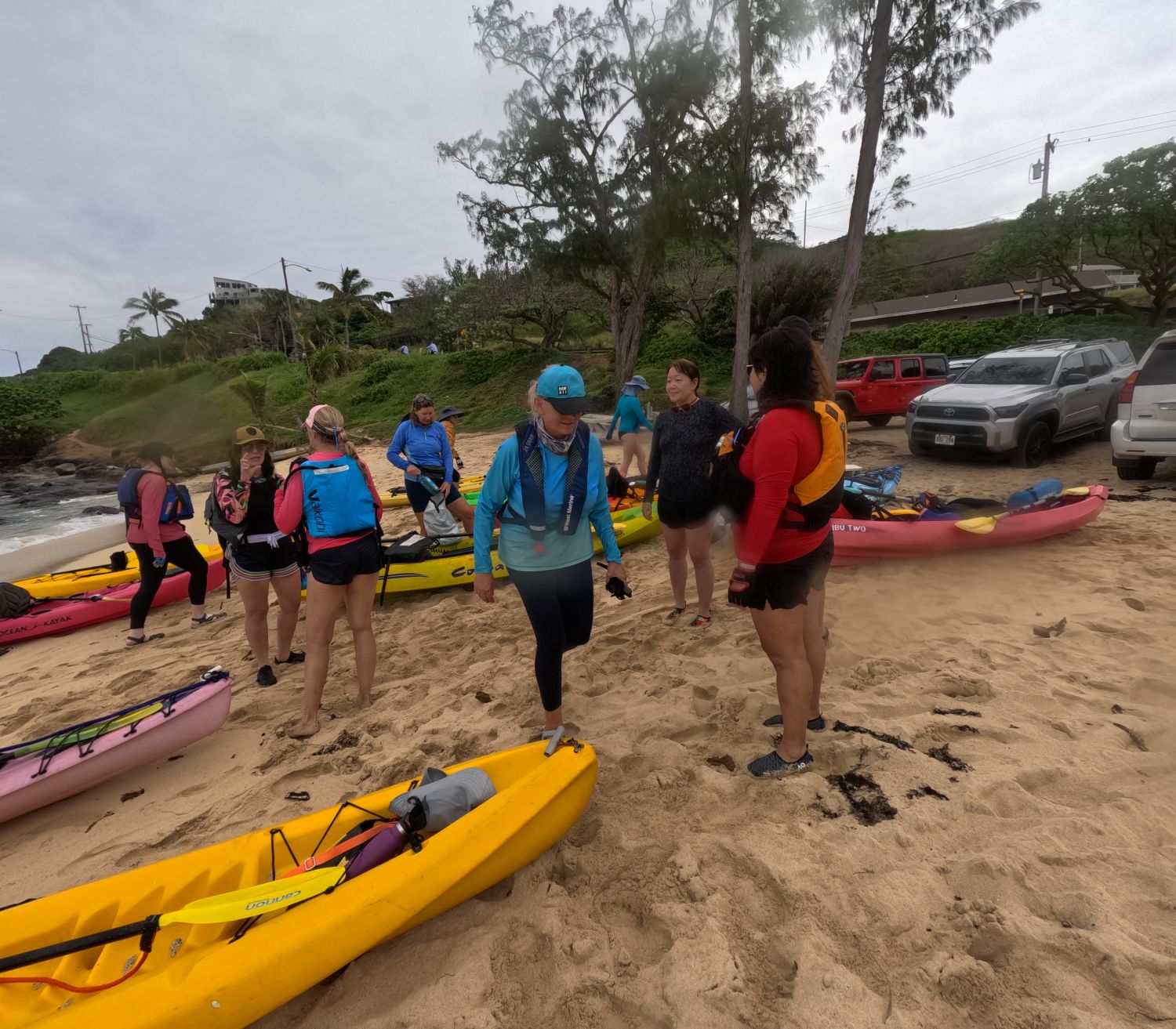
Bill, Steve, Stan and later Paul arrived and thankfully helped with the clinic, as we started with the Captain’s meeting. Some really good questions came from the group about how to punch through waves and specific questions about the low brace, in which Bill demonstrated. Before long it was time to launch as the armada led by Bill paddle towards the Mokulua Islands. Surfline mentioned the surf would be 4 to 6 feet in Kailua, so we paddled cautiously. As we approached the islands waves were breaking at the reef north of the islands and it was with caution as we approached the surf site. Steve and his nephew Tommy were already there checking out the surf and it looked like it was the break in between the islands that was punching, but I would take Sarah to the break fronting Mokulua Nui instead because it was the most organized but not very large sets.
Kayakers getting ready to launch
The rest of the group landed on the island, following the lead of Bill as the occasional “haystack” waves clapped together right I front of the beach. Sarah eventually had enough of the waves and joined the rest of the group on the beach. The group spent the day exploring the island, several had never been there before and I remembered what it was like when I first made it there decades ago. The parking lot may have been full, but the beach did not appear as full as it usually would be.
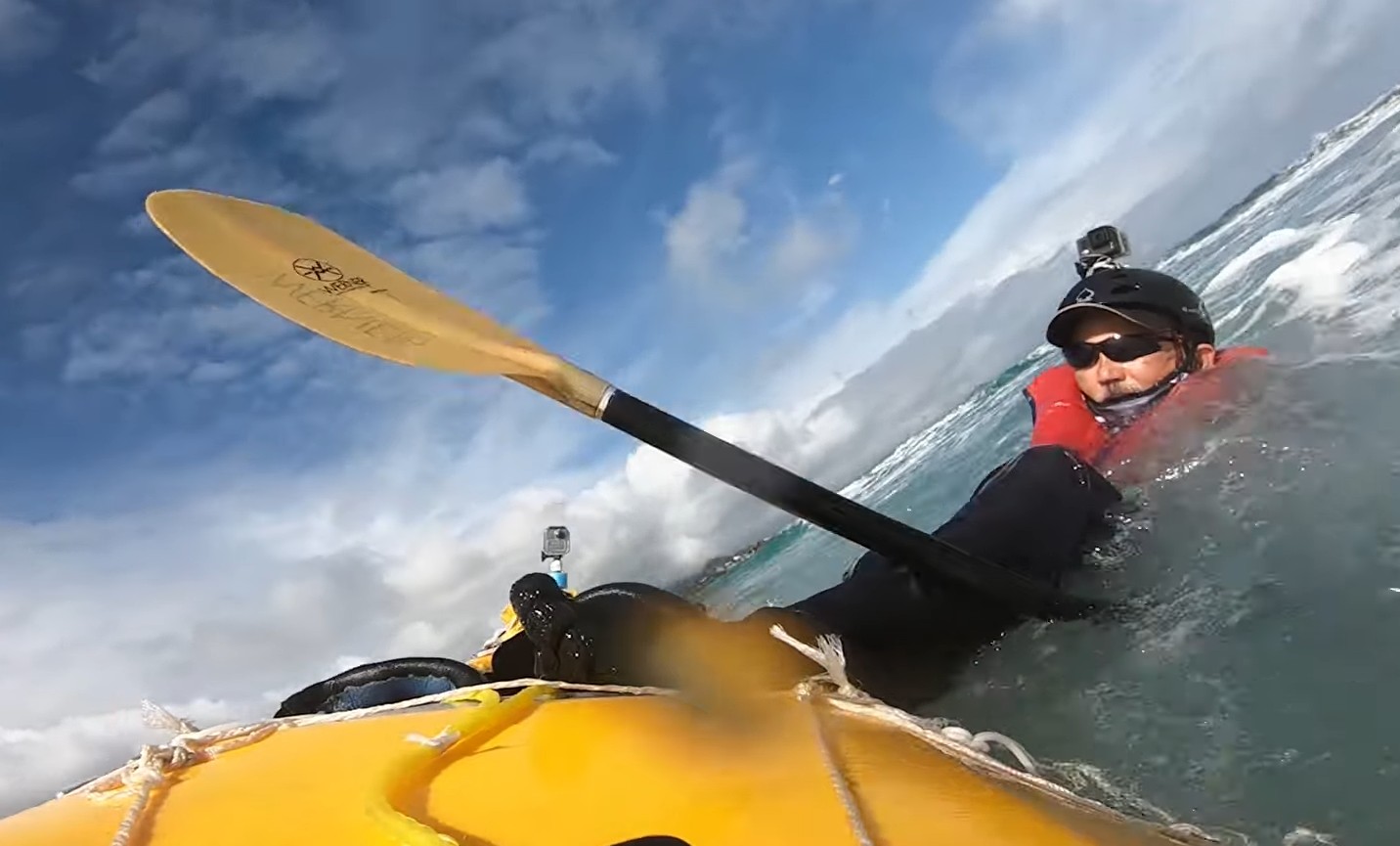
Since the surf was quite smaller than what Surfline had reported, I decided to join Steve in the break in between the islands and the waves were considerably gnarlier. I caught one of the bigger waves and surfed left hard, but this wave would not have me do this as it started to bowl back towards the submerged rocks. The kolohe wave actually became rough and started to turn my Strike to the right, directly into the submerged rocks, when the wave passed, I immediately paddle hard to the left to get out of the danger, my paddle striking many of the rocks below, but here came the second wave and as usually the case, it is even more gnarly and as I leaned into the wave, I hulied, this time my foot was caught in the foot strap and I could not pull it out, then came the third wave and I thought there goes the ankle as the Strike started to roll. My foot finally came free, saving my ankle, but now I had to self-rescue in a rock garden. I rolled up jumped into my kayak and paddled away, with memories of the same thing happening the last time I paddled with Steve at the In Between Break at the Mokulua Island when I gouged my brand new Strike. This time I had a few more gouges, but she still surfs like a champ.
Kevin struggling to free his foot
After a few more rides, I paddled the mauka side of the island and signaled to group that it was time to make the long paddle back to the boat ramp. Debbie wanted to follow Steve and his nephew as they wanted to surf the breaks back to the beach. I advised her not to follow them based on my experience with the Rock Garden incident and she finally agreed and she paddled towards the rest of the group. That was a good thing as everyone made it back after what everyone agreed was a great outing.
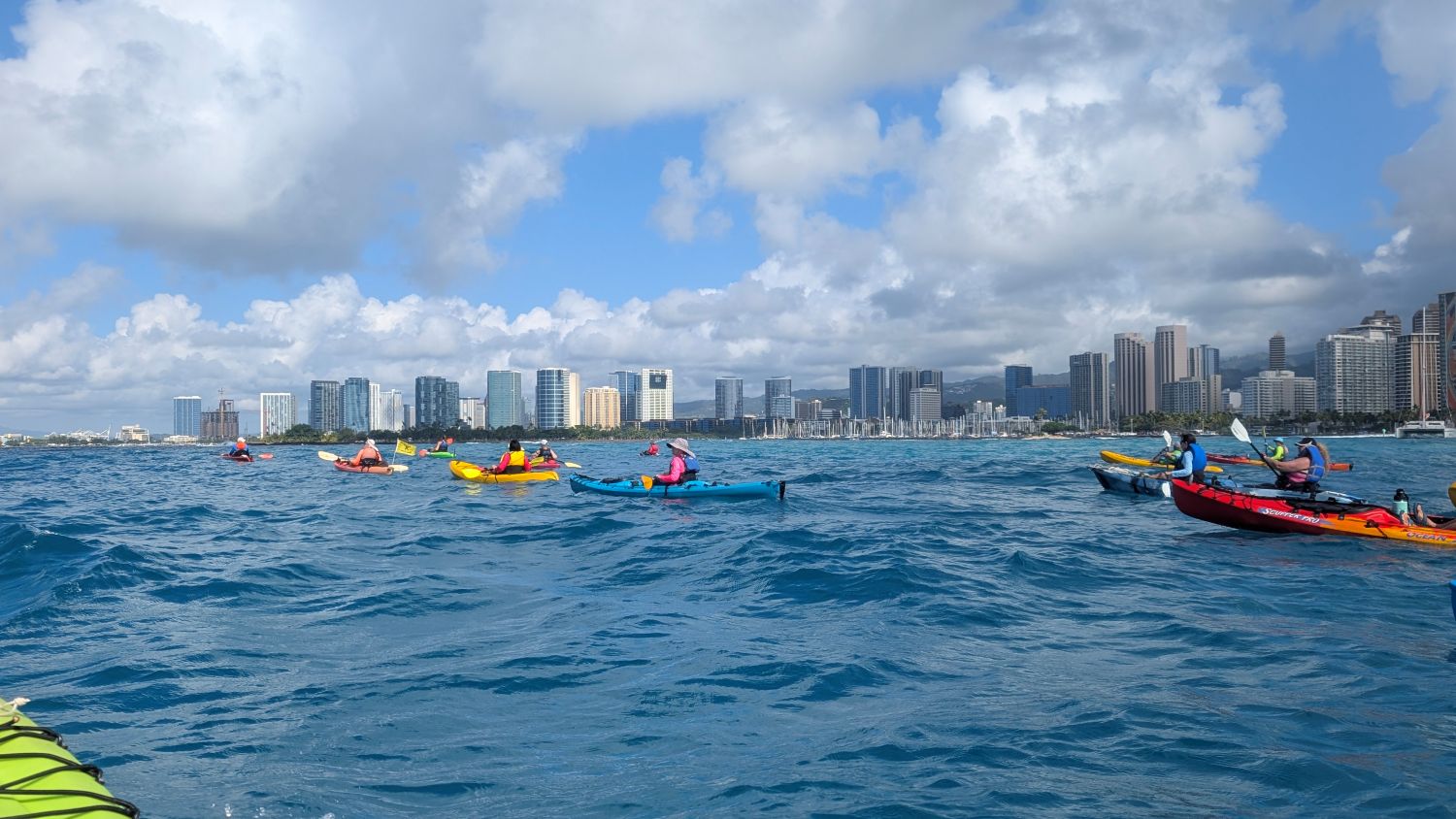
February started off fine with nice weather for the year’s first Meet & Greet at Magic Island and ended with great conditions for Weed Out the Wimps. Strong winds and heavy downpours canceled the middle of the month paddles, however.
A strong turnout with a good mix of newbies and vets showed up for the Meet & Greet. While the weather was fine, the surf was a little bigger than forecast forcing us to turn around sooner than desired. Kevin led us out the Halekulani Channel so that we’d be outside the breakers on the return leg. Unfortunately, one distracted paddler hulied on a swell at the end of the channel. Luckily, an Ocean Safety jet ski happened to be monitoring the surfers out there and it quickly swooped in to tow “Splash” and his kayak past the swell.
Ruby and Lois secured the picnic site for a delicious post-paddle potluck lunch. Even though we had a little more excitement than normal for a beginner level paddle we convinced two new members to join on the spot. E komo mai Sam and Penni!
The flotilla heading back outside the breakers
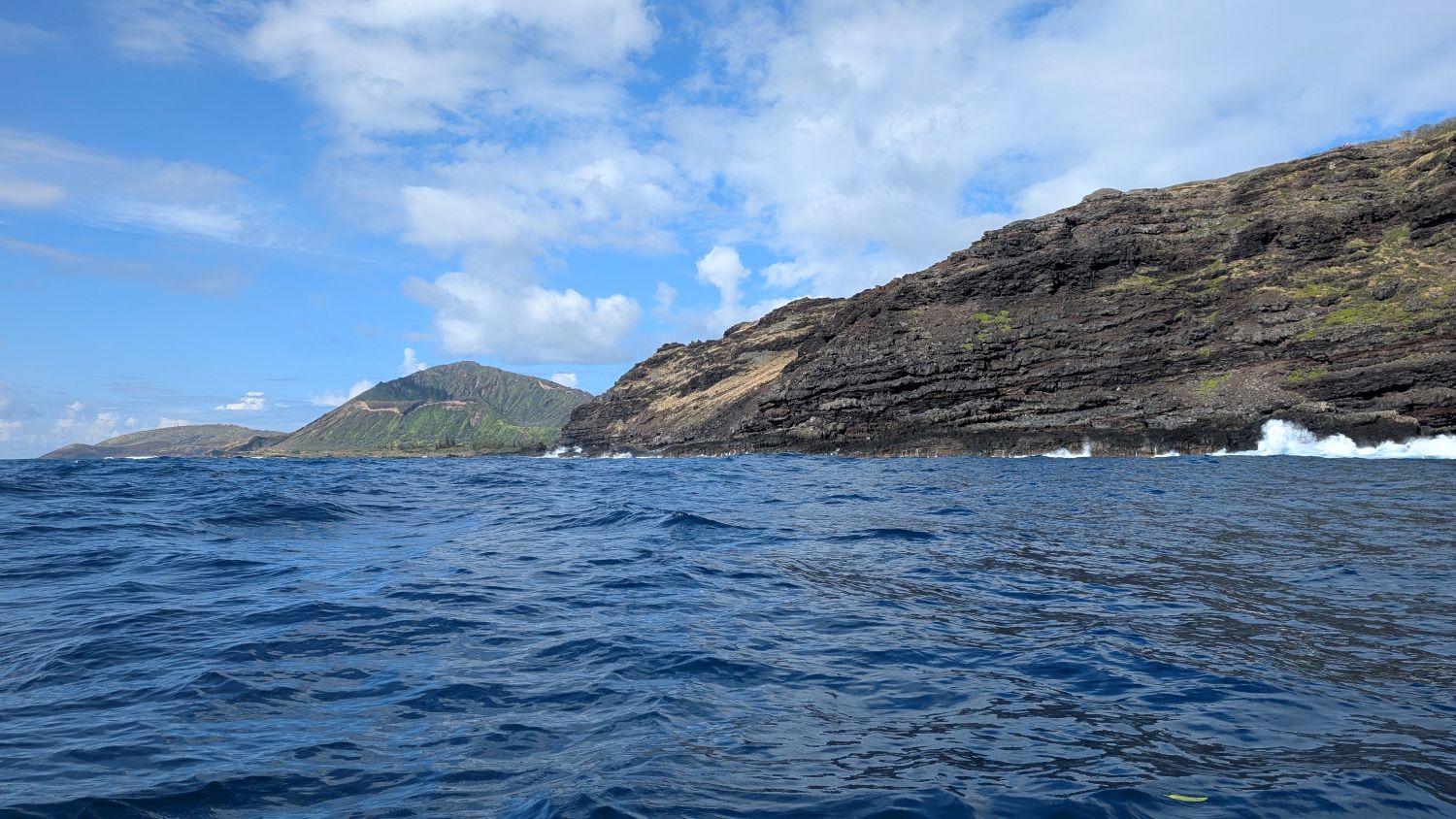
Rough weather the day before kept most paddlers away from the Weed Out the Wimps paddle, but Steve and I put our faith in the forecast that predicted a break in the nasty weather and were rewarded with beautiful kayaking conditions. We opted not to do a carpool for two and did a round trip to Peleʻs Chair and back instead. Calm seas allowed us to go around Manana where I had the thrill of hearing two whales exhale behind me. I turned quickly to watch their next few breaths before diving back under. On the return leg I saw another koholā in full breach near the horizon. Made my day!
Makapuʻu Point to Koko Crater and Kokohead
We both returned to the beach with empty fish bags, but happy that we trusted the weatherman and got to enjoy some of the most breathtaking scenery on ʻOahu.
Please enjoy this video recap of our February paddles: